Deutsche Bank is Germany’s largest banking group and operates a diversified business model spanning corporate banking, investment banking, private banking, and asset management. It recently released a good set of FY25 results (ending 31 December 2025), with net profits more than doubling to record levels. We review Deutsche Bank’s latest financial performance and compare its bonds against peer issuances.
Steady revenue growth in FY25
Deutsche Bank delivered solid revenue growth with FY25 revenues rising +7% YoY to €32.1b. Growth was led primarily by market-driven and fee-based businesses, particularly Investment Bank and Asset Management (Chart 1). Traditional banking activities were more affected by margin dynamics, although underlying activity remained resilient.
‘Corporate Bank’ revenues were broadly stable, declining marginally by -1% YoY to €7.4b (Table 1). Lower net interest income (-9% to €4.6b) reflected continued margin compression, as net interest margins fell further to 3.50% in FY25 (FY23: 4.22% / FY24: 3.95%) amid asset repricing. Nevertheless, strong deposit volume growth helped mitigate this margin pressure, while higher fee income (+5%) provided additional support.
‘Investment Bank’ revenues grew +9% YoY (Chart 2), driven mainly by continued strength in the Fixed Income & Currencies sub-segment (+13%), where management highlighted gains in market share and stronger client activity. In contrast, debt and equity origination revenues declined (-6%), largely due to a high base effect following exceptionally strong growth in FY24 (+61%).
‘Private Bank’ revenues rose +3%, supported by higher net interest income (+7%). Unlike the Corporate Bank segment, Private Bank benefited more visibly from the rollover of its structural hedge portfolio, which supported margins. Differences in deposit and mortgage repricing dynamics also contributed to relatively resilient revenues.
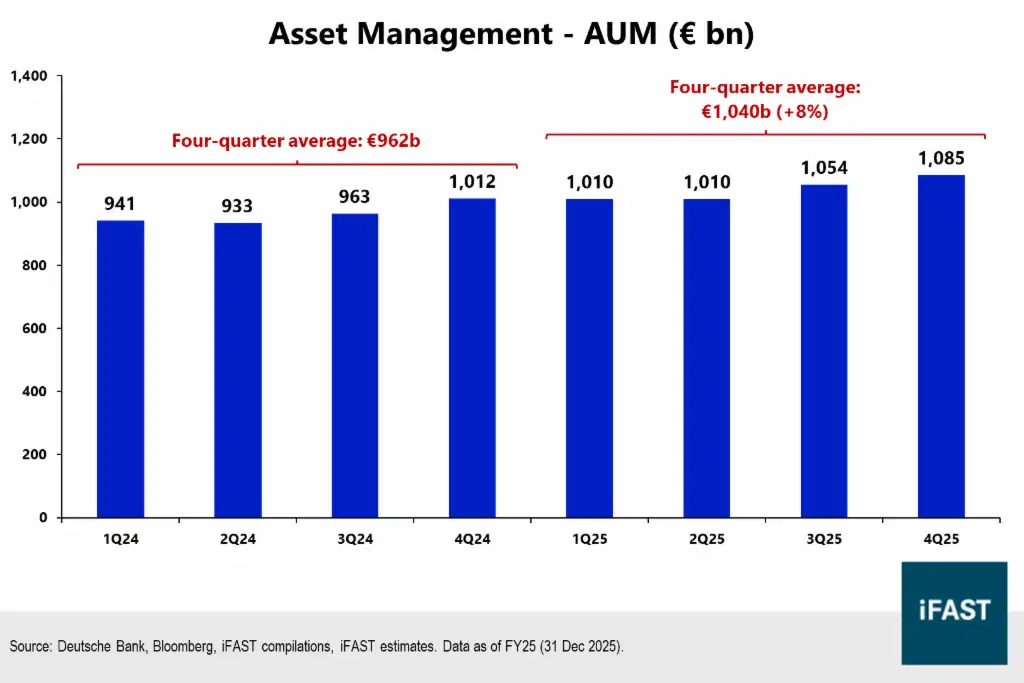
‘Asset Management’ delivered the strongest YoY growth among the four segments, with revenues rising +16% YoY. Growth was driven by solid increases in AUM (which recently surpassed €1t), supported by consistent net inflows and favourable market performance. Performance fees, particularly within alternatives, also contributed.
To summarise, despite clear interest rates headwinds as the ECB cut rates, Deutsche Bank demonstrated strong underlying client activity and business momentum, particularly within its ‘Investment Bank’ and ‘Asset Management’ segments.
Chart 1: Broad-based revenue growth across all business segments
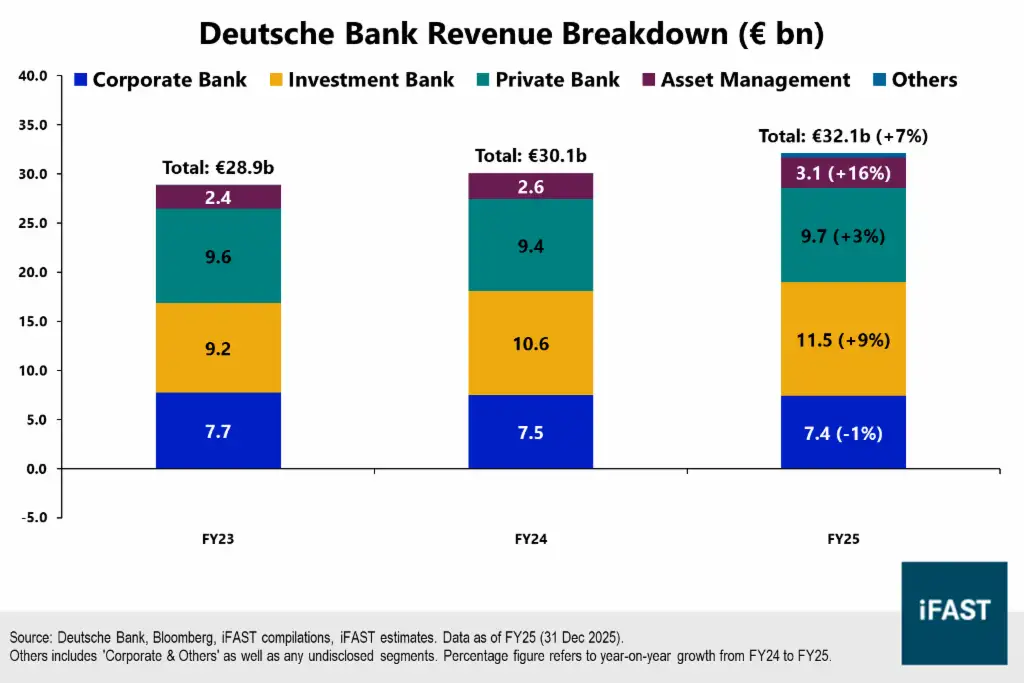
Table 1: Corporate Bank revenues fell primarily due to margin compression
| Deutsche Bank: Corporate Bank Segment (€ bn) | FY23 | FY24 | FY25 | FY24 to FY25 (YoY Change) |
| Net interest income (€ bn) | 5.2 | 5.0 | 4.6 | -8% |
| - Deposits (€ bn) | 289 | 313 | 329 | +5% |
| - Net Interest Margins (%) | 4.22% | 3.95% | 3.50% | -0.45 pp |
| Net commission and fee income (€ bn) | 2.5 | 2.6 | 2.7 | +5% |
| Remaining income (€ bn) | 0.0 | -0.1 | 0.1 | N.M. |
| Net Revenues (€ bn) | 7.7 | 7.5 | 7.4 | -1% |
| Source: Deutsche Bank, Bloomberg, iFAST compilations, iFAST estimates. Data as of FY25 (31 Dec 2025). | ||||
Chart 2: Investment Bank revenue breakdown
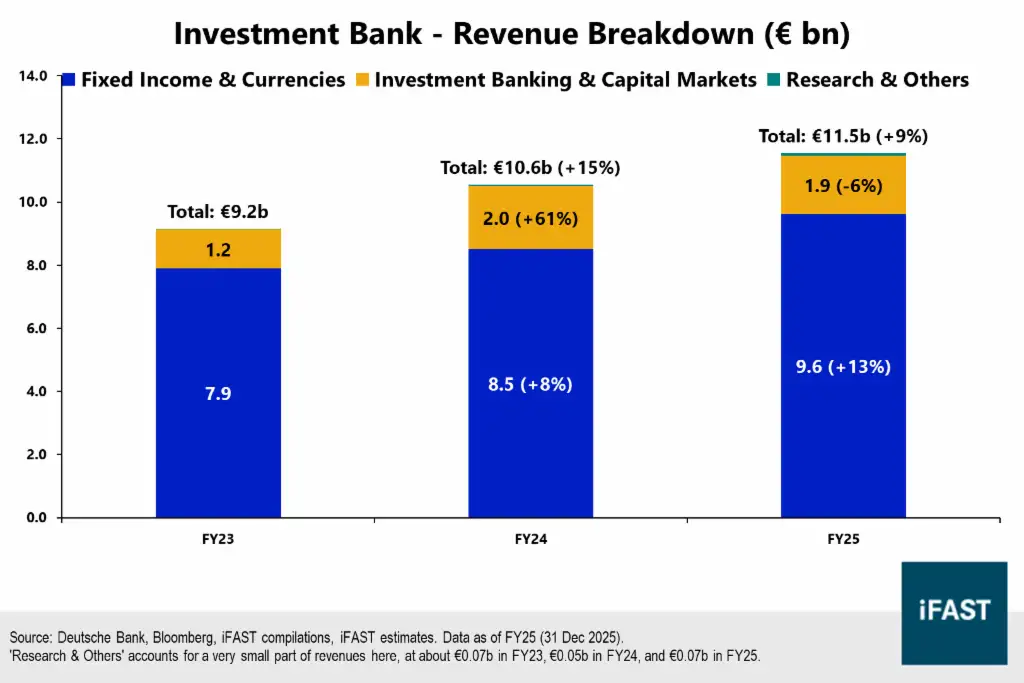
Chart 3: Steady AUM growth across previous quarters supported by consistent positive inflows
Record profitability with major litigation overhang cleared
Deutsche Bank’s profitability hit record levels, with profit before tax rising +84% to €9.7b and net profit more than doubling (+104%) to €7.1b. The sharp improvement was primarily driven by a substantial reduction in non-operating expenses following the resolution of the long-running Postbank litigation in 2024.
Non-operating expenses fell sharply from €2.6b in FY24 to just €362m in FY25, reflecting the absence of large litigation charges and the release of previously booked provisions. Adjusted operating expenses (more representative of underlying costs; excludes litigation charges) edged down by -1% to €20.3b, as higher staff compensation was largely offset by cost savings, particularly in IT and infrastructure. Combined with revenue growth, this drove a meaningful improvement in Deutsche Bank’s cost-to-income ratio to 64%, from 71% on an adjusted basis in FY24 (76% including litigation), in line with management’s < 65% target.
Overall, FY25 represents a strong year for Deutsche Bank, combining solid underlying earnings momentum with a one-off uplift from the removal of a major litigation overhang.
Profit outlook: Incremental improvement from FY25
Management expects modest growth across all four business segments in 2026, consistent with stated revenue targets of €33b by FY26 and €37b by FY28 (implying annualised growth rates of 3% and 5% respectively). Assuming a broadly resilient macroeconomic and market backdrop, these modest revenue targets appear achievable, particularly as interest rate headwinds are expected to moderate in 2H26.
On costs, management has (implicitly or explicitly) guided for the cost-income ratio to remain in the mid-60% range in FY26, before declining toward 60% by FY28. This implies cost growth of roughly 2+% annually (assuming the 5% revenue growth above), consistent with management’s plans to deliver €2b in gross efficiency savings over the same period.
Meanwhile, credit provisioning and cost of risk are expected to remain broadly stable in FY26. While there is scope for some volatility depending on macroeconomic conditions and idiosyncratic exposures (e.g. commercial real estate), a sharp, broad-based deterioration is not part of our base case. Overall, we expect Deutsche Bank’s profitability to improve gradually alongside its top-line growth.
Steady credit profile with manageable asset quality
Deutsche Bank’s capitalisation is sound, with a CET1 ratio of 14.19% as of FY25, comfortably above its 11.22% regulatory requirement (Chart 4). Although CET1 declined slightly from the previous quarter, management attributed this primarily to one-off accounting effects. In any case, this CET1 ratio and buffer remain higher than a year ago.
Other capital ratios (e.g. leverage and total capital ratios) also show healthy buffers above requirements. As a European G-SIB, Deutsche Bank is subject to multiple requirements across different capital instruments (e.g. AT1, Tier 2, and senior non-preferred instruments). Collectively, these provide an estimated capital buffer of €10b across CET1 & leverage ratios.
Deutsche Bank’s impaired (Stage 3) loans ratio climbed gradually to 3.3% as of 4Q25 (Chart 5), while provisioning increased in tandem, with Stage 3 provisions consistently around 30% of gross loan amounts. Management repeatedly emphasised that deterioration was concentrated in specific segments, notably commercial real estate, rather than reflecting broad-based weakening. We think asset quality remains manageable with adequate provisioning for now, though we will continue to monitor future developments.
(Note: While the impaired loans ratio as a proportion of loans was 3.2%, the ratio as a proportion of total assets was fairly stable at 1.96% in 4Q25 [4Q24: 2.09% / 3Q25: 1.97%].)
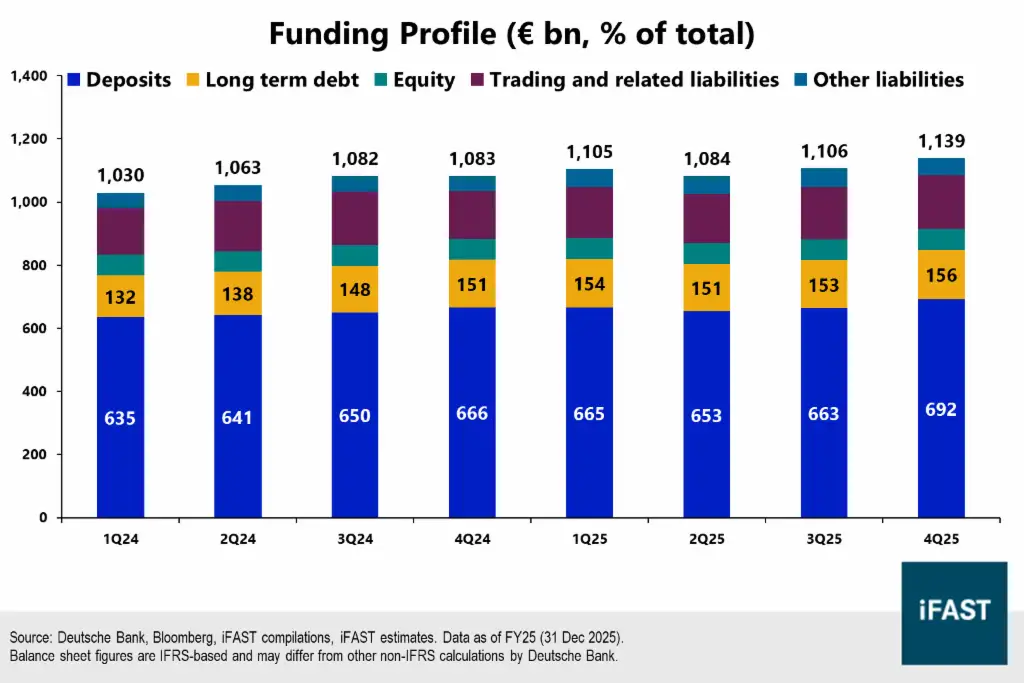
Deutsche Bank’s funding and liquidity profiles remain robust, backed by its strong domestic franchise. Deposits account for a majority (60%) of its funding (Chart 6), of which 67% are sourced domestically in Germany. Funding remains diversified across business segments, particularly Private Bank and Corporate Bank. Meanwhile, Deutsche Bank has significant flexibility to tap wholesale funding if required, supported by its investment-grade credit rating. Its liquidity coverage ratio (144%) and net stable funding ratio (119%) were both well above regulatory requirements and have remained stable over recent quarters.
Overall, Deutsche Bank’s solid capital base and diversified earnings mix position it well for the coming quarters. While its performance and credit profile remain sensitive to market conditions, we continue to view the probability of default as low.
Chart 4: CET1 buffer remains healthy
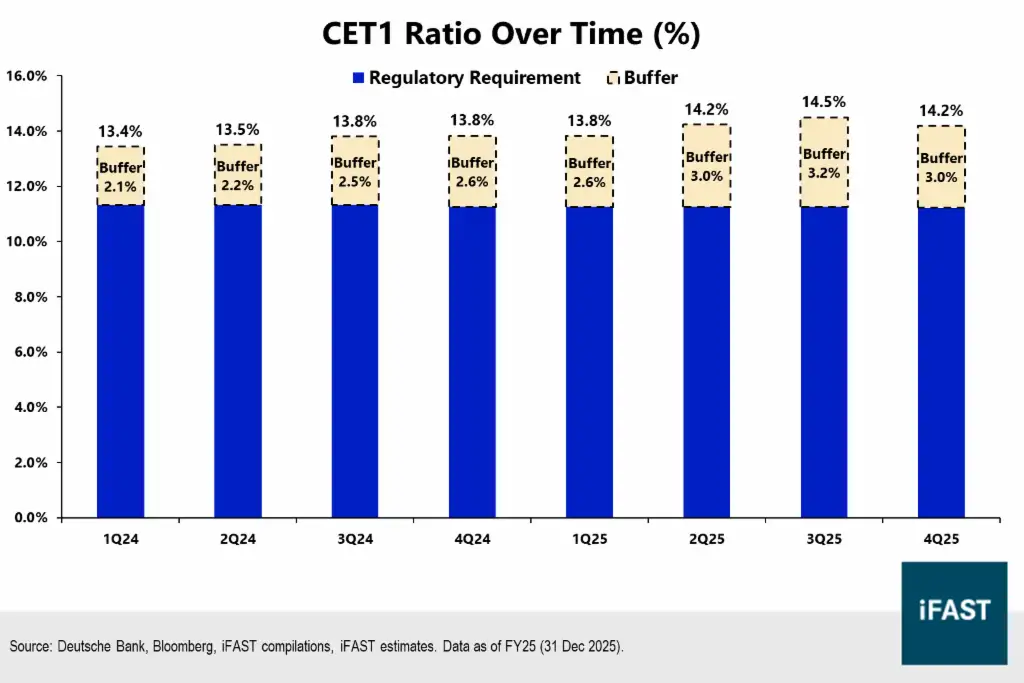
Chart 5: Impaired loans ratio has crept up over time, but remains manageable
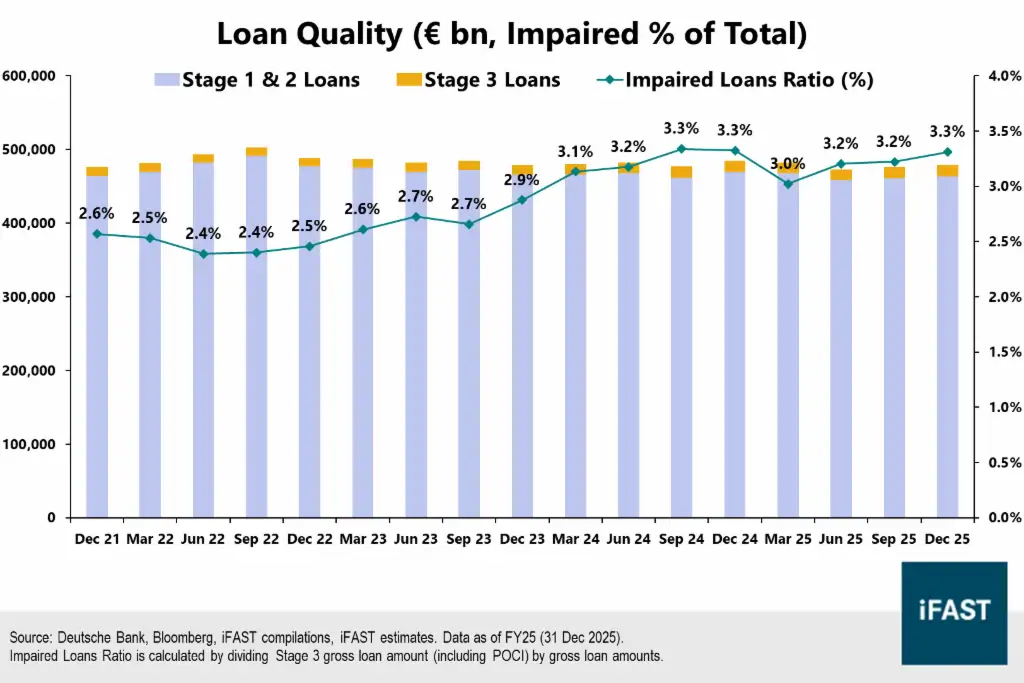
Chart 6: Comfortable access to funding from a strong domestic franchise and wholesale debt issuances
Key risks to note
Deutsche Bank’s business remains exposed to interest rate and market risks. A decline in interest rates would likely weigh on net interest income – management estimates that a 25 bps fall in yields would reduce NII by about €140m by 2028. Nonetheless, we do not anticipate a sharp decline in rates in the near term, with the ECB expected to keep policy relatively stable over the coming meetings. More broadly, some of Deutsche Bank’s business segments are sensitive to client activity levels and specific risk exposures (e.g. commercial real estate). While these remain areas to monitor, we do not currently expect a material deterioration under a broadly resilient macroeconomic backdrop.
In addition, Deutsche Bank’s global business model exposes it to ongoing regulatory and litigation risks. Higher-profile matters include a recent AML-related raid in January 2026, and an ongoing 1MDB lawsuit with claims totalling about $1.1b. While such developments warrant attention, the bank has made meaningful progress in resolving legacy issues in recent years, including the Postbank matter. We therefore view regulatory and litigation risks as manageable, albeit still capable of causing episodic earnings volatility.
Bond comparisons
To summarise, Deutsche Bank delivered solid FY25 results and appears positioned for steady growth ahead. It maintains comfortable capital buffers over regulatory requirements, while asset quality currently shows no signs of broad-based major deterioration.
SGD bonds
Deutsche Bank has one outstanding senior non-preferred bond (DB 4.400% 05Apr2028 Corp (SGD)). While yields briefly rose to around 2.1% in early February, they have since compressed to approximately 1.8%. At current levels, we view the bond as fairly priced, with limited spread or yield differentiation versus comparable peers (Table 2).
(Note: Senior non-preferred bonds and Tier 2 bonds may come with loss absorption clauses. Investors should be comfortable with said risks before investing, though we think the risk of loss-absorption looks low for Deutsche Bank.)
Table 2: SGD bond comparison (DB bond bolded)
| Bond Name | Reset / Maturity Date (Years to Reset / Maturity) |
Ask Price | Yield to Worst (%) | Credit Rating (S&P / Moody's / Fitch) |
| DB 4.400% 05Apr2028 Corp (SGD) | 05 Apr 2027 / 05 Apr 2028 (1.1 / 2.1) |
102.750 | 1.84% | BBB / Baa1 / A- |
| ARTSP 3.630% 20Apr2027 Corp (SGD) | - / 20 Apr
2027 (- / 1.1) |
102.267 | 1.60% | - / - / BBB |
| AITSP 3.700% 30Aug2027 Corp (SGD) | - / 30 Aug 2027 (- / 1.5) |
102.765 | 1.82% | - / - / BBB- |
| OUECT 4.100% 14Jun2027 Corp (SGD) | - / 14 Jun
2027 (- / 1.3) |
102.959 | 1.75% | BBB- / - / - |
| HSBC 4.500% 07Jun2029 Corp (SGD) | 07 Jun 2028 / 07 Jun 2029 (2.3 / 3.3) |
105.392 | 2.05% | A- / A3 / A+ |
| ICBCAS 1.950% 13Aug2027 Corp (SGD) | - / 13 Aug
2027 (- / 1.4) |
100.200 | 1.82% | - / A1 / - |
| Source: Bloomberg, Bondsupermart, iFAST compilations. Data as of 02 Mar 2026. | ||||
USD bonds
Deutsche Bank’s USD senior non-preferred bonds are trading at yields broadly in line with peers like Société Générale (SOCGEN) and BPCE SA (BPCEGP). Similarly, yield and spread differentials are modest between bonds, reflecting their similar credit ratings (Table 3). Meanwhile, Deutsche Bank’s USD Tier 2 bond (maturing 2031) offers yields of around 4.7%, which may appeal to investors seeking higher carry, albeit with additional subordination risks.
Table 3: USD bond comparison (DB bond bolded)
| Bond Name | Reset / Maturity Date (Years to Reset / Maturity) |
Ask Price | Yield to Worst (%) | Credit Rating (S&P / Moody's / Fitch) | Seniority |
| DB 5.706% 08Feb2028 Corp (USD) | 08 Feb 2027 / 08 Feb 2028 (0.9 / 1.9) |
101.672 | 3.85% | BBB / Baa1 / A- | Senior Non-Preferred |
| DB 6.720% 18Jan2029 Corp (USD) | 18 Jan
2028 / 18 Jan 2029 (1.9 / 2.9) |
104.809 | 4.02% | BBB / Baa1 / A- | Senior Non-Preferred |
| DB 5.882% 08Jul2031 Corp (USD) | 08 Apr 2030 / 08 Jul 2031 (4.1 / 5.4) |
104.211 | 4.74% | BBB- / Baa3 / BBB | Tier 2 Subordinated |
| SOCGEN 6.446% 10Jan2029 Corp (USD) | 10 Jan
2028 / 10 Jan 2029 (1.9 / 2.9) |
103.950 | 4.20% | BBB / Baa2 / A- | Senior Non-Preferred |
| BPCEGP 1.826% 13Oct2027 Corp (USD) | - / 13 Oct 2027 (- / 1.6) |
96.568 | 4.05% | BBB+ / Baa1 / A | Senior Non-Preferred |
| STANLN 8.000% 30May2031 Corp (USD) | - / 30 May
2031 (- / 5.2) |
114.950 | 4.74% | BBB / Baa1 / BBB+ | Tier 2 Subordinated |
| BACR 5.088% 20Jun2030 Corp (USD) | 20 Jun 2029 / 20 Jun 2030 (3.3 / 4.3) |
101.804 | 4.49% | BBB / Baa1 / BBB+ | Tier 2 Subordinated |
| Source: Bloomberg, Bondsupermart, iFAST compilations. Data as of 02 Mar 2026. | |||||
GBP bonds
Deutsche Bank’s 2028 GBP senior non-preferred bonds yield approximately 4.25%, broadly in line with peers with similar maturities and rated within one notch. Investors comfortable with such senior debt can consider these bonds for stable income with a low probability of default (Table 4).
Table 4: GBP senior non-preferred bond comparison (DB bond bolded)
| Bond Name | Reset / Maturity Date (Years to Reset / Maturity) |
Ask Price | Yield to Worst (%) | Credit Rating (S&P / Moody's / Fitch) |
| DB 1.875% 22Dec2028 Corp (GBP) | 22 Dec 2027 / 22 Dec 2028 (1.8 / 2.8) |
96.003 | 4.18% | BBB / Baa1 / A- |
| BPCEGP 6.000% 29Sep2028 Corp (GBP) | 29 Sept
2027 / 29 Sept 2028 (1.6 / 2.6) |
102.642 | 4.16% | BBB+ / Baa1 / A |
| SOCGEN 1.250% 07Dec2027 Corp (GBP) | - / 07 Dec 2027 (- / 1.8) |
94.915 | 4.27% | BBB / Baa2 / A- |
| BNP 1.875% 14Dec2027 Corp (GBP) | - / 14 Dec
2027 (- / 1.8) |
96.360 | 3.99% | A- / Baa1 / A+ |
| ACAFP 5.375% 15Jan2029 Corp (GBP) | 15 Jan 2028 / 15 Jan 2029 (1.9 / 2.9) |
101.978 | 4.20% | A- / A3 / A+ |
| ISPIM 6.500% 14Mar2029 Corp (GBP) | 14 Mar
2028 / 14 Mar 2029 (2.0 / 3.0) |
104.004 | 4.41% | BBB / Baa2 / BBB+ |
| Source: Bloomberg, Bondsupermart, iFAST compilations. Data as of 02 Mar 2026. | ||||
Declaration: For specific disclosure, at the time of publication of this report, IFPL (via its connected and associated entities) and the analyst who produced this report hold NIL positions in the abovementioned securities. This research report was prepared with the assistance of artificial intelligence (AI) tools. iFAST Financial Pte Ltd does not rely exclusively on AI for content generation; the content of this report – including all investment theses, ratings, price targets and conclusions – has been independently reviewed and verified by the research analyst(s) to ensure accuracy and professional integrity.