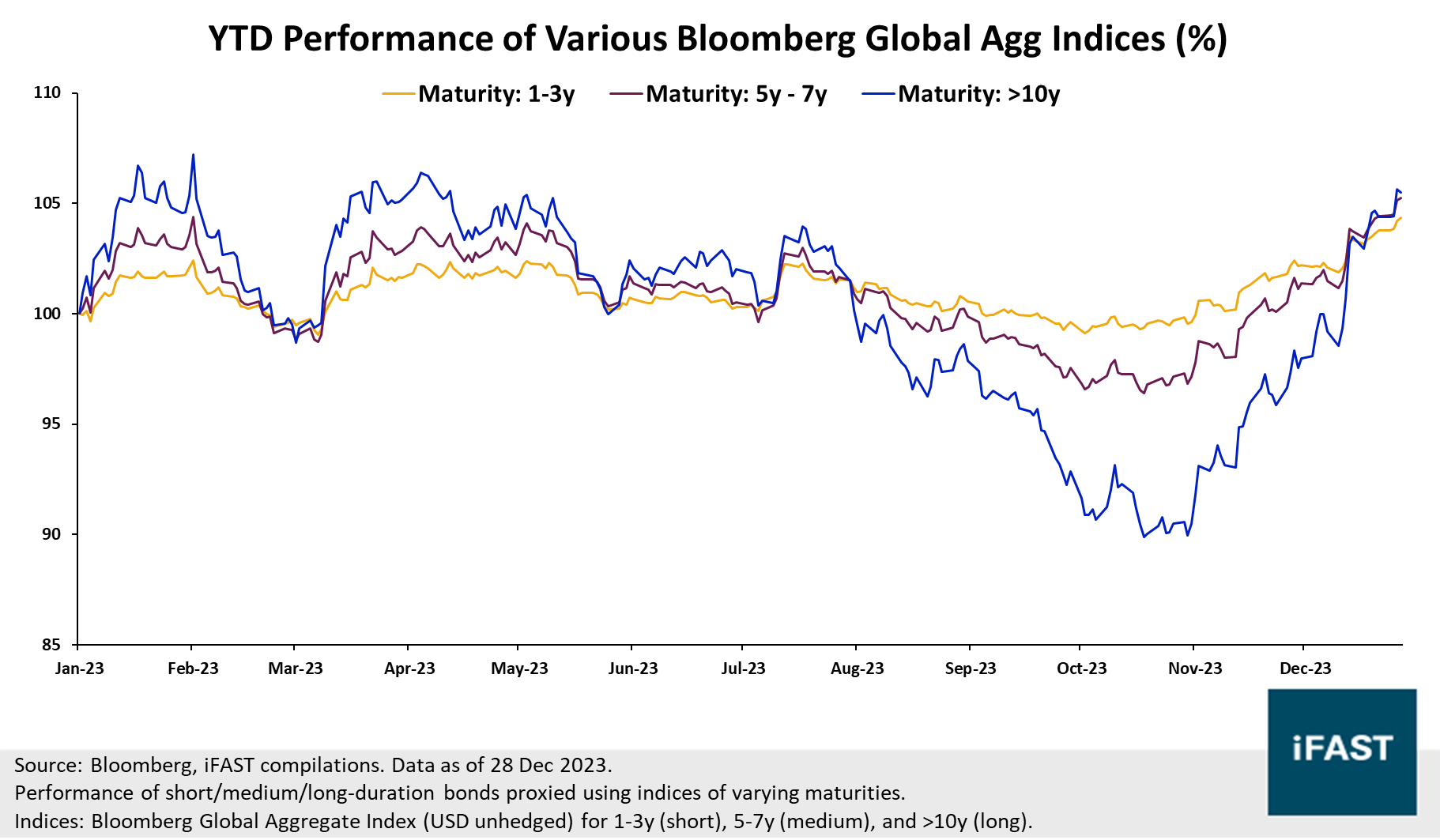
In the year-to-date (YTD), short-maturity bonds have generally delivered a positive performance, though they have fallen very slightly behind longer-maturity bonds following a sharp rally in the latter (Chart 1).
In this article, we do a quick recap of 2023, and provide our thoughts on what to expect for inflation and yields in 2024. We also reiterate our preference for short-duration over long-duration bonds.
Chart 1: Short-maturity bonds have generally fallen behind longer-maturity bonds in performance this year
A quick recap of 2023
2023 was a year of surprises on multiple fronts. In the US, economic growth has largely turned out better than expected, the labour market has also been remarkably resilient, and inflation has also come down significantly (Chart 2). These have led to growing calls for a ‘soft landing’ in 2024, and for some to even declare the battle against inflation already won.
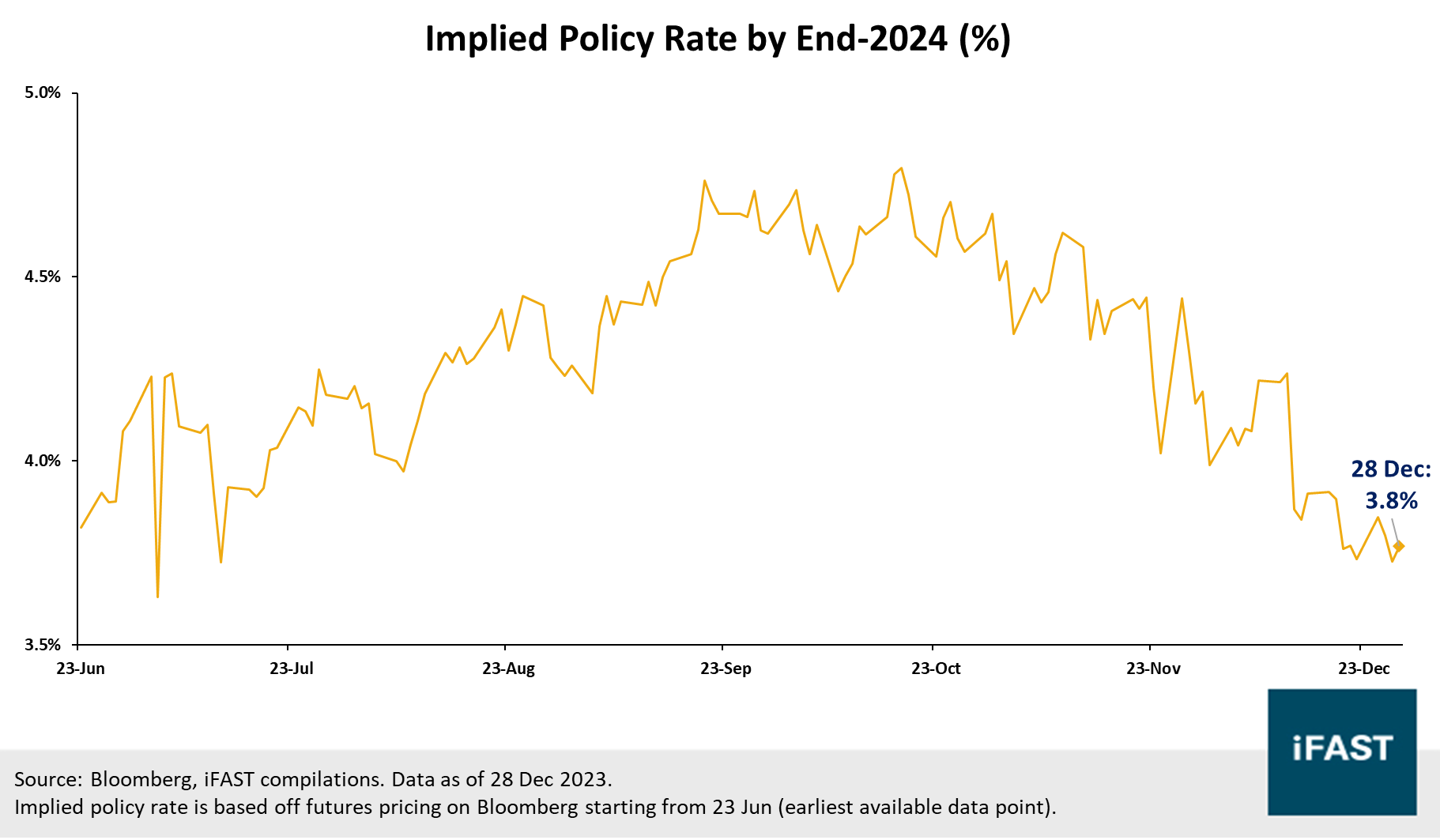
Policy rate expectations have also fluctuated wildly. In the past six months, market pricing for end-2024 policy rates has gone from about 3.8% to a high of 4.8% in late-Oct, before falling back to 3.8% today (Chart 3). The increasingly dovish tone adopted by the Fed in recent months has also resulted in both short-end and long-end yields retracing downwards significantly over the past few months.
Chart 2: Key macro data points in the US
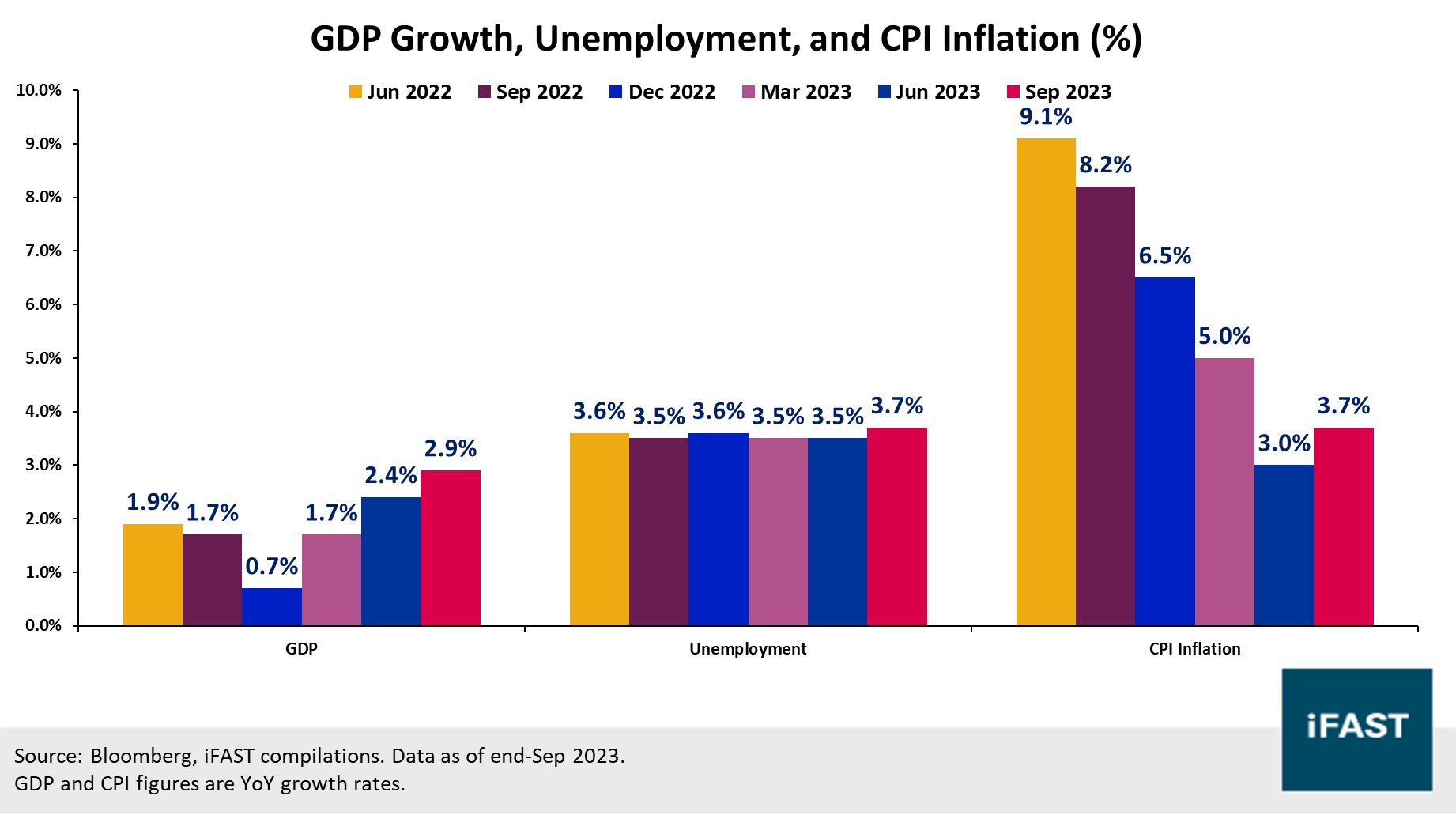
Chart 3: Implied end-2024 policy rates have fluctuated significantly over the past 6 months
Reasons to remain positive on Short Duration Bonds
We expect inflation in the US to remain persistently elevated. In contrast, multiple metrics of inflation expectations generally point towards a belief that inflation will continue to ease in 2024 to about or below 2.5% (Chart 4) - we think these are too low and overoptimistic. While the recent decline in inflation readings has certainly been encouraging, we still expect inflation to remain firmly above the Fed target of 2%, with a heightened risk of rebounding from existing levels (e.g. 3.1% CPI reading in Nov), due to a mix of shorter-term factors like energy uncertainty as well as longer-term factors like deglobalisation.
Consequently, our base case is for the Fed to hold rates steady in 2024, contrary to market pricing today (Chart 5). If inflation continues to remain stubborn and surprise to the upside, policymakers may opt to remain hawkish for longer than markets may be expecting, which could ultimately lead to a repricing of yields higher again in 2024. Considering that longer-duration products are generally more sensitive to changes in yields, we continue to discourage the addition of excessive duration exposure at this point.
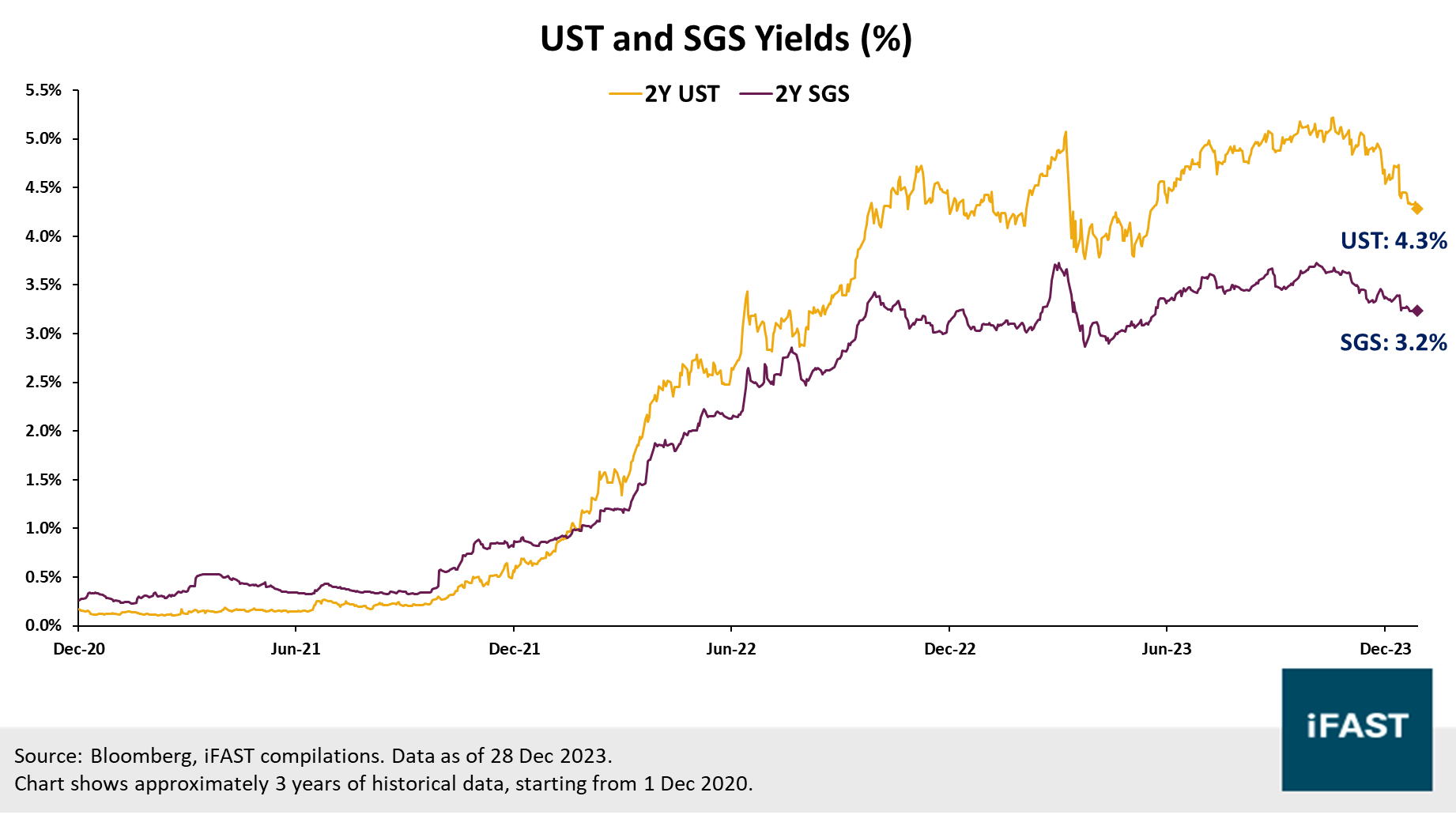
The good news for investors is that short-end yields are expected to remain anchored at attractive levels for some time. Short-end yields (of 2y USTs and SGSes) are now at about 4.3% (UST) and 3.3% (SGS), compared to several years ago when they were much closer to zero (Chart 6). We think that our forecast of higher-for-longer rates in 2024 should result in even greater anchoring of these short-end policy-sensitive yields.
Chart 4: Inflation expectations generally point towards inflation coming down by end-2024
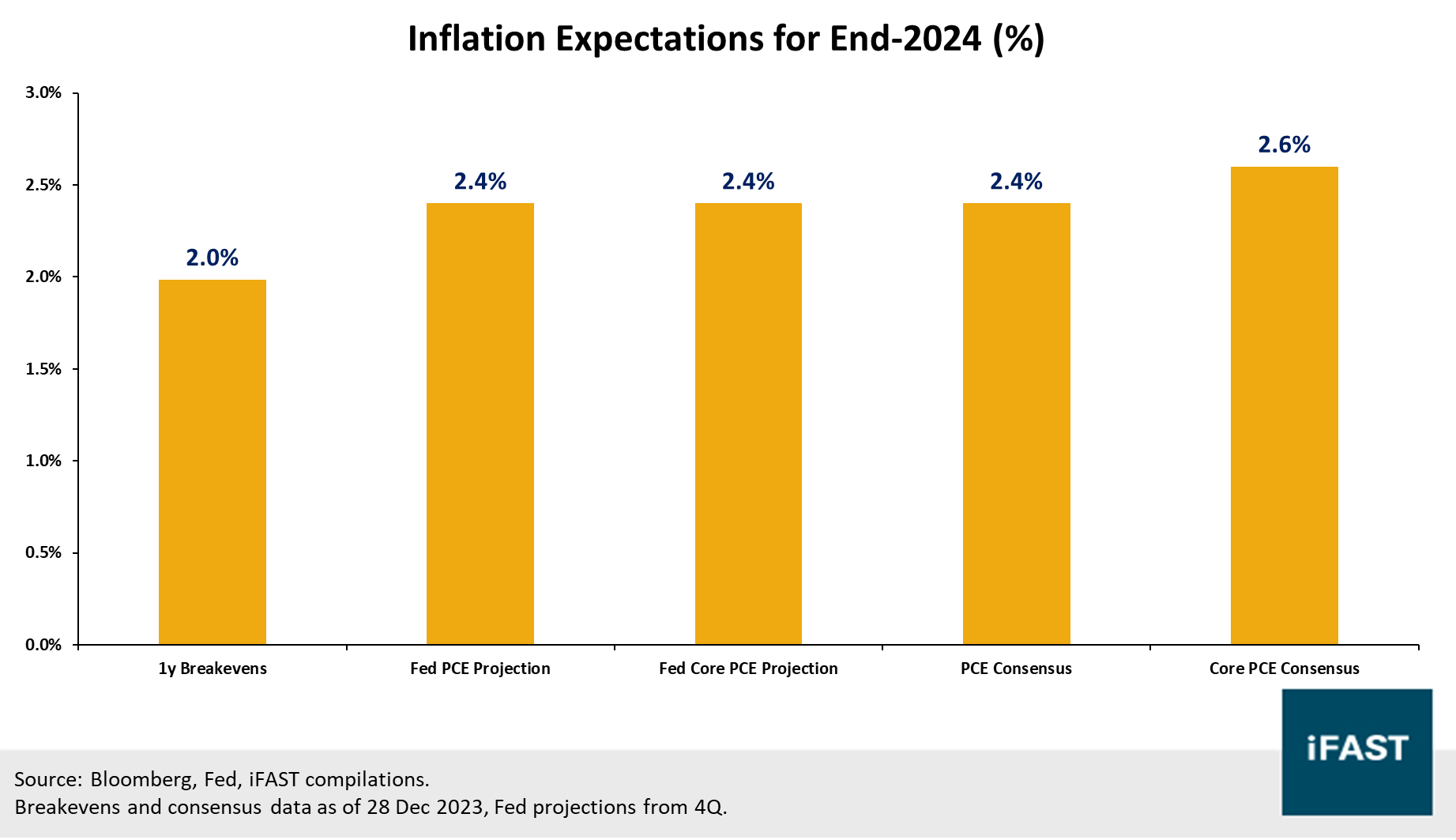
Chart 5: Markets are pricing in 6 rate cuts by end-2024
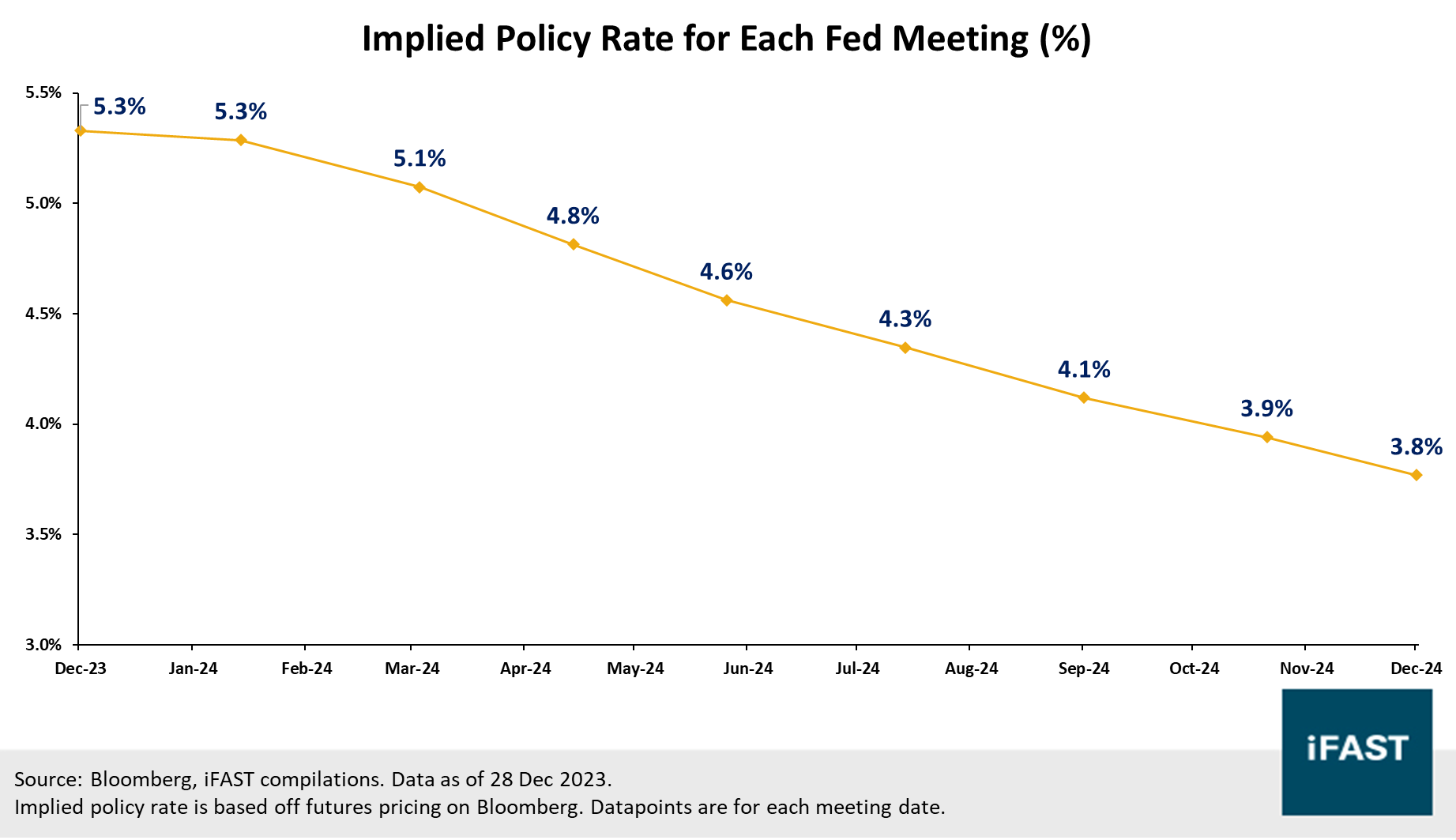
Chart 6: Short-end yields look much more attractive today relative to several years ago
When should you add duration?
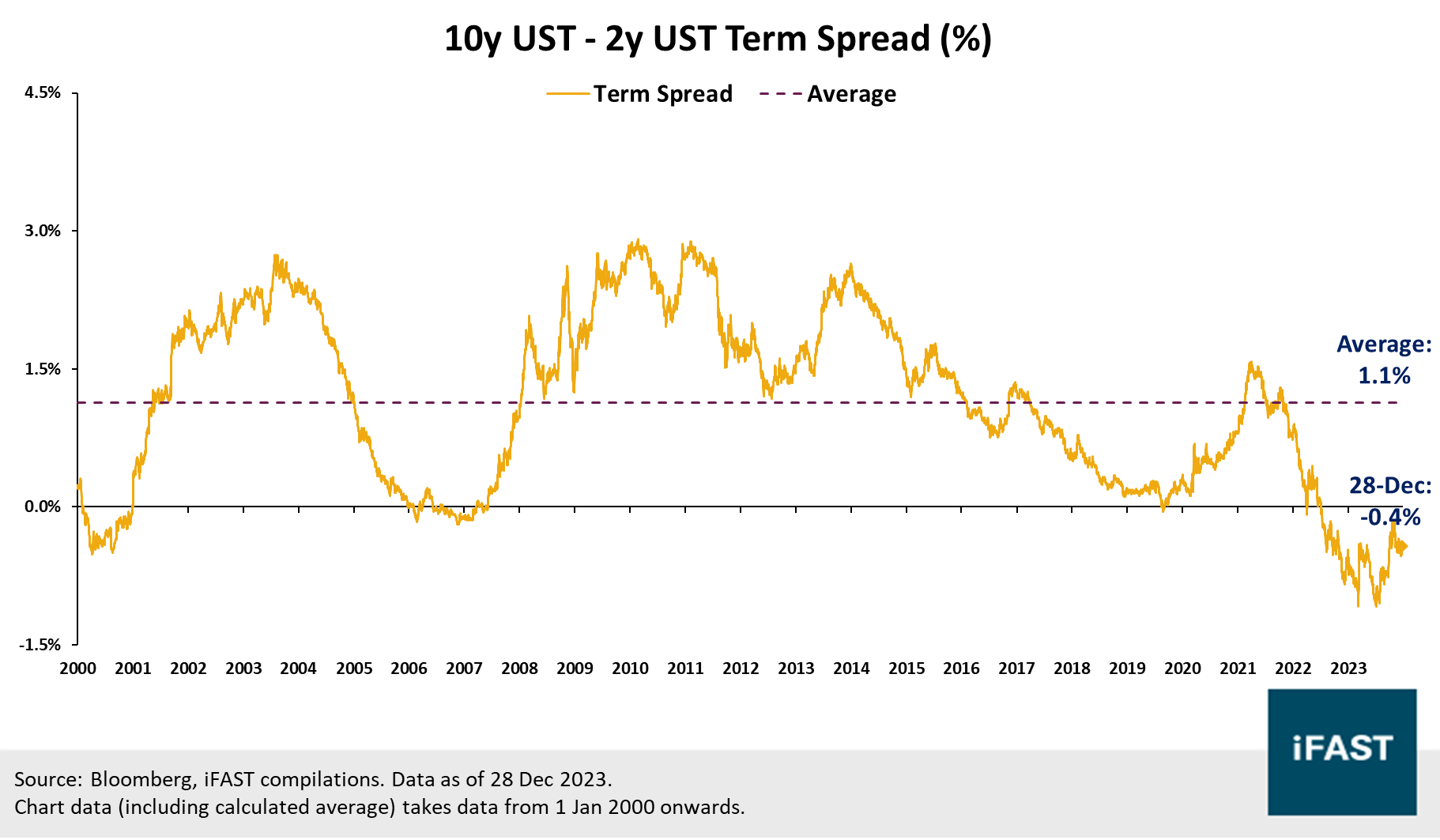
We would ideally need to see a dis-inversion of the yield curve before we turn more positive on duration. Currently, investors are essentially getting paid less (lower yields) despite taking on higher duration and maturity risks (for most tenors) (Chart 7). For instance, the term spread for USTs (10y – 2y) currently sits at -0.4% with this inverted curve, much lower than the historical average of +1.1% (Chart 8). Coupled with our view that shorter-end yields should remain anchored, we see room for longer-end yields to increase in 2024 before investors consider adding duration.
Our forecast of a growth rebound next year (including within the US) should also help to put upward pressure on nominal yields. For instance, a persistently robust labour market would directly result in wage inflationary pressures, particularly in terms of services inflation. In addition, a growth rebound would mean that the Fed would have less incentive to stimulate the economy through rate cuts, especially with inflation still hovering above the 2% target. Overall, we see room for long-end yields to rise in 2024 if the US economy remains resilient.
Chart 7: UST and SGS yield curves remain deeply inverted
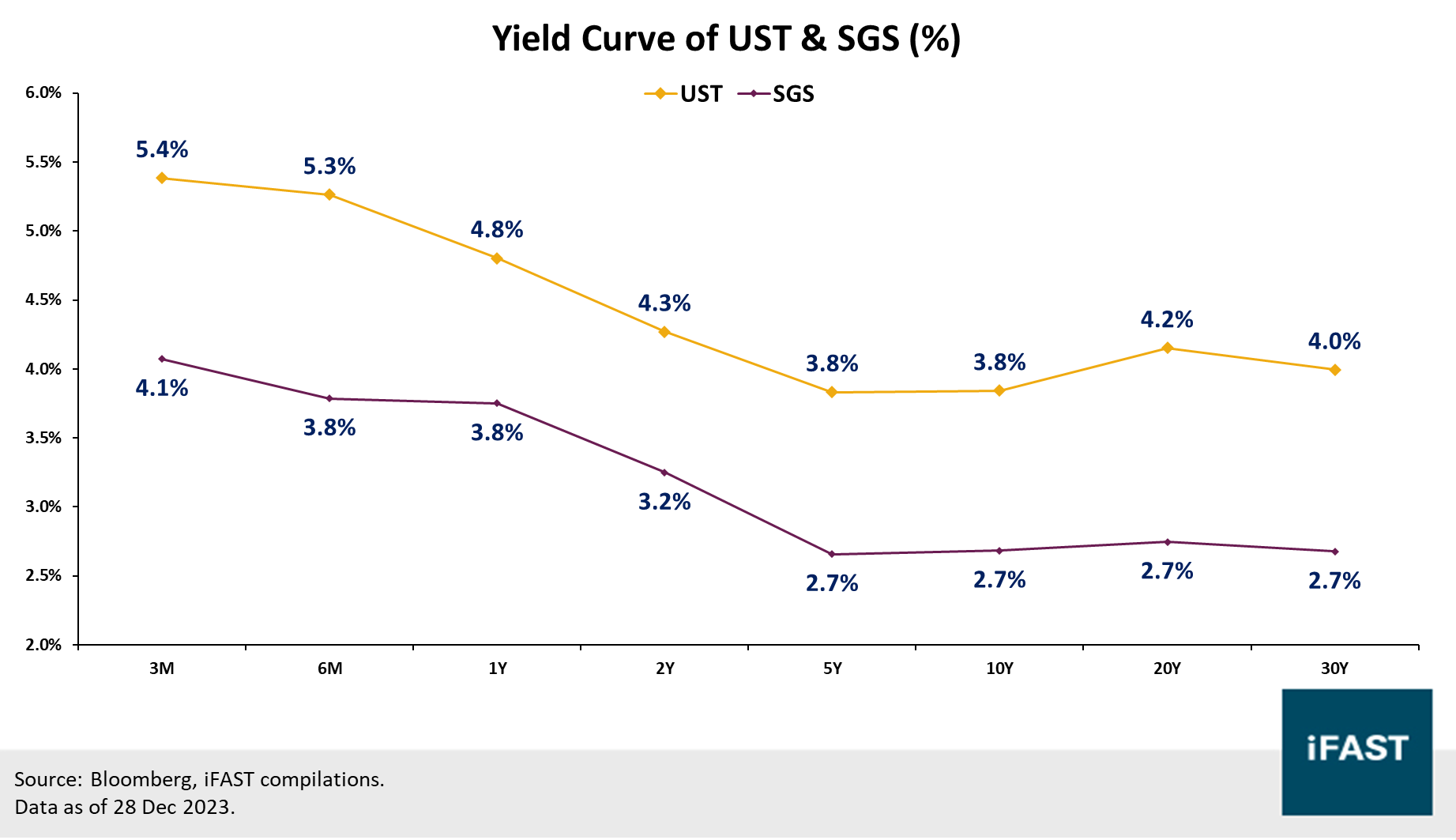
Chart 8: Current term spread is significantly below historical average of 1.1%
Recommendations
To summarise, we expect both inflation and rates to remain elevated for some time, more than what markets may be pricing in or expecting themselves. We also think that longer-end yields may reverse higher in 2024, and prefer to wait for at least a curve dis-inversion before adding duration.
We split our recommendations into two types: sovereigns and corporates. For sovereigns, we think that the various US and SG Treasuries offer short-duration exposures with very high credit qualities, with many US T-Bills also available on our Bond Express platform. With the large number of Treasuries available on our various iFAST platforms, investors can expect to see yields of over 5% for US sovereigns and over 3% for SG sovereigns and .
For corporates, we have also listed some of our recommendations over the past year below, which either mature, or have their first call date by end-2026. These have been sorted into two tables: USD (Table 1) and SGD (Table 2). They will also vary slightly in terms of the yields on offer and their corresponding credit profiles, giving investors a wide variety of options to select from to bolster their fixed income portfolio.
Table 1: Recommendations – USD-denominated corporates
Table 2: Recommendations – SGD-denominated corporates
Declaration: For specific disclosure, at the time of publication of this report, IFPL (via its connected and associated entities) holds a position in STRTR 3.750% 29Oct2025 Corp (SGD), ESRCAY 5.100% 26Feb2025 Corp (SGD), STRTR 4.100% 04May2026 Corp (SGD), and OUECT 3.950% 02Jun2026 Corp (SGD). The analyst who produced this report holds a NIL position in the securities mentioned in this article.