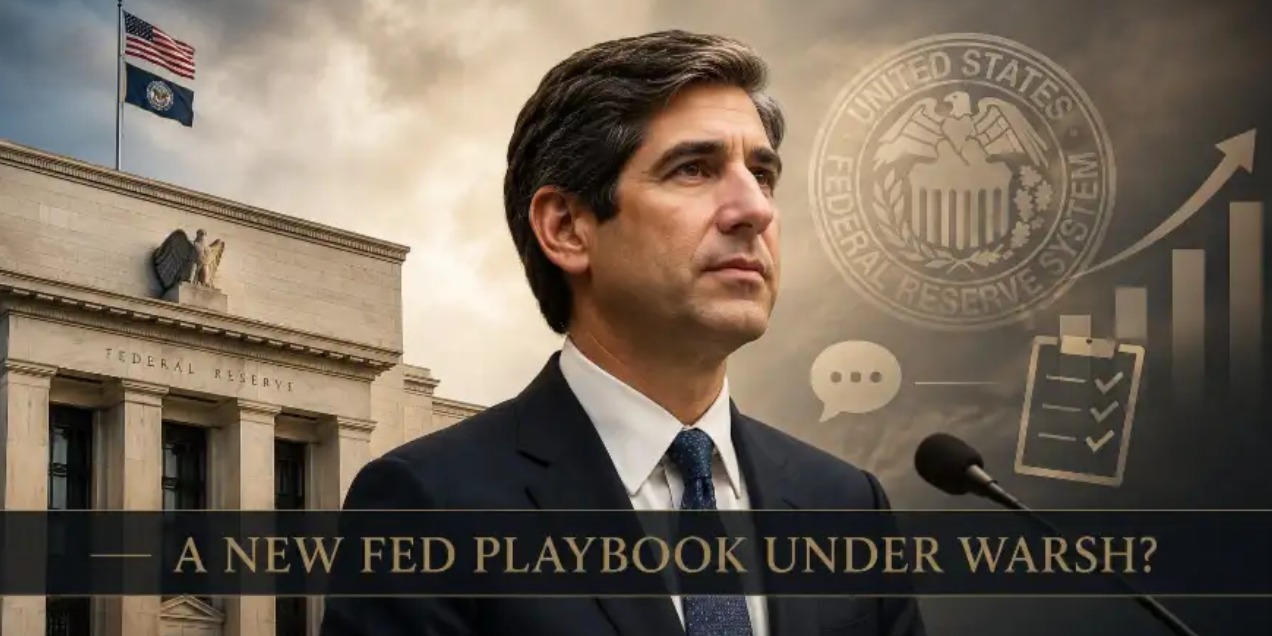
On 11 January 2026 (Sunday), Federal Reserve (Fed) Chairman Jerome Powell disclosed that the Fed had been served with grand jury subpoenas by the Department of Justice (DOJ). The subpoenas relate to an ongoing investigation into the renovation of several historic Fed office buildings. However, no charges have been filed to date, and the DOJ remains in the investigative phase.
We summarise the key developments surrounding the subpoenas and outline their implications for bond investors. Broadly speaking, we still expect further yield curve steepening, with rising political pressure on the Fed potentially accelerating this steepening process.
Reactions by Powell, Trump, and markets
Powell delivered a strongly worded statement in a recorded video. He characterised the subpoenas as a ‘pretext’ for political pressure from the Trump administration, and a ‘consequence of the Federal Reserve setting interest rates based on our best assessment of what will serve the public, rather than following the preferences of the President’.
Trump subsequently stated that he had no prior knowledge of the subpoenas, though we note he had previously raised the possibility of legal action against Powell over these renovations. Notably, Republican Senator Thom Tillis, a member of the Senate Banking Committee, publicly criticised this move and said he would block the confirmation of future Fed nominees until the matter is resolved.
(Note: The Senate Banking Committee has a 13-11 Republican majority, hence future nominees can be ‘blocked’ if a single Republican decides to vote with the Democrats.)
The market reaction to the announcement was relatively muted. The US Dollar Index (DXY), a proxy for USD strength, fell by -0.3% on Monday amid concerns over the Fed’s independence. US Treasury yields edged slightly higher on Monday, while 2-year and 10-year breakevens (proxies for inflation expectations) also rose marginally. Expectations for future Fed policy were largely unchanged, with markets pricing in roughly 2 cuts in 2026.
The S&P 500 Index also opened on a lower footing (though partially driven by other factors such as Trump’s move to cap credit card interest rates) but ended the day in the green at +0.2%.
What these subpoenas mean
The subpoenas represent yet another round of pressure on the Fed by the Trump administration. While the Fed is designed to operate independently of political pressures, the Trump administration has increasingly challenged this convention by openly urging the Fed to cut rates in support of its political objectives. Recently, in September, the Trump administration attempted to fire Fed Governor Lisa Cook, citing allegations of mortgage fraud. The case is set to resume in the Supreme Court later in January.
What stands out in this episode is the directness of Powell’s response, signalling a much stronger pushback to the Trump administration. While Powell had previously refrained from political commentary (e.g. in the multiple press conferences after Fed meetings), his latest remarks directly referenced ‘political pressure’ and ‘intimidation’ regarding the Fed’s rate-setting decisions.
However, we think the Fed’s operational independence remains intact for now, supported by multiple legal and procedural safeguards. Fed Governors may only be removed ‘for cause’, a standard that typically applies to serious misconduct rather than policy disagreements. Moreover, all Fed nominees require Senate confirmation. With several Republican lawmakers, including Senator Tillis, already speaking out against this move, the confirmation process could act as a check on political pressure.
Finally, Powell could remain as a Fed governor even after his Chairmanship ends in May, allowing him to continue defending the Fed’s independence. Historically, US Presidents have found it difficult to forcibly remove a Fed Chairman even amid sharp policy disagreements.
What happens if the Fed is deemed NOT to be independent
The perception of reduced Fed independence could risk undermining the Fed’s policy credibility. This could lead to poorer economic outcomes over time, including higher inflation and inflation expectations. Economic orthodoxy suggests that central bank independence is critical precisely for policymakers to make politically difficult but economically necessary decisions. For instance, US monetary policy was tightened significantly in the 1980s (Volcker era) to re-anchor inflation expectations despite political opposition and short-term economic pain.
In a more extreme scenario, diminished credibility in the Fed’s inflation-targeting framework, combined with the risk of rate cuts driven by political considerations rather than economic fundamentals, could cause inflation expectations to rise. This would place upward pressure on long-dated bond yields, as fixed income investors would demand higher nominal yields to compensate for the erosion of returns from inflation.
In addition, greater uncertainty around Fed policy (as rates may be set for political reasons) could increase the term premia for Treasuries, most notably affecting the longer-end. In these scenarios, we think there could again be pressure on the curve to steepen further.
Our take, and what you should do
These subpoenas represent ongoing risks to Fed independence. However, we emphasise that there remain several layers of safeguards, and the Fed continues to operate with de facto operational independence today.
However, these risks introduce greater long-term uncertainty around monetary policy, which in turn can put upward pressure on long-dated Treasury yields, most clearly through higher term premia (i.e. additional compensation required for holding longer-maturity securities). Yields could also rise if inflation expectations increase, especially if these expectations become more entrenched at longer tenors. Together, higher term premia and elevated inflation expectations would exert upward pressure on longer-tenor yields.
Overall, we do not expect these events to materially change our Fed outlook. As highlighted in our recent article, we expect further yield steepening as the Fed gradually loosens policy - we do not expect aggressive cuts in 2026. Short and medium-term yields could drift lower over time following rate cuts, while long-end yields would remain supported by the structural risks highlighted above, namely inflation expectations and term premia.
In this environment, we see attractive opportunities in medium-term bonds, which provide a compelling mix of income and upside potential. Medium-term bonds stand to benefit from price appreciation if yields decline in a rate-cut environment and can also generate roll-down returns as they sit on the steepest parts of the yield curve. Meanwhile, short-term bonds also remain attractive to us for near-term income, while serving as short-term parking facilities as investors position for medium-term opportunities.
We have recommended a range of USD and SGD bonds over the past few months. Some of our recommended issuers for USD include Meituan (China big-tech), FWD Group (insurance), Embraer (airplane giant), while recommended issuers for SGD include HSBC (Asia-focused bank), BPCE (French bank leader), and OUE REIT (high-quality Singapore commercial REIT). For a comprehensive list of bond recommendations, you may refer to our Outlook article linked here.
Declaration: For specific disclosure, at the time of publication of this report, IFPL (via its connected and associated entities) and the analyst who produced this report hold NIL positions in the abovementioned securities.