Receive first-hand news on the latest bond issues, credit updates and special events when you join us on our Telegram channel at https://t.me/bondsupermart!
Highlights:
- Murphy Oil is a mid-sized oil and gas company. The company is diversified in terms of oil production location. The onshore oil and the offshore oil represent around 56% and 44% of production respectively. The company is one of the few oil companies with a manageable operational risk but with a relatively large proportion of offshore oil projects.
- Murphy Oil’s overall operating performance was fair, with the potential for significant improvement in free cash flow. Its balance sheet continues to improve. The company could be upgraded to investment grade by the end of 2025.
- Investors could consider bonds due on or before 2028, with a yield to maturity of up to 6.2%, which has certain attractiveness.
Murphy Oil is a mid-sized oil and gas company. The company has oil fields in US Eagle Ford Basin and Canada, as well as oil projects in the Gulf of Mexico, offshore. The company is diversified in terms of oil production location.
Murphy Oil’s daily production is around 180 Mboe. Amongst these, oil, natural gas and natural gas liquid accounts for 51%, 43% and 6% respectively. The onshore oil (including shale oil) and the offshore oil represent around 56% and 44% of production respectively.
The company is listed on NYSE (Stock Code: MUR.US), with a current market capitalisation of around USD 6.07 billion.
Note: For readers’ understanding, the oil price below refers to the WTI price per barrel; the natural gas price refers to the Henry Hub price per million British thermal units (MMbtu); the cost of natural gas is expressed in units of 1,000 cubic feet (Mcf), with 1 Mcf equal to approximately 1 MMbtu
One of the Few Oil Companies with Manageable Operational Risk but with a Relatively Large Proportion of Offshore Oil Projects
In general, the projects of onshore or shale oil have a higher breakeven point, while having a lower upfront capital expenditure and being put into production sooner. On the other hand, offshore oil projects have a higher upfront capital expenditure, a longer time from equipment construction to oil production and a larger project scale. These features result in a higher investment risk and higher risk of project suspension but the breakeven point is much lower in the subsequent period.
Oil companies tend to focus on onshore or shale oil projects, mainly because it is easier to control the capital expenditures of the projects and manage the future cash flows. Oil companies generally have fewer offshore projects. However, contrary to the mainstream of the industry, Murphy Oil's offshore oil projects account for as much as 40% to 50% of its oil equivalent and 60% or more of its revenues.
Murphy Oil has a number of offshore oil projects in production, and the company reduces its upfront capital expenditure on offshore oil field projects by bringing in minority shareholders or through joint ventures.
In addition, Murphy Oil has a certain percentage of onshore or shale oil projects. The cash flows generated from these projects serve as a capital buffer for the development of offshore oil projects, which makes Murphy Oil one of the few oil companies with a manageable operational risk but with a relatively large proportion of offshore oil projects.
Massive Cash Flows from Oil and Certain Degree of Profits from Natural Gas
The oil or gas break-even point can be simply understood as an oil company's operating costs for producing energy.
As shown in Charts 1 to 3, the breakeven points of Murphy Oil's onshore projects are mainly located in the range of below $40 to $60. The production costs of the onshore projects are similar to those of its peers. For the offshore part, Murphy Oil's breakeven point for oil production is mostly below $35.
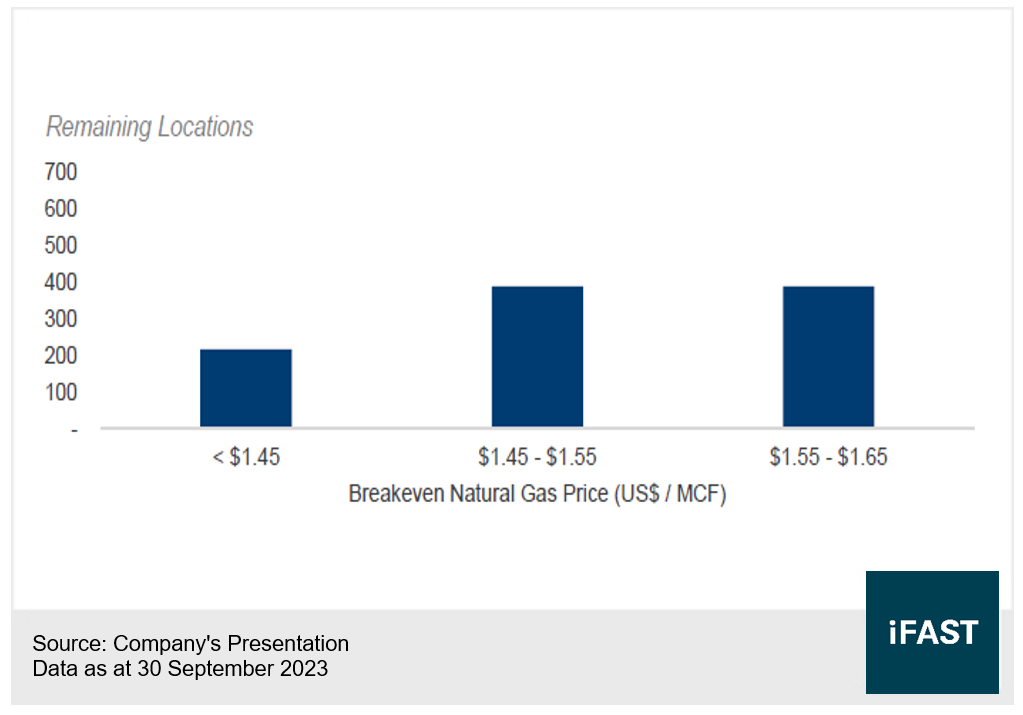
Murphy Oil has a cost advantage in natural gas production, with breakeven points for natural gas in the Tupper Montney project below $1.65.
Chart 1: Breakeven Points of Onshore Oil Projects
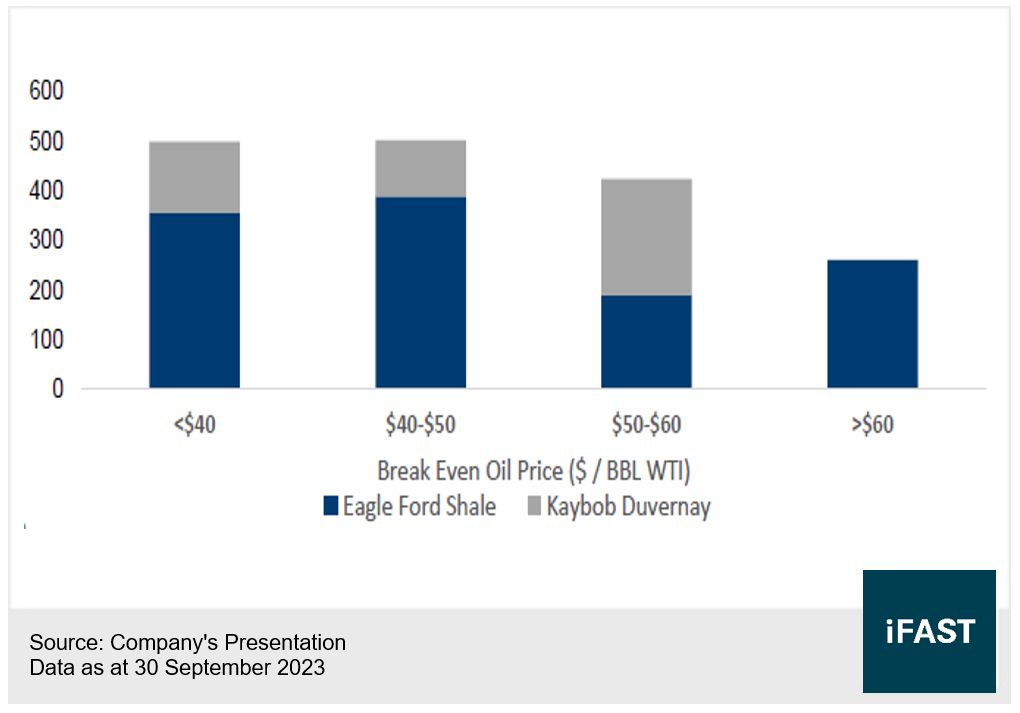
Chart 2: Breakeven Points of Offshore Oil Projects
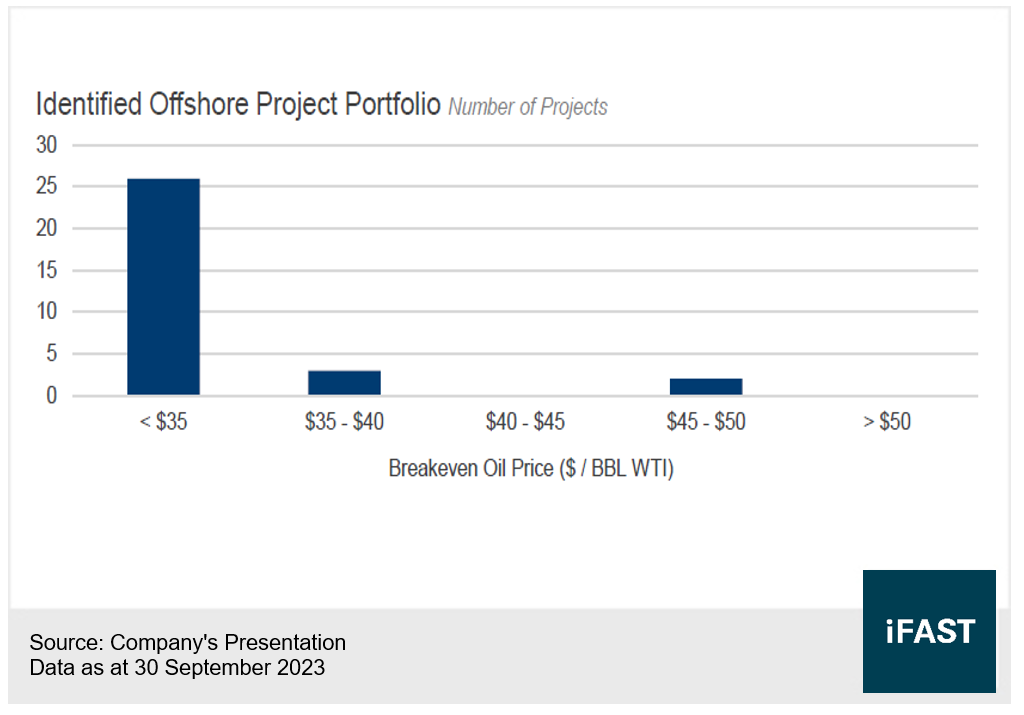
Chart 3: Breakeven Points of Natural Gas Under Tupper Montney Project
Under the current environment where the oil price is higher (WTI around $74) and natural gas is weak (Henry Hub gas price around $3), the oil part could bring in massive cash inflows for Murphy Oil and the natural gas could provide a certain degree of profits. The company has certain advantages in operation.
Fair Operating Performance with Potential in Significant Improvement in Free Cash Flow
As shown in Chart 4, in the first nine months of 2023, Murphy Oil’s EBITDA and free cash flow were around USD 1.63 billion and USD 0.88 billion, decreased by around 9% and 64%, due to the decline in the oil price and a one-time contingent consideration of USD 200 million, instead of deterioration in fundamentals. The overall operating performance was fair.
Chart 4: Murphy Oil’s EBITDA and Free Cash Flow
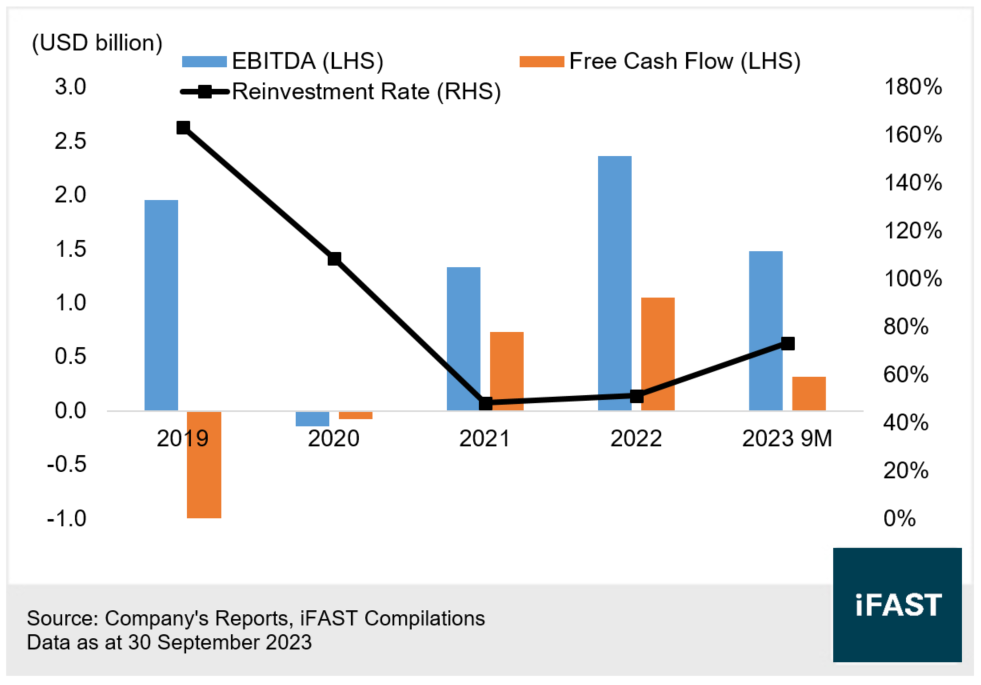
Murphy Oil's medium to long-term goal is to reduce its reinvestment rate to 40% (assuming an oil price of $75 and a gas price of $5). It hopes to gradually ramp up production to around 210 thousand barrels of oil equivalent (Mboe). The oil exposure accounts for around 55% of the total. This means an increase in the company's production and significant cost-cutting in capital expenditures, which could result in a significant improvement in free cash flow.
Balance Sheet Continues to Improve; Could Be Upgraded to Investment Grade by End-2025
On the credit side, as shown in Table 1, at the end of September 2023, Murphy Oil's total debt was USD 2.44 billion, a decrease of 13% from the end of 2022. The company is actively reducing its debt and its balance sheet continues to improve.
Murphy Oil's net debt/EBITDA and net debt/free cash flow were 1.1 times and 3.1 times respectively. The leverage level was decent. The interest coverage ratio increased to 16.8 times, showing the interest expenses not posing much pressure on the company. The average cost of borrowing dropped to 4.5%. The downward trend of the funding cost shows the company’s improving credit profile.
Table 1: Murphy Oil’s Credit Indicators
|
Dec 21 |
Dec 22 |
Sep 23 |
|
|
Total Debt* (USD billion) |
3.37 |
2.79 |
2.44 |
|
Net Debt* (USD billion) |
2.85 |
2.29 |
2.11 |
|
Net Debt* / EBITDA (times) |
2.1x |
1.0x |
1.1x |
|
Net Debt* / Free Cash Flow (times) |
3.9x |
2.2x |
3.1x^ |
|
Net Debt* / Market Capitalisation (times) |
71% |
34% |
35% |
|
Interest Coverage Ratio (times) |
6.0x |
15.7x |
16.8x |
|
Average Cost of Borrowings (%) |
6.1% |
4.9% |
4.5% |
|
*Total Debt and Net Debt include Asset Retirement Obligations ^Free cash flow excludes a contingent consideration of USD 200 million Source: Company’s Reports, iFAST Compilations Data as of 12 January 2024 |
|||
Murphy Oil's long-term objective is to upgrade its credit rating to investment grade (current rating: BB+ by S&P). As shown in Table 2, the company has three phases, with the company currently in "Murphy 2.0", where 75% of adjusted free cash flow (defined as free cash flow after quarterly dividends, acquisitions and distributions to non-controlling interests) will be used to reduce debt until long term debt falls below USD 1 billion and enter the "Murphy 3.0" phrase.
Based on the current oil price environment, it is expected that Murphy 3.0 will be completed by mid-2025. At the same time, we believe that the rating agencies already upgrade the company to the investment grade, i.e. BBB- or above.
When the company enters the "Murphy 3.0" phase, this means that its one-year free cash flow could cover the long-term debt at an oil price of $70 or more.
Table 2: Murphy Oil’s Capital Allocation Plan
|
Stage |
Condition |
Capital Allocation Plan |
|
Murphy 1.0 |
Long-term debt of over USD 1.8 billion |
|
|
Murphy 2.0 |
Long-term debt of USD 1.0 billion to USD 1.8 billion |
|
|
Murphy 3.0 |
Long-term debt of below USD 1.0 billion |
|
|
Source: Company’s Representation, iFAST Compilations Data as of 30 September 2023 |
||
Investors Could Consider Bonds due on or before 2028 with Yield to Maturity of Up to 6.2%
As a result of Murphy Oil's improving credit quality, the rating agency, S&P, upgraded the company's issuer credit rating from BB to BB+ with a stable outlook in June 2023, which was also in line with our previous judgment. Under the high oil price environment, the credit quality will continue to improve for most oil companies, including those who actively deleveraged, such as Murphy Oil.
Even if the oil price unexpectedly falls to below $70 in the future, Murphy Oil is still able to replenish its liquidity through issuing new bonds and other financing methods. The liquidity pressure remains under control.
At the same time, we expect that Murphy Oil will continue to redeem or repurchase bonds. In October 2023, the company exercised its call option to redeem the August 2025 bond with a principal amount of around USD 250 million. While this is favourable to the credit and bond performance, investors should also consider the yield to call or yield to worst before investing, as there is a certain probability that the company will exercise the call option of the bond to reduce debt, which is in line with the company’s growth and debt reduction targets.
Given Murphy Oil's strong cash flow and commitment to improving its balance sheet, investors could consider the bonds due on or before 2028, with the yield to maturity of 6.1% and 6.2% respectively (see Table 3).
Table 3: Murphy Oil Bonds Due on or Before 2028
|
Bond Name |
Years to Maturity |
Yield To Maturity |
Yield To Call |
| MUR 5.875% 01Dec2027 Corp (USD) | 3.9 |
6.1% |
6.9% (December 2024) 5.9% (December 2025) |
| MUR 6.375% 15Jul2028 Corp (USD) | 4.6 |
6.2% |
10.5% (July 2024) 5.7% (July 2025) |
|
Source: Bondsupermart Data as of 12 January 2024 |
|||
Related Risk
Murphy Oil’s revenues are primarily from the sale of crude oil and natural gas, which are highly volatile. This could cause its revenues to be volatile as well.
Murphy Oil seldom hedges the crude oil and natural gas exposures. For example, the company only hedges a small portion of natural gas at the moment. Compared to its peers, this might make the company more sensitive to oil prices or natural gas prices.
Besides, Murphy Oil might put a large portion of operating cash flow into the capital expenditure in order to increase production, and the company might invest a large amount of upfront capital expenditure into some offshore projects. This might lead to a lower free cash flow, affecting its repayment ability.
Conclusion
Murphy Oil is a mid-sized oil and gas company. The company is diversified in terms of oil production location. The onshore oil and the offshore oil represent around 56% and 44% of production respectively. The company is one of the few oil companies with a manageable operational risk but with a relatively large proportion of offshore oil projects.
Murphy Oil’s overall operating performance was fair, with the potential for significant improvement in free cash flow. Its balance sheet continues to improve. The company could be upgraded to investment grade by the end of 2025.
Investors could consider bonds due on or before 2028, with the yield to maturity of up to 6.2%, which has certain attractiveness.
Declaration: For specific disclosure, at the time of publication of this report, IFPL (via its connected and associated entities) and the analyst who produced this report hold a NIL position in the abovementioned securities.
Our podcast series, Yield Hunters, is available on Spotify, iTunes Podcasts and Google Podcasts. We share our thoughts on new bond issues and hold discussions on the fixed income space. Listen to our latest episode below and follow us!