On 24 January, the People's Bank of China (PBoC) and the National Financial Regulatory Administration jointly announced a notification about the relaxation of commercial real estate loan uses. For those real estate companies that are “well-run and with bright prospects”, banks could provide commercial property loans for them to repay the other real estate loans and bonds issued by them or their parent companies. The notification is effective until the end of 2024.
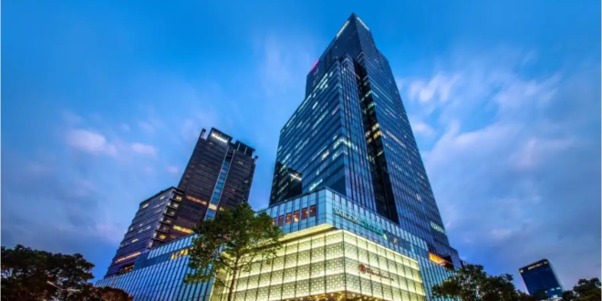
Commercial real estate loans mean secured loans related to profitable and completed commercial real estate, including but not limited to commercial complexes, shopping malls, business centers, offices, hotels, cultural and tourism real estate projects, but excluding residential properties and rental housing.
The notification pointed out that the value of loans should not exceed 70% of the appraised value of the property. The term of the loans shall generally not exceed 10 years, and the maximum term shall not exceed 15 years. The maturity date of the loans should be at least five years prior to the expiration date of a certificate of title in that property. In addition, the loans should be secured by the property, and the operating revenues from the property should be used for repayment of the loan principal and interest in the first priority. The banks might require the real estate companies to be co-borrowers or guarantors of the loans.
In the past, generally, such commercial real estate loans were subject to specific purposes and restrictions, and could only be used to supplement the property's operating capital or to repay debts generated by the construction of the project, or acquisition of the property. The loans could not be used to pay other debts.
Hence, we believe that the notification could be favourable to those non-defaulted real estate companies with a higher proportion of investment properties. These companies could take out more commercial real estate loans, increase the loan-to-value (LTV) ratios of their investment properties and use the proceeds to repay other debts or/and even bonds in the open market. This would enhance their liquidity and mitigate the short-term debt default risk.
These are some examples of potential beneficiaries:
Table 1: Potential Beneficiaries of the Notification
Recurring Revenues / Total Revenues* (%) |
Investment Properties / Total Assets (%) |
Net Debt / Investment Properties (%) |
Remark | |
| Wanda | 93% | 75% | 37% | The company extended its offshore bond, which might be considered as debt default |
| GLP China | 66% | 68% | 54% | Investment Properties include its investment in JVs and Associates |
| Shui On Land | 18% | 50% | 53% | / |
| China South City | 17% | 46% | 64% | The company extended its offshore bonds, which might be considered as debt default |
| Hopson Development | 12% | 29% | 84% | / |
| Seazen Group | 6% | 26% | 42% | / |
| Longfor Group | 10% | 25% | 70% | / |
| China Overseas Land & Investment Limited | 4% | 21% | 71% | / |
| China Resources Land | 14% | 21% | 36% | / |
| China Jinmao | 7% | 9% | 231% | / |
| Vanke | 3% | 8% | 254% | Recurring revenues and total revenues include revenues of SCPG Holdings, which is China Vanke’s associate |
| Gemdale Group | 6% | 6% | 93% | / |
| Some Large Hong Kong Real Estate Companies, including Sun Hung Kai Properties and New World Development | / | / | / | / |
| Remark | The higher the number, the greater the benefit is likely to be | The lower the number, the greater the benefit is likely to be | / | |
| *Recurring revenues include rental revenues, hotel
operation etc., but not include management fee and other revenues Sources: Company’s announcements, iFAST compilations Data as of 30 June 2023 |
||||
However, investors have to pay attention that the banks are the ultimate decision-makers on whether or not to lend (or whether to borrow more) to real estate companies. Also, this notification might not benefit the real estate companies if they are not considered to be “well-run and with bright prospects”.
Finally, we would like to reiterate that the Chinese real estate sector is still facing a large number of debt maturity, confidence crises and sales downturns. Investors should take a more conservative approach towards Chinese real estate (especially for the traditional property developers, defined as those with a “high liabilities, high leverage and high turnover” business model). Those traditional property developers who have a better credit profile might gradually deplete their liquidity and be defaulted on their debts.
Declaration: For specific disclosure, at the time of publication of this report, IFPL (via its connected and associated entities) hold a NIL position in the abovementioned securities. The analyst who produced this report holds a GLPSP 4.500% Perpetual Corp (USD) position.
Our podcast series, Yield Hunters, is available on Spotify, iTunes Podcasts and Google Podcasts. We share our thoughts on new bond issues and hold discussions on the fixed income space. Listen to our latest episode below and follow us!