Receive first-hand news on the latest bond issues, credit updates and special events when you join us on our Telegram channel at https://t.me/bondsupermart!
Note: This is an edited version of an article published earlier on our affiliates on 2 Jul 2021
Highlights:
The Federal Reserve (Fed) is likely to start tapering asset purchases amid inflation concerns, which will pose upward pressure on Treasury yields. Long-term investment-grade bonds face the risk of a higher interest rate.
High yield bonds are set to benefit as the economy recovers; Asian and emerging markets bonds are growing to become more attractive now.
Fundamentals of the Chinese real estate sector remain sound. A recent spike in yields for some real estate bonds provide opportunities for investors – so long as issuers are selected prudently.
In mid-June, the U.S. Bureau of Labour Statistics announced that the CPI in May was up 5.0% YoY, which exceeds the 4.7% market consensus and has been the largest annual growth in the last 13 years.
Despite the Fed’s claim of inflation being “transitory”, more than half of committee members in the last FOMC meeting believe that there will be two rate hikes in 2023. In other words, tapering is coming soon.
We explore bond investment strategies that investors can consider given this macro backdrop.
Treasury Yields Still Face Upward Pressure
The nominal 10-year Treasury yield consists of two components: real yield and expected inflation. Real yield is determined by market demand and supply. The last time it dropped below 0% was during the European debt crisis in 2011 (see Chart 1).
Chart 1: Real Yield and Expected Inflation of 10-year Treasury Bond
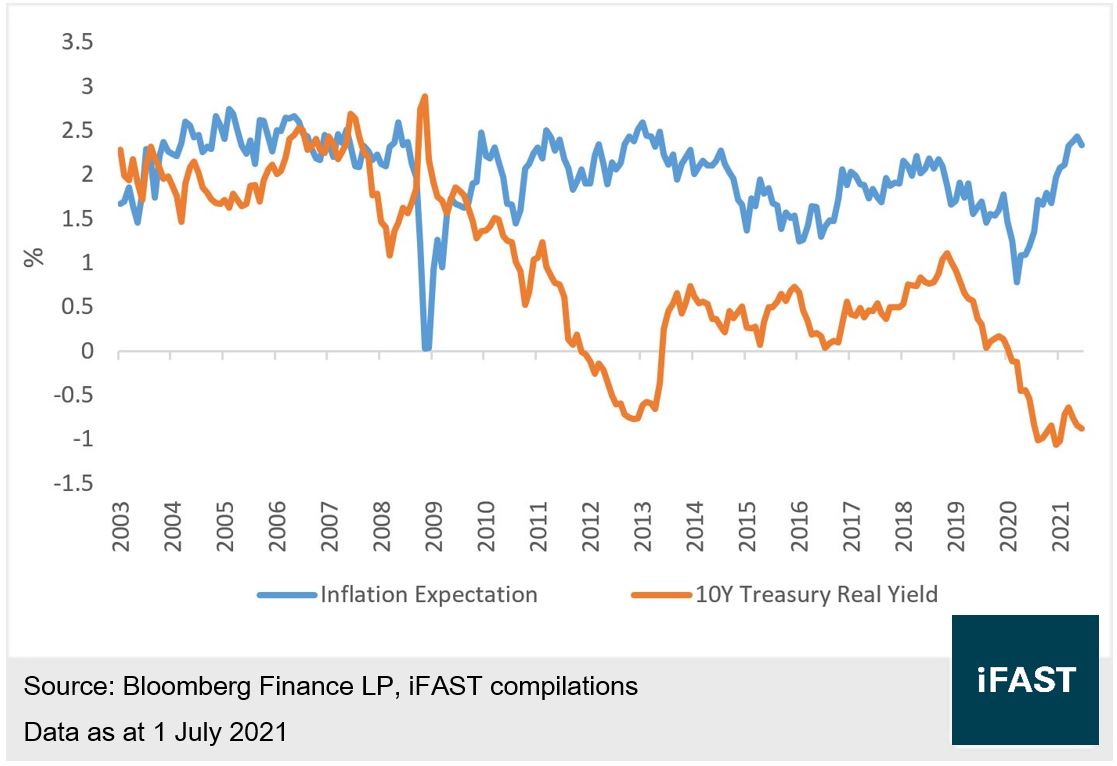
In 2013, because of the Fed’s announcement of plans to gradually exit from its “Quantitative Easing” (“QE”) program, real yield rebounded sharply by over 100 basis points from its historical low within six months – giving rise to the name ‘Taper Tantrum’ by the market. In actual fact, the Fed did not implement the first-rate hike until late 2015, which was 2.5 years later.
Powell has reiterated that the Fed would like to avoid any form of Taper Tantrum again. However, under Biden’s advocacy for the Modern Monetary Theory (MMT), a USD 6 trillion stimulus package is expected to be delivered soon. Given the Government’s determination to adopt fiscal policies in order to maximize employment (distinctive from the approach of adopting monetary policies in traditional economics), it is likely that the Treasury will keep issuing new notes in the future.
At this juncture, if the Fed decides to exit from QE, which includes shrinking its USD 120 billion monthly bond-buying program, it may lead to a disequilibrium in supply and demand. Consequently, it would pose upward pressure on real yield, which is currently at -0.8%. Moreover, under the reopening of the economy, the Fed has already readjusted its forecasts for 2021 and 2022 GDP growth upwards to 7% and 3.3% respectively. As a result, the need for a higher interest rate is more significant. Under a rate hike cycle, the increase in cost of borrowings will inevitably push up Treasury yields.
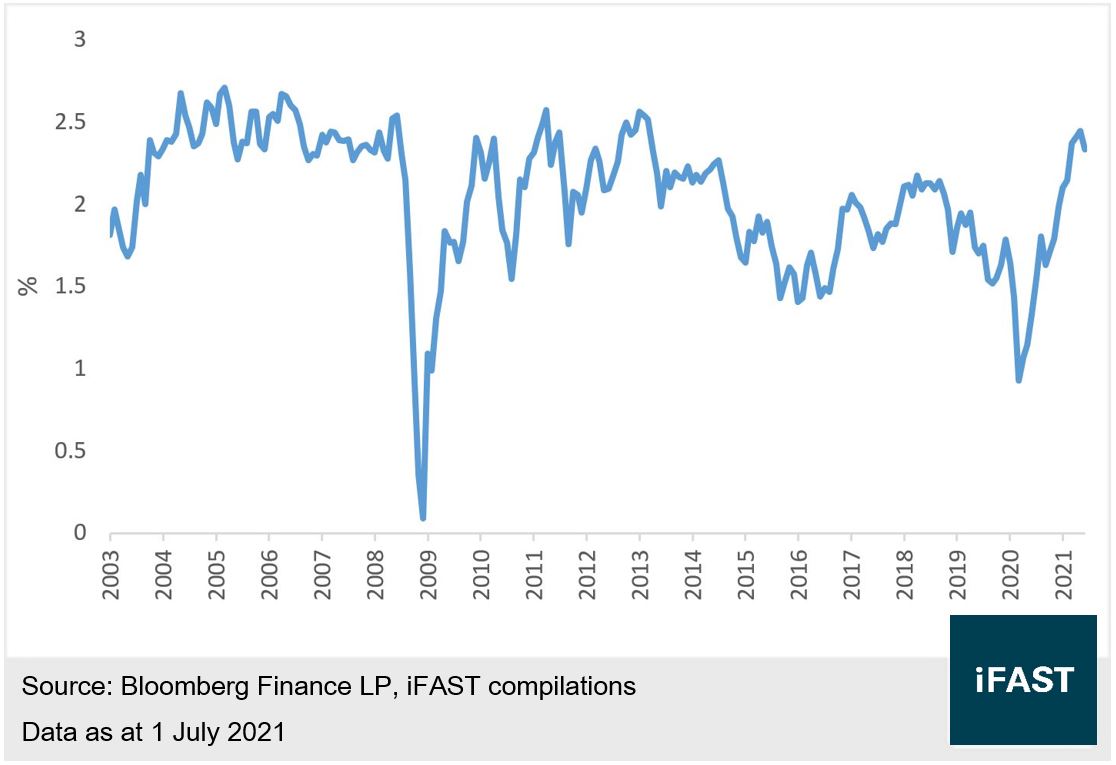
Since the launch of the Treasury Inflation-Protected Securities (TIPS) in 2003, the peak of the 10-year inflation expectation was 2.7% (see Chart 2). Nonetheless, we believe that the nominal yield will continue to rise even if inflation expectations have a ceiling. This is because the real yield will become the key contributor in the long run.
Chart 2: 10-year Inflation Expectation
High Yield Bonds are More Attractive than Investment Grade Bonds
High grade bonds are more sensitive to rate movement. Therefore, we believe long-term investment grade bonds will carry a higher interest rate risk. Unless investors intend to hold them until maturity, they should be more careful when buying these types of bonds.
High yield bonds remained strong over the past year, with credit spreads narrowing as a result of economic recovery; significantly different from the performance of investment grade bonds (see Chart 3).
Chart 3: Investment Grade and High Yield Corporate Bonds Yield
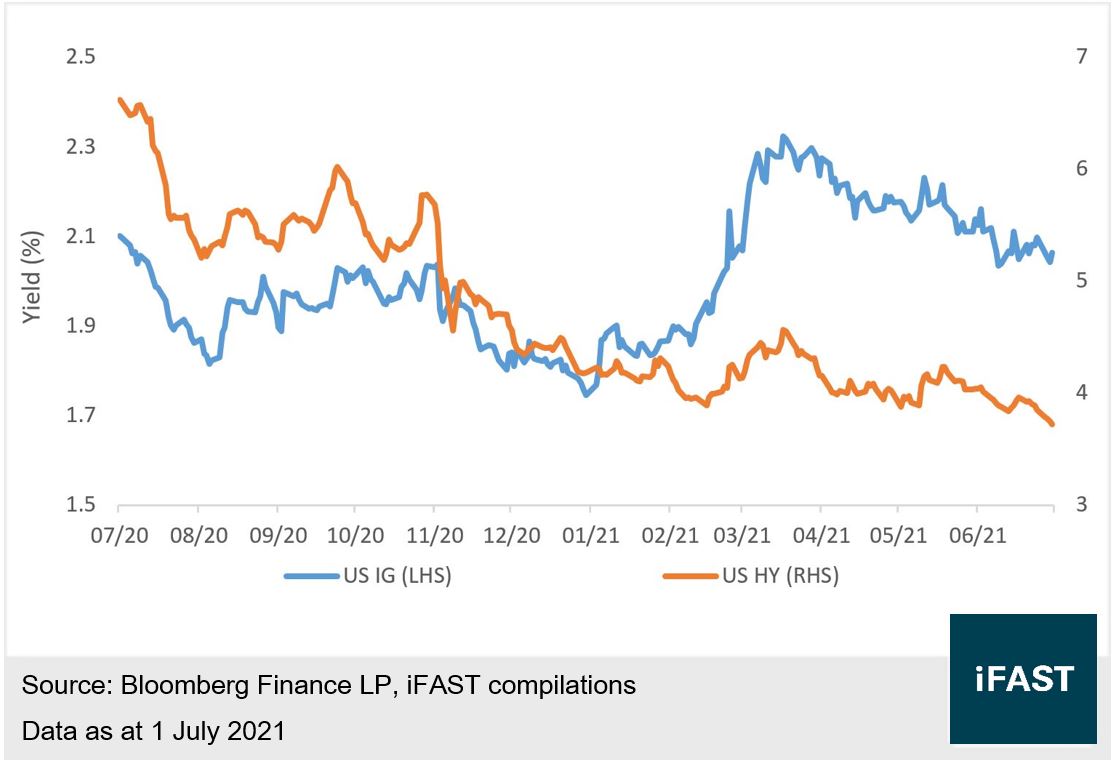
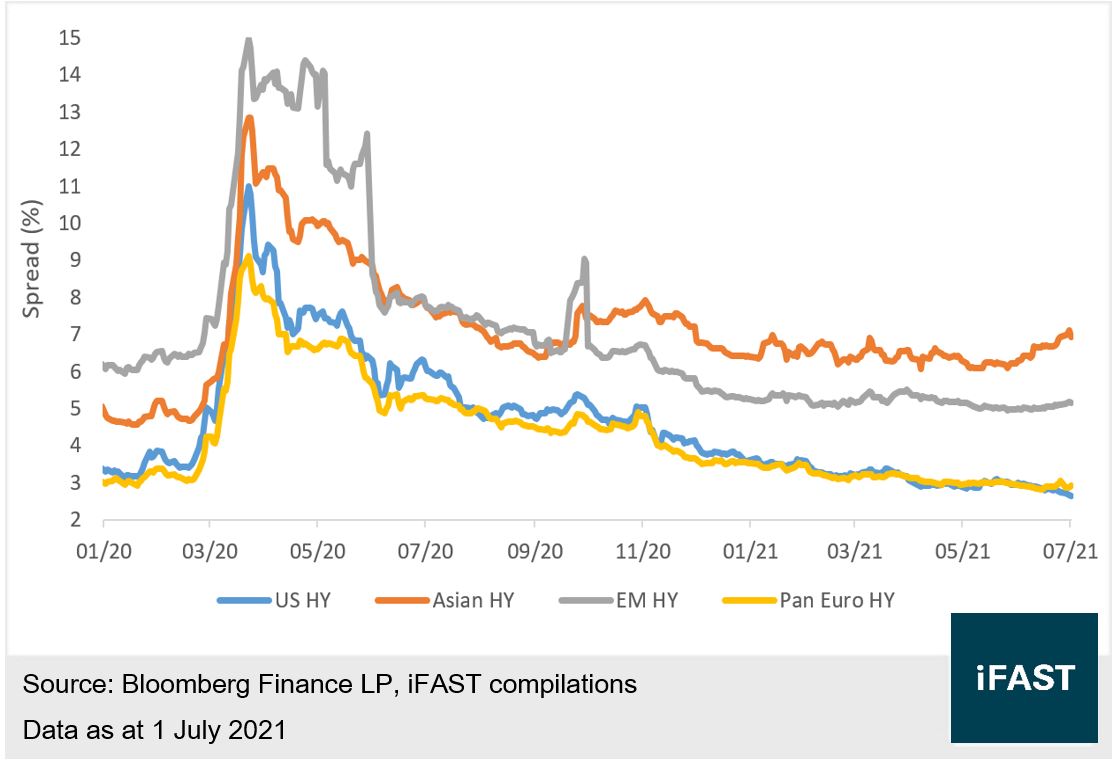
Geographically, Asian and emerging market bonds are still offering higher relative yield spreads (see Chart 4). Among them, Chinese real estate bonds remain under the market spotlight as they account for nearly half of the Asian high yield bond index.
Chart 4: High Yield Bond Spreads by Geographical
Locations
Chinese Real Estate Sector: Strong Fundamentals despite Challenges Abound
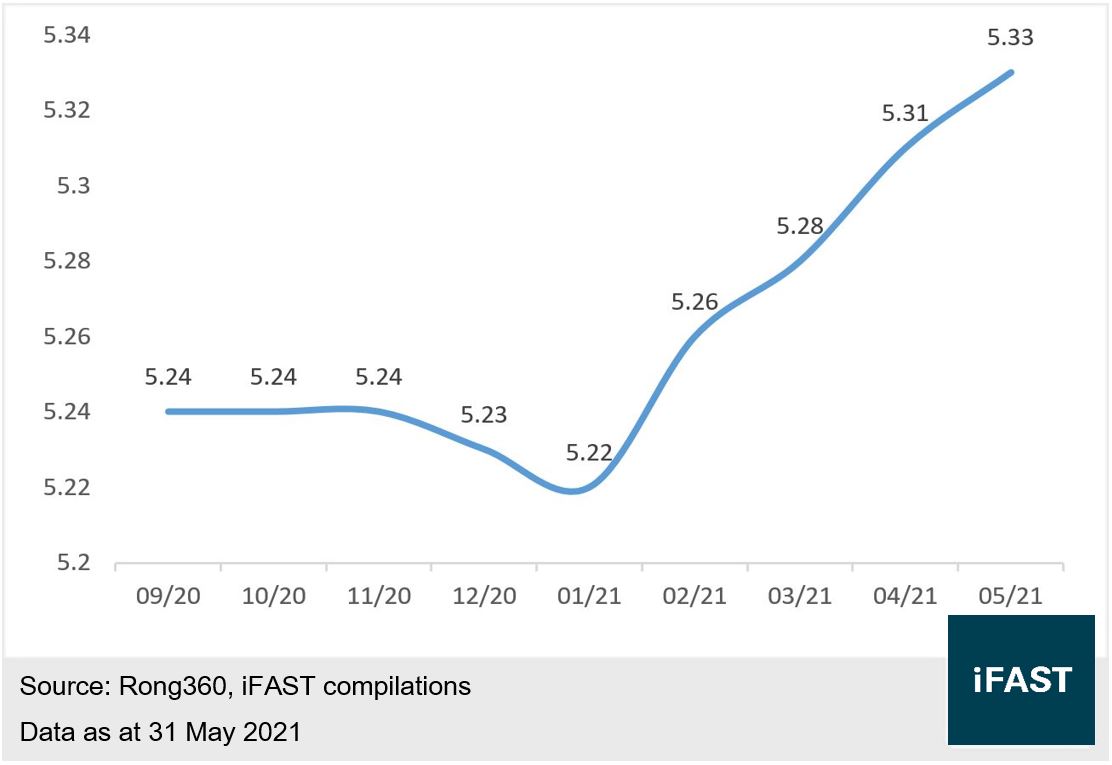
The Chinese Real Estate sector continues to face tight regulations under the direction of “houses are built to be lived in, not for speculation”. Due to the buying and selling limitations imposed in major cities, regulators have also implemented the “Two Red Lines” policy on banks which target real estate loans. In addition, the Central Bank has apparently been tightening its monetary policy in recent months. Although the 5-year Loan Prime Rate (LPR) remains unchanged, the mortgage rate has continued to climb for consecutive months (see Chart 5). This will affect market demand to a certain extent.
Chart 5: Nationwide Mortgage Rate on First Housing
On the other hand, the financing channels of property developers are also restricted. Apart from the widely-known “Three Red Lines”, sources indicate that regulators are attempting to tighten control on non-standard financing channels, including prohibiting asset management plans to invest into mortgage balance ABS products, and limiting the issuance of supply chain ABS products.
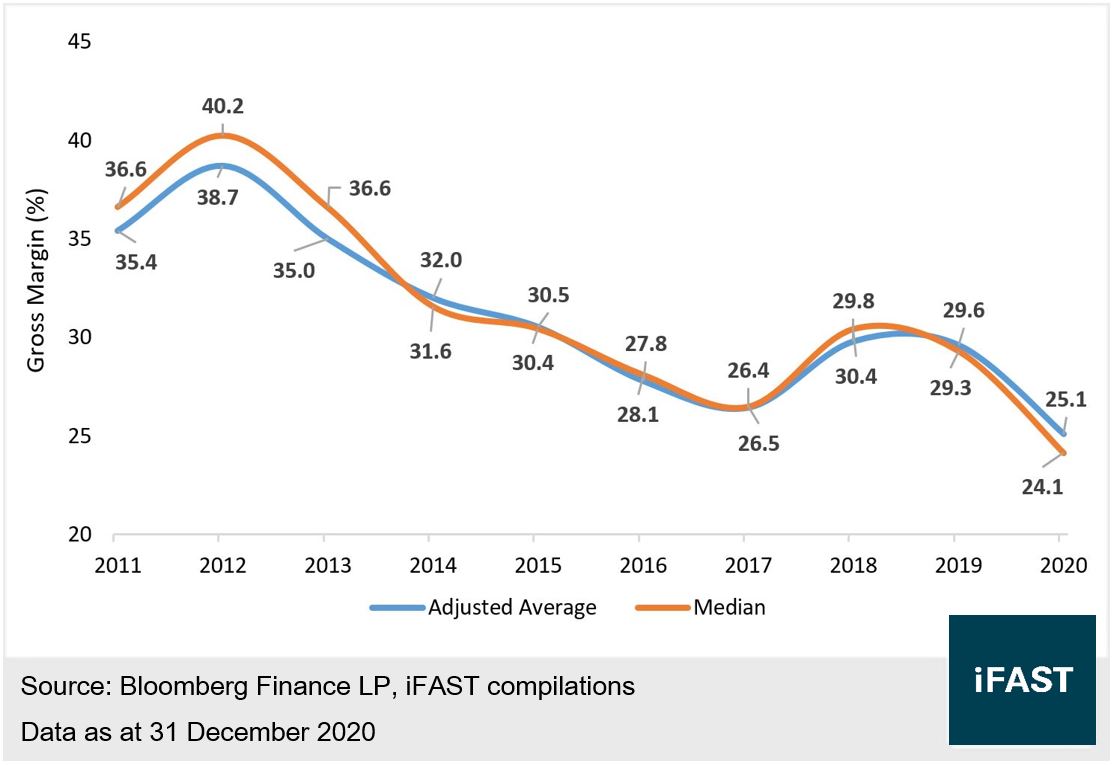
As a result, many developers have to maximize their cash flows by lowering prices in exchange for volume. The overall profit margin is under pressure due to large promotional discounts, which will deteriorate the developers’ long-term interest-servicing ability as shown in Chart 6 below.
Chart 6: Gross Margin of Mainstream Developers
Nonetheless, we believe Chinese real estate bonds are worth the attention because of other crucial factors, such as sales amount, land cost, housing price and issuers’ credit status.
The deleveraging result in the Chinese real estate sector is remarkable. More than 90% of developers have reached the "yellow light" or "green light" level under the “Three Red Lines” guidance. As a result, the improvements in net gearing and cash to short-term debt ratio are the most significant.
In terms of contracted sales, the national residential sales amount increased by 56.5% YoY throughout Jan-May according to the National Bureau of Statistics. The growth remains strong and we believe it is highly possible to reach the double-digit growth that we forecasted earlier this year.
Under the first round of centralized land supply, the land premium rate of several major cities remained high, reflecting a positive market outlook from developers. Despite increasing regulations, housing prices are still resilient, as the 70 Large-and-medium Cities Housing Price Index has been increasing consistently for over 68 consecutive months, while the average MoM growth in 2021 has reached 0.5%. Overall, the market fundamentals are healthy.
Selecting Suitable Issuers Becomes More Important amid Increasing Volatility
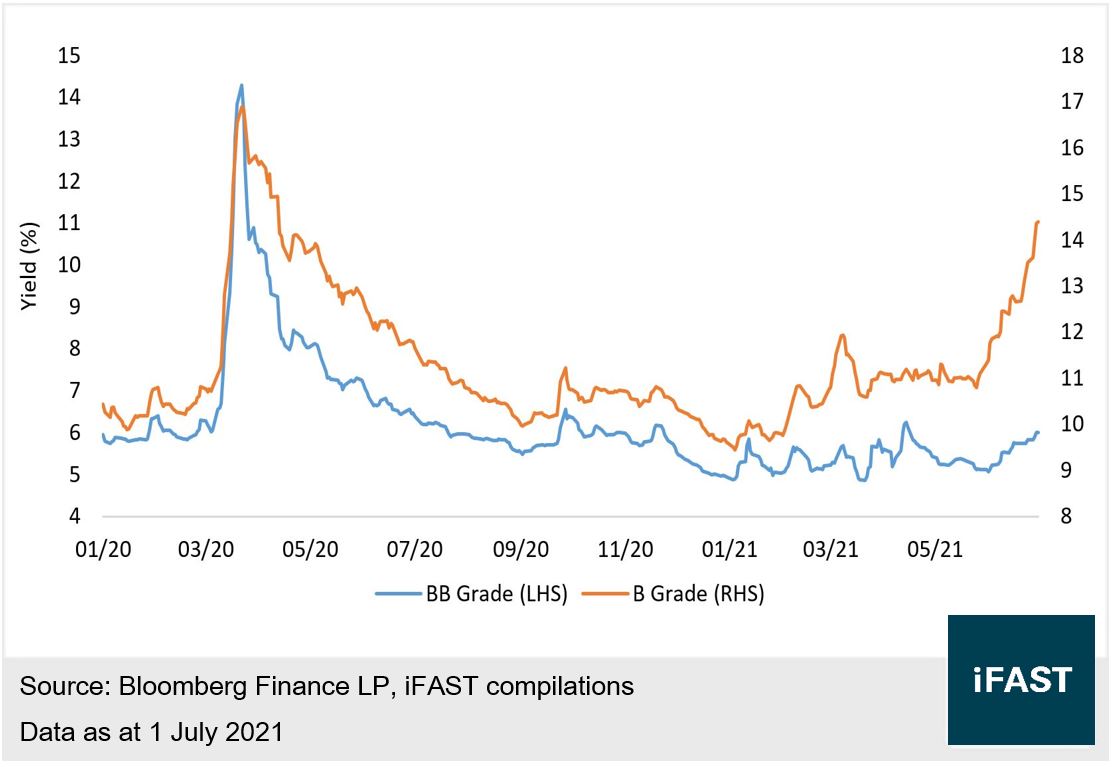
Since January, Chinese real estate bonds have come under pressure due to several credit events involving companies like China Fortune Land, China Huarong and China Evergrande. With the increasing yields of some B- and BB-rated bonds (see Chart 7), we believe more investment opportunities have emerged, especially for companies who have been impacted because of the selloff in the entire sector and not due to deterioration in their own credit. Thus, selecting suitable issuers have become more important now.
Chart 7: BSM Chinese Real Estate USD Bond Yield Index
In fact, we noticed that it is more common for issuers to use different ‘hidden debt’ approaches to improve their net gearing ratio. This includes the use of minority interests, operating leverage and off-balance-sheet borrowings. To evaluate their real debt level, we can compare the difference between the equity and profit distributions of minority interests, monitor the adjusted liabilities to assets ratio and the change in payables, and focus on the investment in associates as well as the external guarantee amount. We think these indicators will become more useful for future analysis.
In summary, we continue to favour first-tier (the top 20) developers, and some second- and third-tier issuers which are either growing rapidly or have a healthy credit profile. In addition, we still maintain our “Short term, high yield” bond investment strategy, which generally refers to holding bonds due in three years or less, especially for highly leveraged issuers.
Our podcast series, Yield Hunters, is available on Spotify, iTunes Podcasts and Google Podcasts. We share our thoughts on new bond issues and hold discussions on the fixed income space. Listen to our latest episode below and follow us!
Declaration: For specific disclosure, at the time of publication of this report, IFPL (via its connected and associated entities) has a principal position in EVERRE 7.500% 28Jun2023 Corp (USD) and EVERRE 8.250% 23Mar2022 Corp (USD). The analyst who produced this report holds a NIL position in the abovementioned securities.