- Credit spreads and underlying fundamentals suggest that Evergande’s fallout is likely domestic, contained within China's high yield bond market. We currently see little risk of spillover to China investment-grade bonds given the absence of funding stress.
- Within China's high yield bond market, credit stress is largely contained within the property sector. Yields of property bonds have surged, reflecting mounting risk, while those of non-property bonds remain largely unaffected.
- We expect minimal spillover to global credit market given the limited exposure to China bonds. Additionally, most markets are not showing material signs of stress after the Evergrande fallout while spillover fears are gradually abating.
- Amongst major credit markets, Asian HY bonds are more at risk given the higher underlying exposure. However, at the moment, we are not overly concerned given the smaller direct exposure to Evergrande bonds and our expectation that risk will be contained within China's property sector.
Evergrande, China’s largest financial concern, has made international headlines again. Concerns of a potential default sparked fears of an acute spillover impact on global credit markets. Consequently, major credit markets were hit by a blanket of pessimism, and some suffered persistent selling over recent weeks. As the saga unfolds, we assess the scope and degree of spillover domestically and globally to uncover potential impacts on major credit markets.
Impact is largely domestic, contained within China HY bond market
To determine the potential of a spillover, we assess the scope of impact within China bond markets. Comparing credit spread between China high yield (HY) and China Investment grade (IG) offshore USD bonds, we noted a divergence in spread levels starting in June ’21 as news regarding Evergrande became progressively dire. During this period, the spread of China HY offshore bond index exploded higher while the spread of its IG counterpart tightened (chart 1).
This divergence is significant and, in conjunction with the spread tightening of China IG bond index, suggests an absence of material stress within China IG offshore bonds. Credit spread of the latter remains low and does not reflect funding stress that may be triggered by the Evergrande fallout. Moreover, the spread has started to retrace lower after a brief widening following the barrage of bad news from Evergrande.
Similarly, China onshore IG bonds are displaying resiliency amidst the Evergande fallout. Credit spread for the Liquid China Credit Index (tracking the most liquid portion of the IG RMB-denominated bonds) initially widened by 18bps from a YTD low of 50 bps initially when news of Evergrande’s potential default first hit (chart 2). However, we do not consider it as a concerning sign of credit stress as the spread is still very much below the one-year high of 80 bps and the surge is rather short-lived (spread has begun to retrace down).
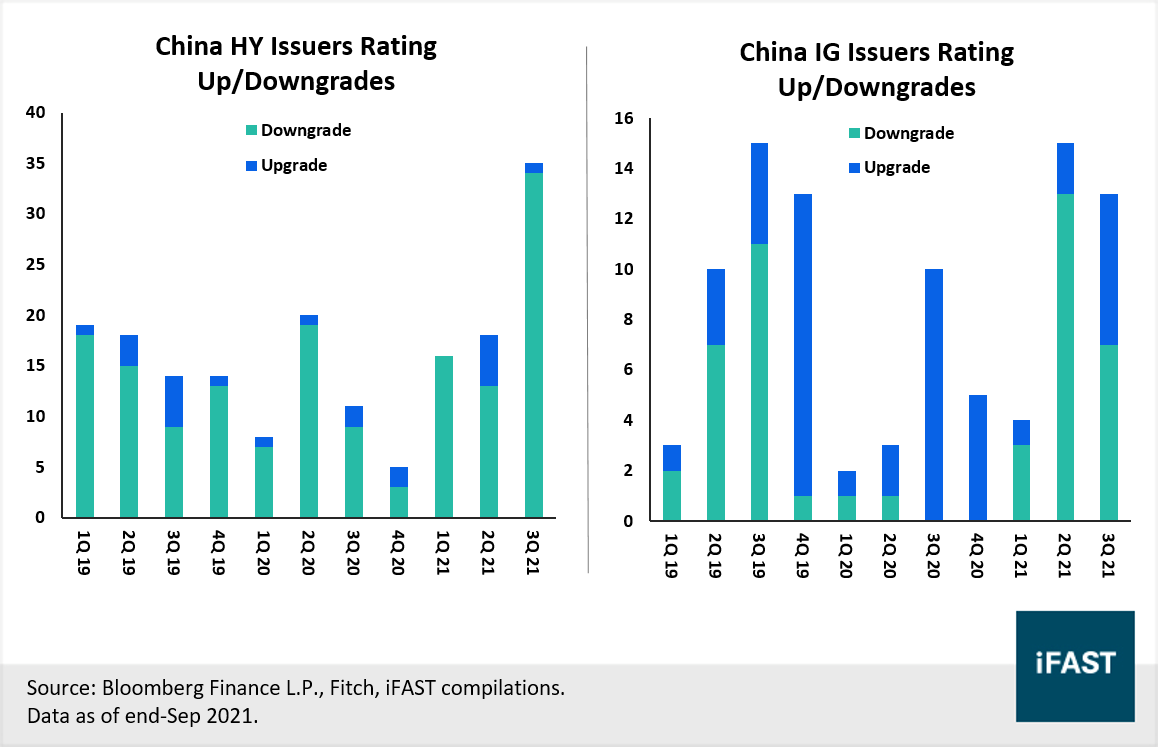
A detailed look at the changes in credit quality of China’s corporate issuers highlights the reason for an absence of spillover into the IG bond market. In the year-to-date (YTD), numerous HY issuers have been dealt with credit rating downgrades (by rating agencies) while IG issuers were concurrently receiving more upgrades and fewer downgrades (chart 3). In other words, China's HY issuers are seeing a deterioration in credit quality while those of IG issuers are ameliorating.
Chart 1: Credit spread of China HY offshore bonds has exploded higher while those of IG offshore bonds have barely reacted
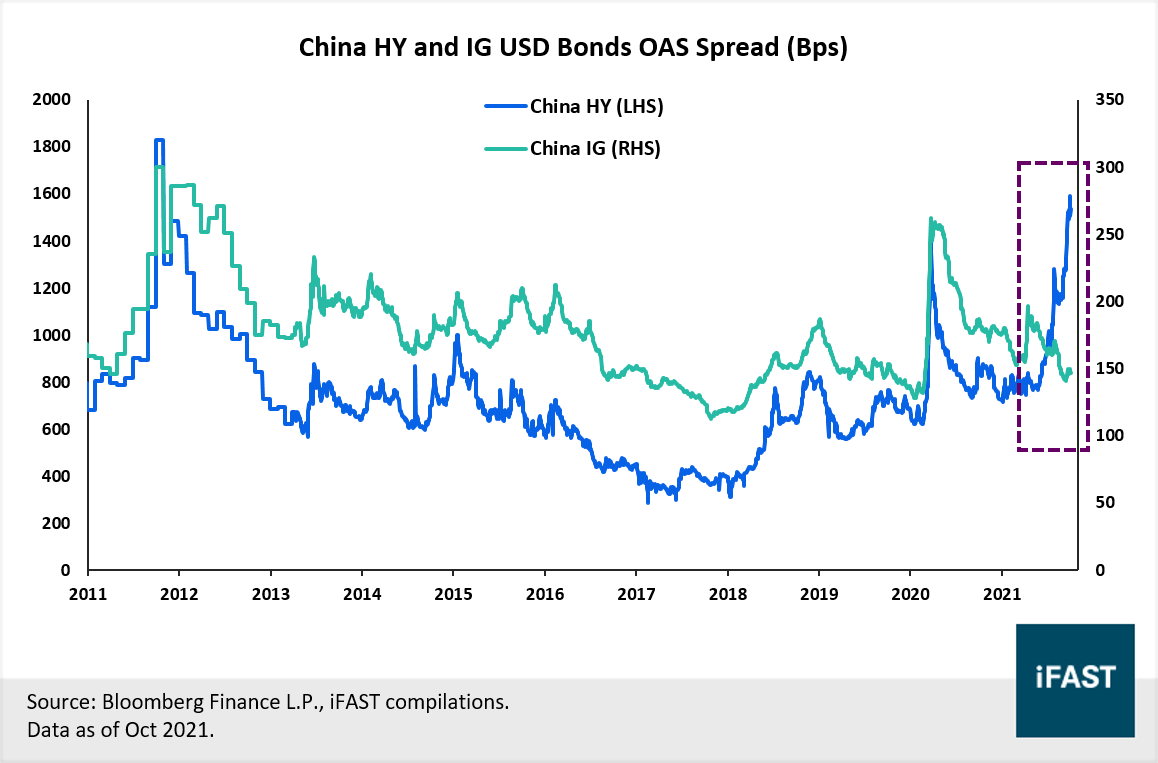
Chart 2: Credit spread of the most liquid China onshore bonds is starting to retrace lower
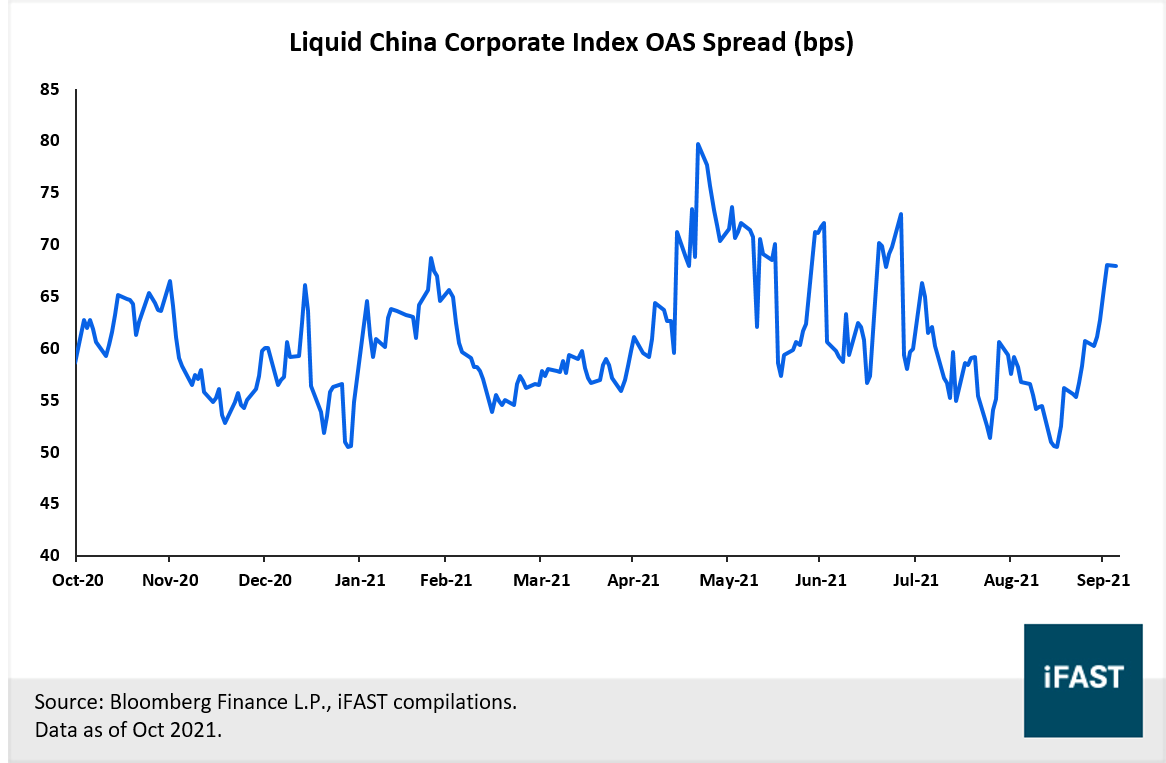
Chart 3: Credit rating up/downgrades for China issuers explain why IG issuers are relatively resilient
Stress is localised to China’s property sector, within the HY bond market
A closer look at yields of the largest players within China HY offshore bond index suggests that credit stress, at the moment, is largely contained within the property sector and non-property sectors are not implicated. There is an observed distinction in yields across China HY bond sectors - yields of property bonds have surged (reflecting mounting credit risks) while those of non-property bonds remain largely unaffected.
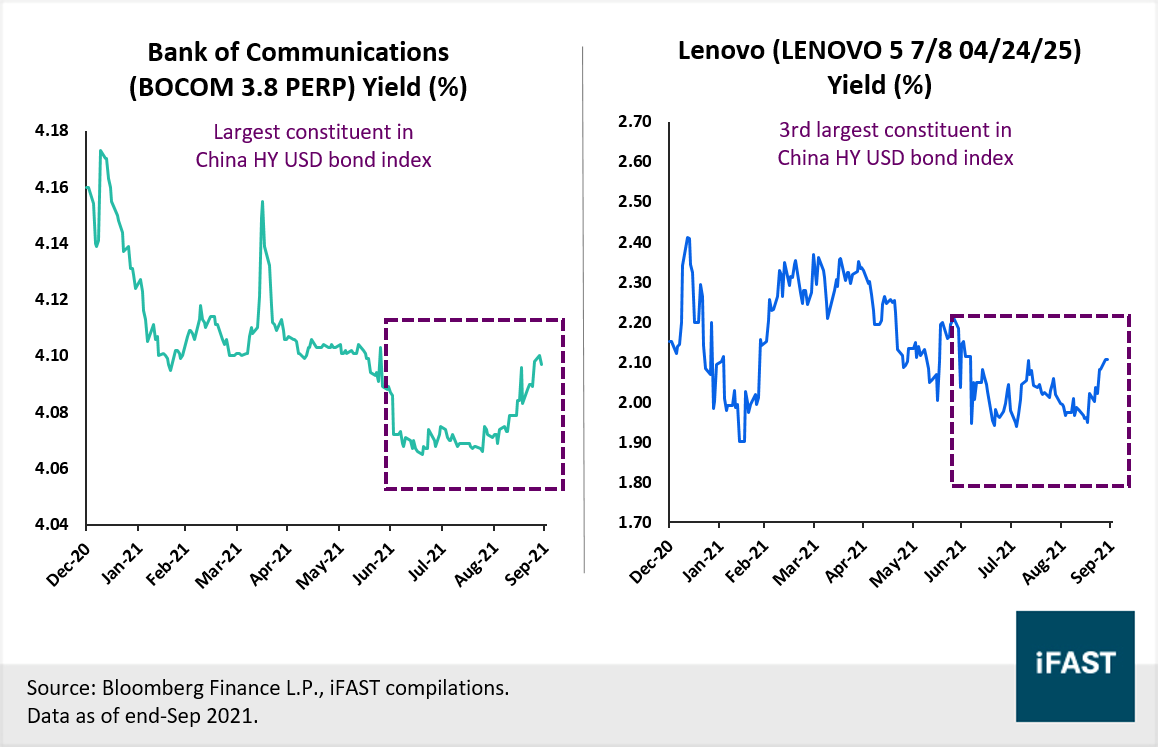
An in-depth look at the largest constituents of China HY offshore bond index (charts 4 – 6) show that i) yields have been relatively flat and below YTD high for Bank of Communication and Lenovo bonds – both non-property bonds whereas, ii) yields for property bonds such as those from Kaisa Group Holdings, Sunac, and Evergrande have skyrocketed, making YTD highs.
Chart 4: Yields of Evergrande’s bond exploded higher, reflecting the mounting credit risk…
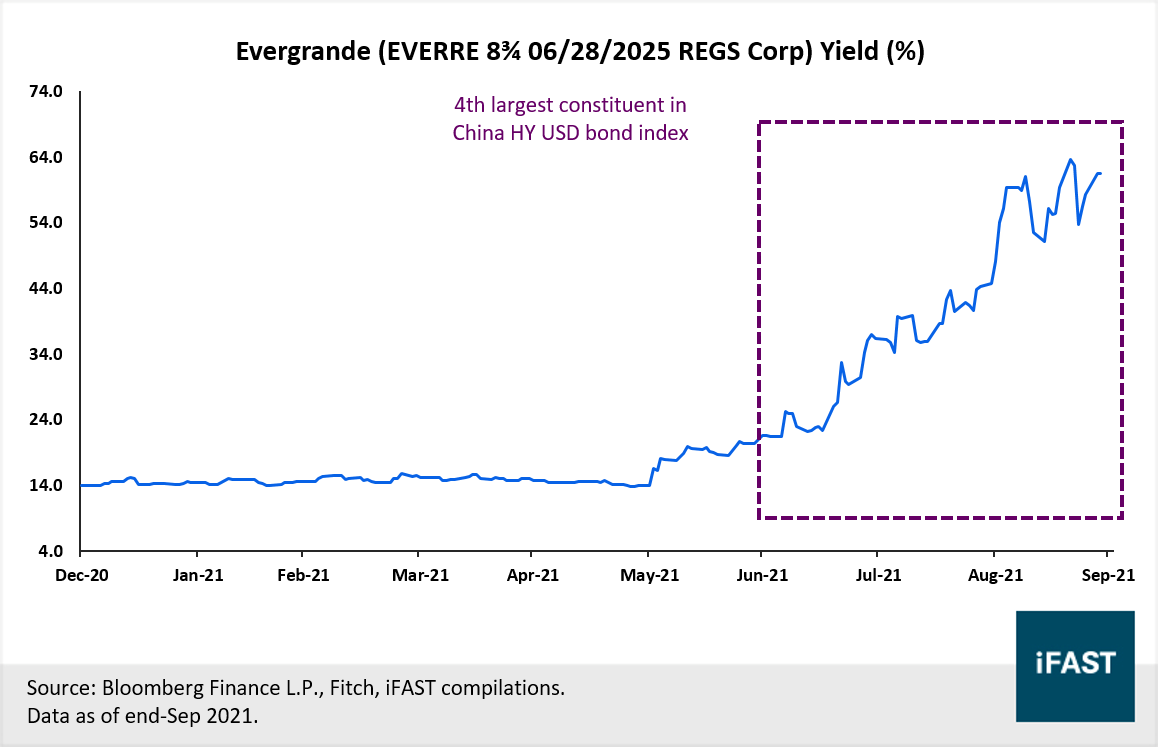
Chart 5: … the same can be observed from yields of other major property developers…
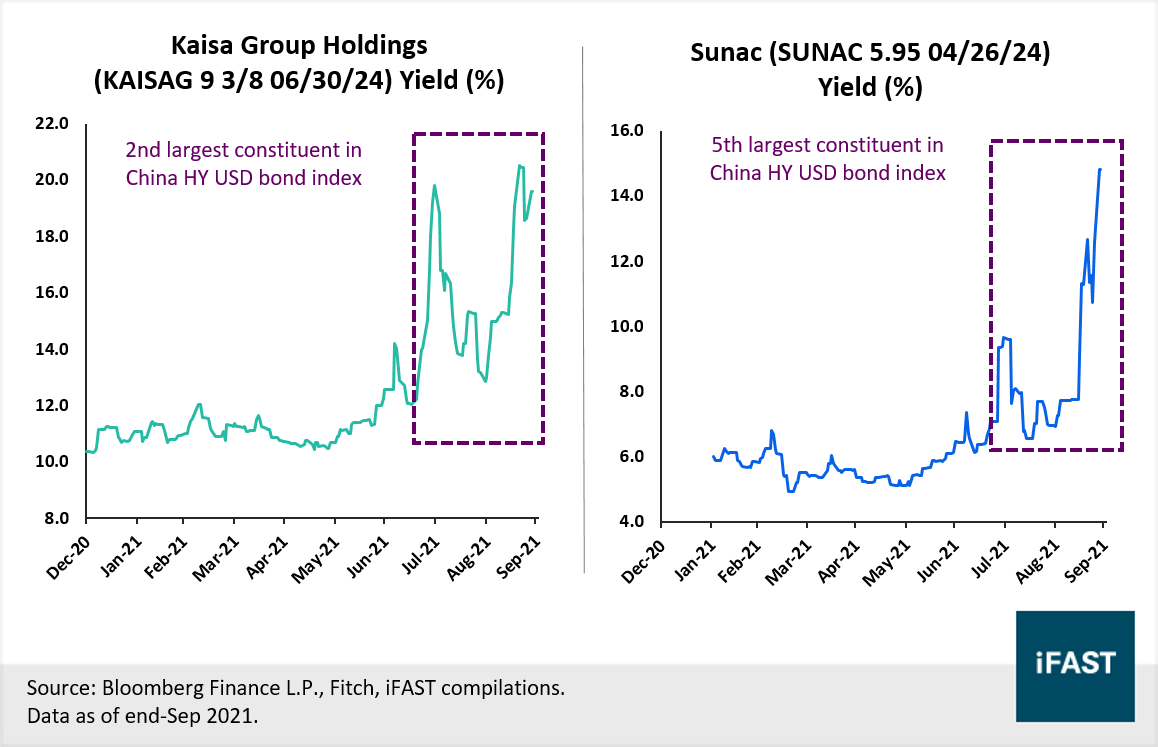
Chart 6: … however, yields of non-property issuers did not react as much
China sovereign bonds are currently unaffected
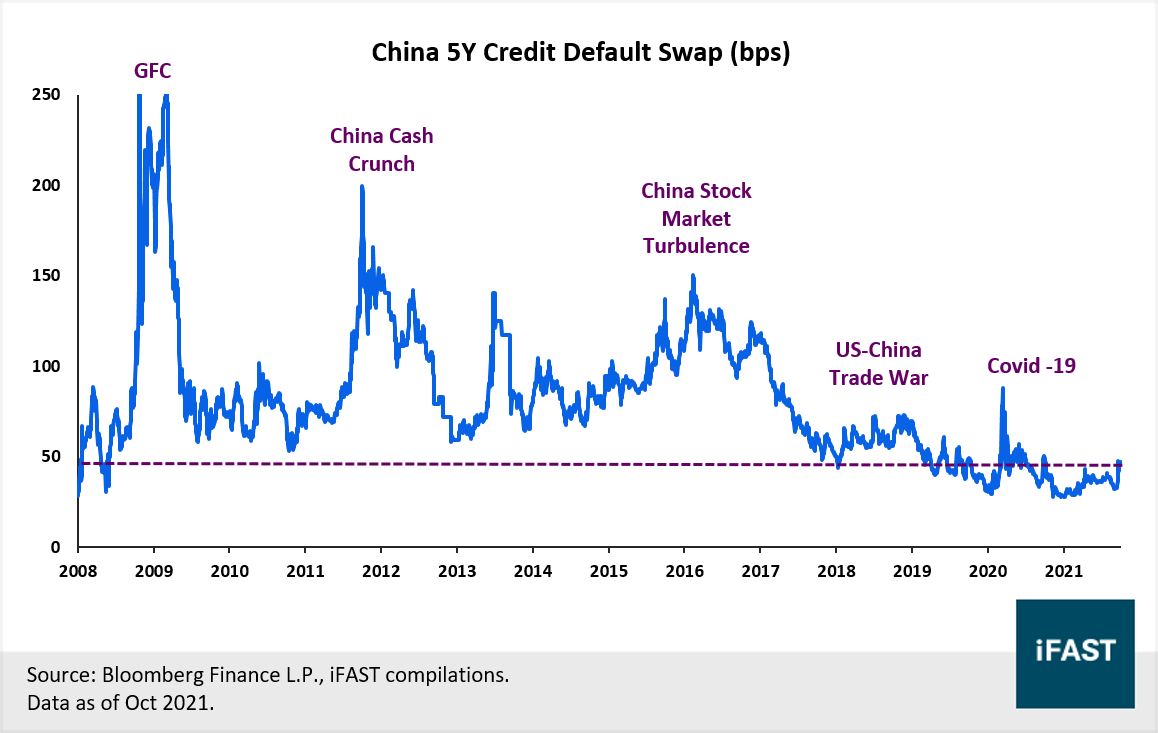
At the current moment, we also see muted direct impact on China sovereign bonds and its credit default swap (CDS) further suggests little systematic risk (CDS is an indicator for sovereign default risk as the spread captures the default risk while excluding liquidity risk from sovereign bonds).
While the spread of China CDS has risen, suggesting an uptick in default risk, it remains low relative to history (chart 7). China’s CDS spread is currently below levels seen during 2018’s US-China trade war, 2015’s China stock market turbulence, 2012’s cash crunch, and 2008’s GFC – periods where severe credit stress was observed. In our view, these are signs that the sovereign bond space is not yet facing significant stress and ultimately, systemic risk from the Evergrande fallout. In the event of a systemic risk, we would likely see a sustained widening in spread, unlike what the spread action has seen lately.
Chart 7: While CDS spread has risen, current level remains low relative to history and compared to previous credit negative events (‘18, ’15, ’12 and ‘08)
No signs of spillover to the global credit market
Looking beyond the China bond market, we note that the global credit market is showing no signs of spillover. Assessing credit spreads across regional credit segments, it is clear that the spillover is limited by the exposure to China bonds.
I. Developed market (DM) credit markets
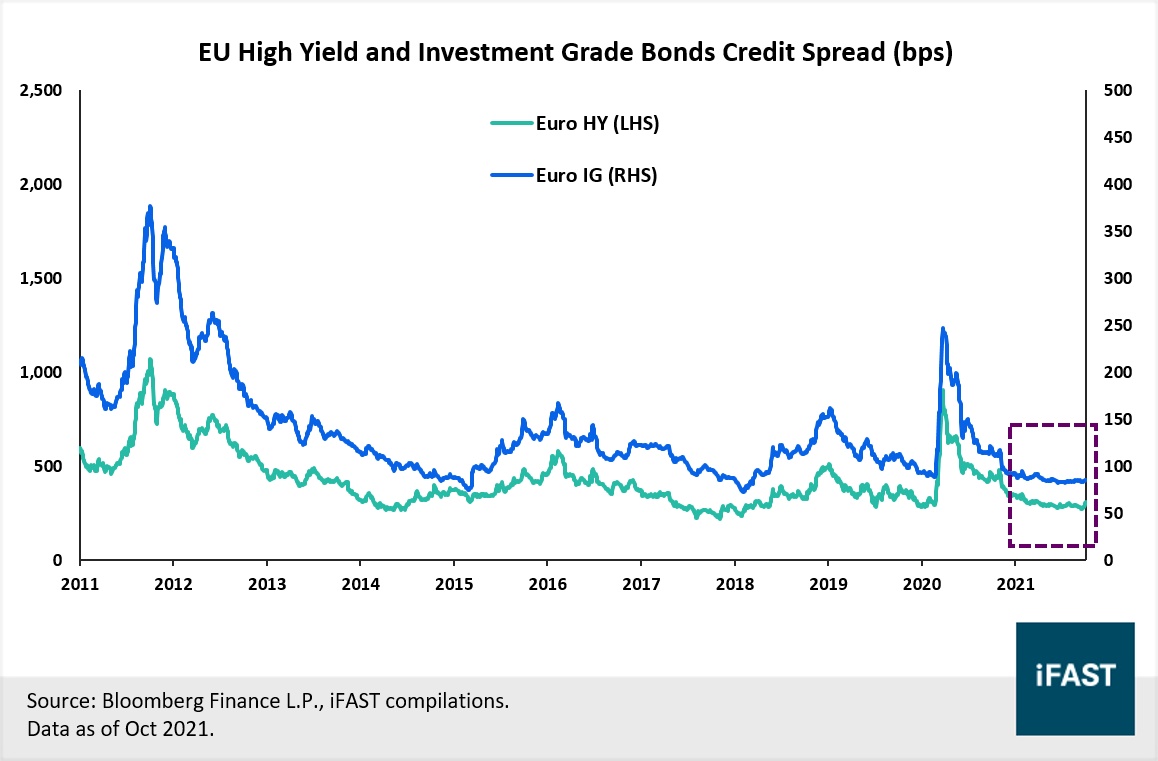
Broadly, DM credit markets do not have direct exposure to China bonds. Credit spreads for US HY and IG bonds barely flinched when Evergrande’s possible default made news over the past couple of weeks (chart 8). The same observation can be made for European HY and IG bonds during the same period (chart 9). In fact, for the HY and IG segments of both regions, spreads remained near their all-time low during this period, implying low embedded credit risk .
With no direct exposure and an absence of credit stress, we expect DM credit markets to be least at risk to a spillover, even if Evergrande defaults. Further, DM credit markets are buttressed by prevailing easy monetary conditions in their respective markets. Liquidity remains ample while interest rates are near all-time low despite DM monetary tightening on the horizon, and collectively these factors help to allay indirect credit stress.
Chart 8: US bonds did not react to the Evergande fallout…
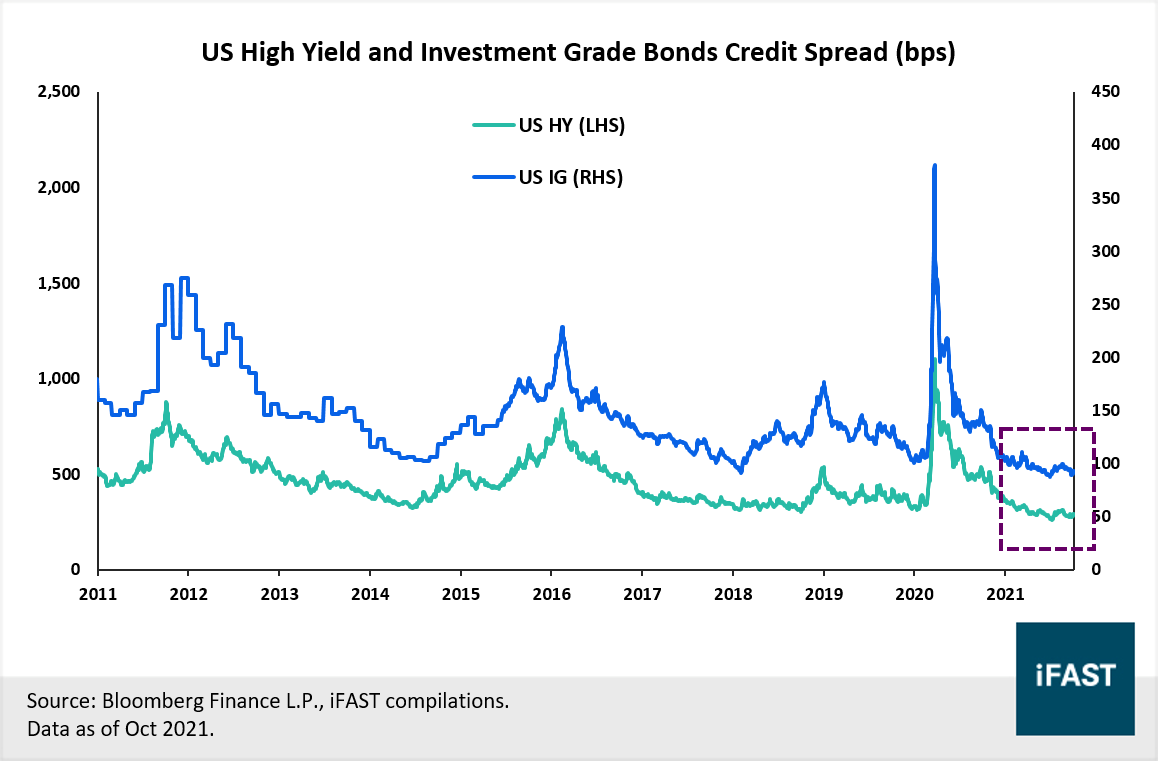
Chart 9:… the same can be observed for European bonds
II. Emerging market (EM) credit markets
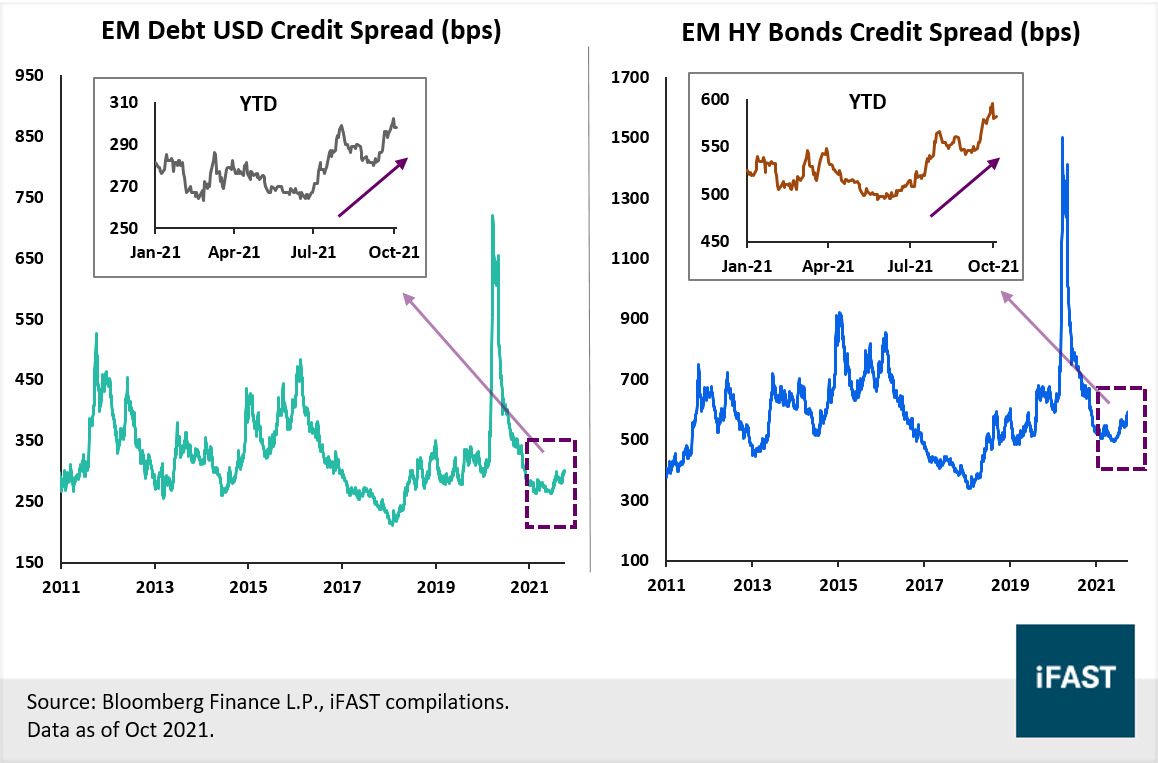
EM credit markets have exposure to China bonds, however, such exposure is relatively minor in our view. For EM hard currency debt (EMD), the underlying exposure (to China bonds) is only 3-4% to agency and sovereign bonds, which are widely considered safer given their stronger credit quality. EM HY bonds, on aggregate, possess a slightly higher underlying exposure of 4-5% to agency and corporate bonds. There is a higher risk to a spillover for the latter given the exposure to corporate bonds, in particular direct exposure to Evergrande bonds. That said, we are unconcerned as the direct exposure is only at an estimated 0.2%.
Across EM credit markets, there was a brief spike in spreads for EM HY and EMD (chart 10). However, in our view, the degree of these moves is considered mild given that spreads for both segments remain low relative to history after widening (Spreads for both segments are still around historical average post-widening). Therefore, we see little signs of stress within EM credit markets and alongside the relatively small direct exposure, we expect minor risks to a spillover for EM credit markets.
Chart 10: While spreads for EM credit markets rose, levels remain low relative to history
III. Asian credit markets
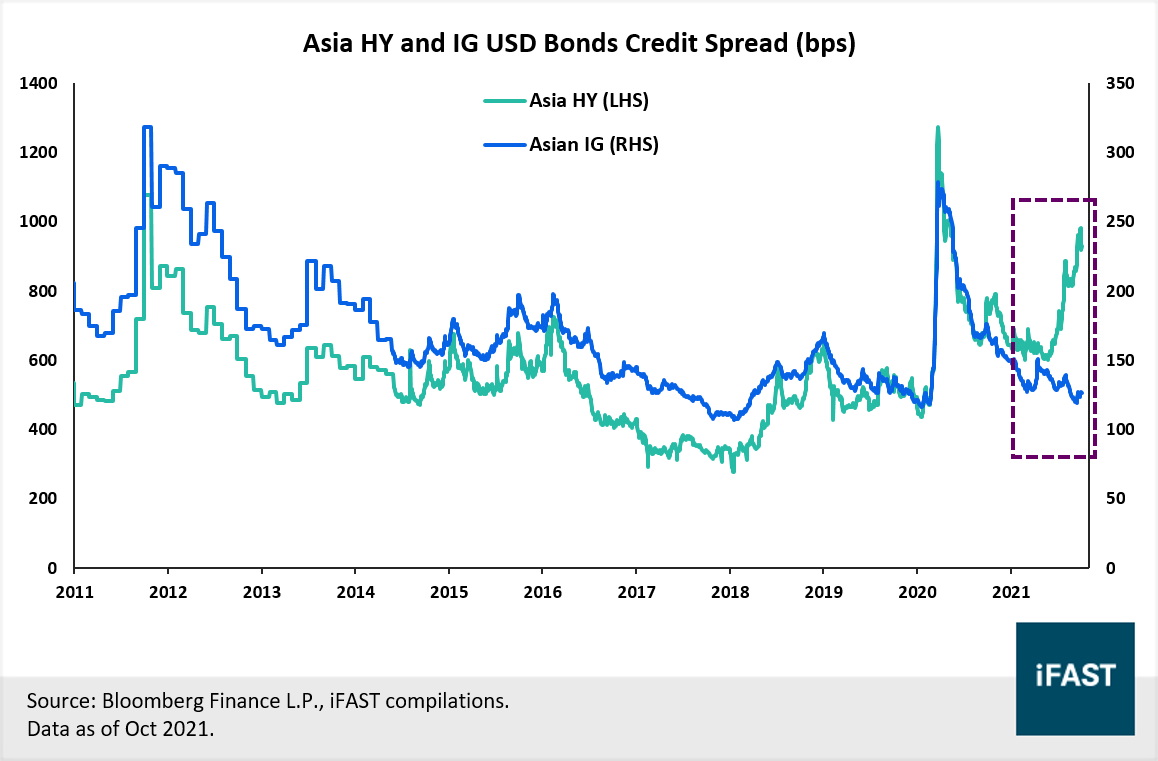
Within the Asian bond space, we see a divergence between IG and HY credit spreads (chart 11), mirroring the China bond space. Spread for Asian IG bonds have barely reacted and are showing little signs of stress as the exposure to China bonds are primarily via the safer corporate IG bonds (around 9-10% of Asian IG bond index). On the contrary, credit spread for Asia HY bonds havesurged around 110bps since September and is currently at 930 bps (as of 4 Oct), exceeding levels observed during 2018’s US-China trade war and 2015’s China market turbulence.
Amongst global credit markets, Asia HY bonds have the highest exposure to China bonds, at more than 40% (of the index) to China corporate HY bonds. While the relatively higher exposure comes with higher risk to a spillover, we are not overly concerned. Two factors anchor our view - i) the direct exposure to Evergrande bonds is relative minor (on aggregate less than 1.6% of the index), and ii) the high exposure might not imply higher risk as the impact is fairly localised within China’s property sector where not all underlying companies are as vulnerable as Evergrande.
Chart 11: Divergence in spreads between Asia HY and Asia IG bonds point to a contrast in expected credit risk
What do we expect next?
With the Evergrande saga still ongoing, we expect the situation to remain fluid and thus a wider scale contagion remains possible, albeit at a low likelihood. That said, as we move ahead, we expect the impact from the Evergrande fallout to be contained domestically within China HY bonds. Intervention by Chinese authorities plays an integral part and we are seeing attempts to ring-fence spillover impacts. This reinforces our belief that Evergrande’s impact should likely be constrained within the property sector. Consequently, we are also not expecting any major spillover to China IG bond markets, both onshore and offshore.
Globally, we expect minimal spillover to major credit markets and such implication will be limited by the exposure to China bonds. Global credit markets have yet to show material signs of stress after the Evergrande fallout and spillover fears are gradually abating. Amongst major credit markets, Asian HY bonds are more at risk due to its higher underlying exposure to China bonds. However, at the moment, we are not overly concerned given the smaller direct exposure to Evergrande bonds and our expectation that risk will be contained within China property sector (as outlined in sections above).
Declaration: For specific disclosure, at the time of publication of this report, IFPL (via its connected and associated entities) has a principal position in EVERRE 8.250% 23Mar2022 Corp (USD) and EVERRE 7.500% 28Jun2023 Corp (USD).
Our podcast series, Yield Hunters, is available on Spotify, iTunes Podcasts and Google Podcasts. We share our thoughts on new bond issues and hold discussions on the fixed income space. Listen to our latest episode below and follow us!