- The Fed voted to hold policy rates at 3.50% - 3.75% in its January meeting.
- There were no major changes in Powell’s messaging this time, though he acknowledged the labour market appeared to be stabilising.
- We think the Fed will maintain a data-dependent approach in subsequent meetings, with future rate cuts likely to be gradual.
- We still see multiple opportunities in the global bond universe, especially in shorter and medium-tenor bonds.
What happened in the January meeting
At its January 2026 FOMC meeting, the Federal Reserve (Fed) voted 10-2 to hold its policy rate unchanged at 3.50% - 3.75%. The two dissenters, Miran and Waller, instead favoured a 25 basis points (bps) cut. Comparing the Fed’s January statement with that of December, we find little change in its overall messaging (Table 1). The key difference was a slightly more constructive (or less pessimistic) assessment of the US labour market, with the Fed acknowledging signs of stabilisation.
The subsequent press conference also had some interesting titbits, which we summarise below:
- Rates outlook: Powell reiterated a wait-and-see approach. He noted that economic growth remained robust while the labour market appears to be stabilising, and that monetary policy is not meaningfully restrictive at present. Against this backdrop, we think the Fed is unlikely to pursue aggressive cuts in the next few meetings and will instead wait for clearer and more sustained signals from incoming data.
- Tariffs & Inflation: Powell expects the inflationary impact of tariffs to peak around mid-2026. With core PCE inflation in December 2025 little-changed from December 2024 despite tariff effects, he expressed confidence that the Fed could still eventually achieve its objective of price stability. Nonetheless, with tariff effects still in play, we expect inflation to remain sticky over the coming months.
- Fed independence: Powell strongly reaffirmed the importance of Fed independence, defending his decision to attend Fed Governor Cook’s Supreme Court hearing, and advising his future Fed chair successor to ‘stay out of politics’.
Table 1: Comparing December 2025 & January 2026 Fed statements
| Factor | December 2025 Statement | January 2026 Statement | Key takeaway |
| Growth | … economic activity has been expanding at a moderate pace | … economic activity has been expanding at a solid pace | Economic growth remains solid, with no rush for further cuts. |
| Inflation | Inflation has moved up since earlier in the year and remains somewhat elevated. | Inflation remains somewhat elevated. | The Fed may want to see more evidence of disinflation before resuming cuts. |
| Employment | Job
gains have slowed this year, and the unemployment rate has edged up through September. The Committee is attentive to the risks to both sides of its dual mandate and judges that downside risks to employment rose in recent months. |
Job
gains have remained low, and the unemployment rate has shown signs of stabilization. The Committee is attentive to the risks to both sides of its dual mandate. |
The labour market appears to have stabilised after sparking some concerns earlier in 2H25. |
| Summary | The Fed under Powell is still in no hurry to cut aggressively, and will need further inflation / employment data before resuming cuts. | ||
| Source: Bloomberg, iFAST compilations, iFAST estimates. Data as of 28 Jan 2026. | |||
Recent economic datapoints you should know
US economic growth remains robust, with the latest data (released on 22 January) showing that 3Q25 GDP grew by +4.4% QoQ (annualised). Momentum may have strengthened further into year-end, with 4Q25 growth projected at +5.4% based on the Atlanta Fed’s GDPNow estimate (Chart 1). Looking ahead to 2026, we expect US economic growth to moderate from the exceptionally strong 4-5% pace but remain firmly positive, supported by elevated investments in technology and AI-related sectors.
(Note: 4Q25 GDP is not yet released and could see slight delays arising from the US government shutdown last year.)
US inflation remains sticky, in part due to tariff-related price pressures. Headline PCE inflation most recently stood at 2.8% in November 2025, broadly in line with levels over the past 1 to 2 years (November 2024: 2.6%). However, we are increasingly seeing evidence of tariff passthrough into prices, via a pickup in goods inflation relative to services inflation (Chart 2). A St. Louis Fed study estimated the tariffs contributed roughly 0.5 percentage points to inflation between June and August 2025. With tariff effects likely to continue working through the system over the coming months, we think inflation could remain elevated above the 2% level.
The US labour market, as Powell himself noted, appears to have stabilised recently. While the unemployment rate drifted higher across most of 2025, it unexpectedly ticked down to 4.4% in December (Chart 3). Overall hiring trends point to a ‘low-hire-low-fire’ environment: while businesses are more cautious about adding workers, we see little evidence of broad-based layoffs that would signal a pronounced deterioration in labour market conditions.
Chart 1: US GDP growth remains robust
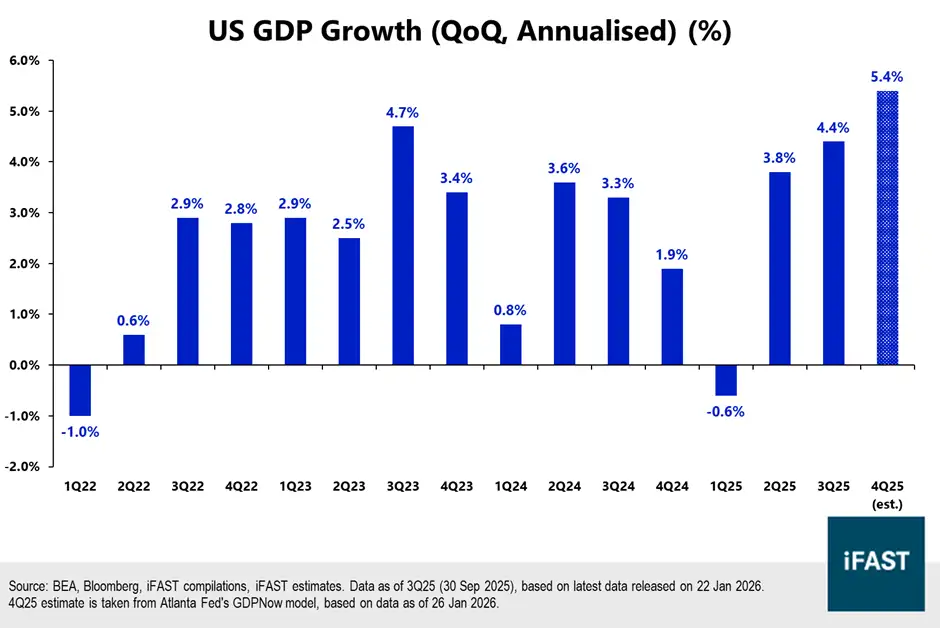
Chart 2: PCE inflation showing a growing contribution from goods, partially due to tariff effects
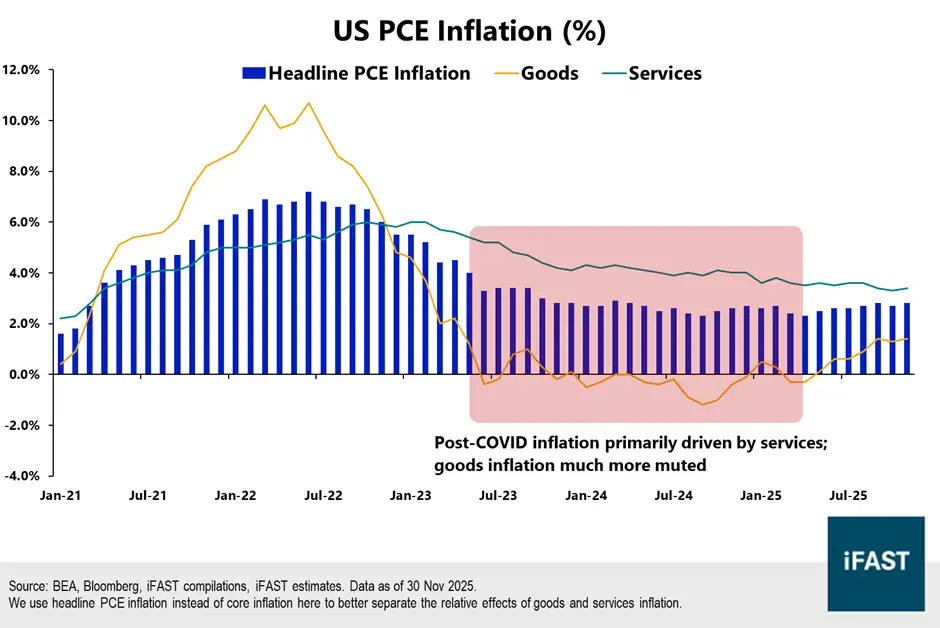
Chart 3: US unemployment rate has ticked up, but remains manageable

What you should do
We still believe that Fed moves in 2026 will be gradual. The Fed still faces some tension in its dual mandate, with inflation remaining sticky around 3%, while the labour market has shown tentative signs of softening. Against this backdrop, we expect the Fed to remain data-dependent, slowly calibrating policy settings and gradually steering rates closer to neutral.
Nonetheless, pressures for yield-curve steepening continue to linger. Such pressures could stem from concerns over US fiscal sustainability or other factors affecting term premia, and/or shifts in long-term inflation expectations, all of which could particularly pressure longer-term yields. Meanwhile, short-term and (to a lesser extent) medium-term yields could drop should the Fed proceed with rate cuts over 2026.
We think a combination of short and medium-term bonds would be suitable for buy-and-hold fixed income investors: short-term instruments offer decent yields with lower volatilities, while medium-term instruments allow investors to lock in yields and potentially benefit from price appreciation if yields decline.
We think there are opportunities in both investment-grade bonds and high-yield bonds, depending on individual investors’ yield objectives and risk tolerance. For detailed bond recommendations, you may refer to the articles linked below.
2026 USD Bond Market Outlook: Slowing US Growth and Gradual Yield Curve Normalization
Investment Grade Bonds: Lock in yields today with these lower-risk instruments
2026 High Yield Bond Market Outlook: Strategies for Capturing Higher Yields as Rates Move Lower
Declaration: For specific disclosure, at the time of publication of this report, IFPL (via its connected and associated entities) and the analyst who produced this report hold NIL positions in the abovementioned securities.