- Uneasiness had been spreading within the Chinese real estate sector but we think China Fortune Land’s non-payment of its February 2021 bonds brought about a buying opportunity in the sector.
- Rising yields are typically associated with higher net interest margins for banks. Bank bonds could thus benefit from higher yields too.
- The price of LMRTSP 6.600% Perpetual Corp (SGD) has been beaten down badly. A return to normalcy in the global economy and Indonesia could bring about good news for LMRT.
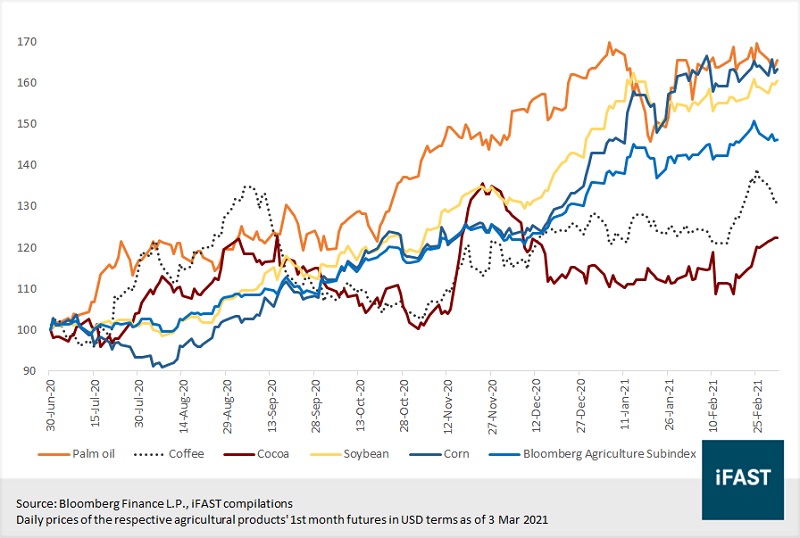
- Agricultural prices have been rising and may stay high for a while due to La Nina, friction in the labour market and rising demand. Olam, as a supplier of food and food ingredients, is expected to continue its good performance.
Corrections & Amplifications: This article has been amended to remove the recommendation on the LLOYDS 12.000% Perpetual Corp (USD). Please read the segment on banks to find out more. All changes are highlighted in italics.
Since the 1990s, US inflation rate has never crossed the 4% mark. The last time inflation showed why it should be feared was during the 1970s and 1980s. However, Paul Volcker, Chairman of the Federal Reserve (“Fed”) at that time crushed inflation by raising the federal funds rate to 20% in 1981.
However, inflation fears have surfaced again – oil prices are now back to pre-COVID levels, food prices are rising due to supply disruptions and metal prices such as copper have also rallied strongly, on the back of shortages and much higher demand. Along with unprecedented stimulus from governments, inflation fears may not be unwarranted.
Although officials from the Fed have been repeatedly saying that they will not be raising rates anytime soon, bondholders seem be preparing for the reverse, with the 10-year US Treasury (“UST”) yield rising by about 80 basis points since end-June 2020. US inflation has picked up from last April’s low of 0.93% and might have been a reason as to why UST yields have been rising. Bondholders may have been front-running the Fed, anticipating interest rate hikes as inflation rate picks up again.
Figure 1: Federal funds rate, 10Y UST yields and inflation tend to trend together
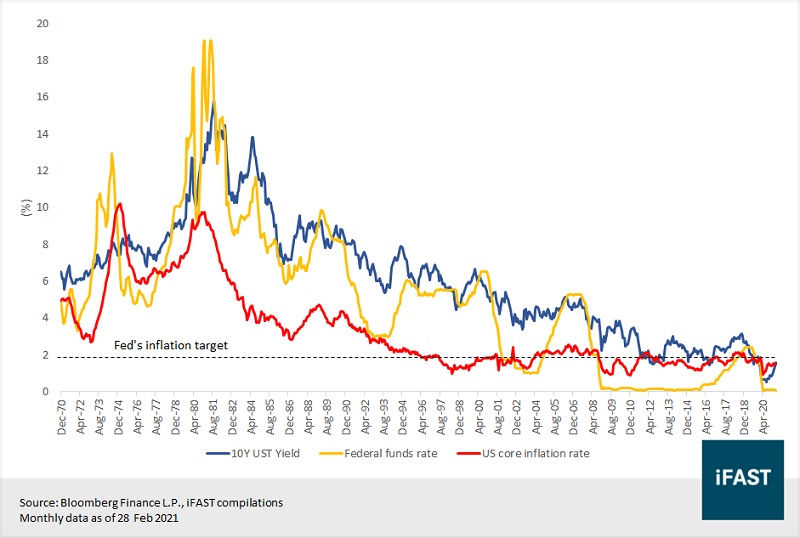
Figure 2: Inflation has picked up in recent months
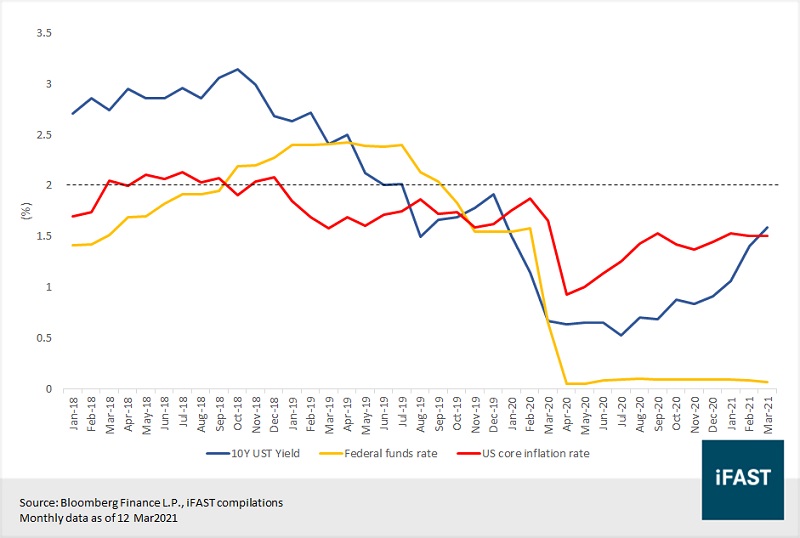
Although US inflation rate is still below 2% and that Fed Chairman Jerome Powell has been emphasising that the Fed will only raise interest rates when the labour market recovers, we still ought to prepare for the scenario where long-end UST yields continue to rise. While the Fed may not raise rates anytime soon, as vaccines continue to roll out and the global economy recovers, investors’ expectations may continue to improve, which will translate to higher bond yields.
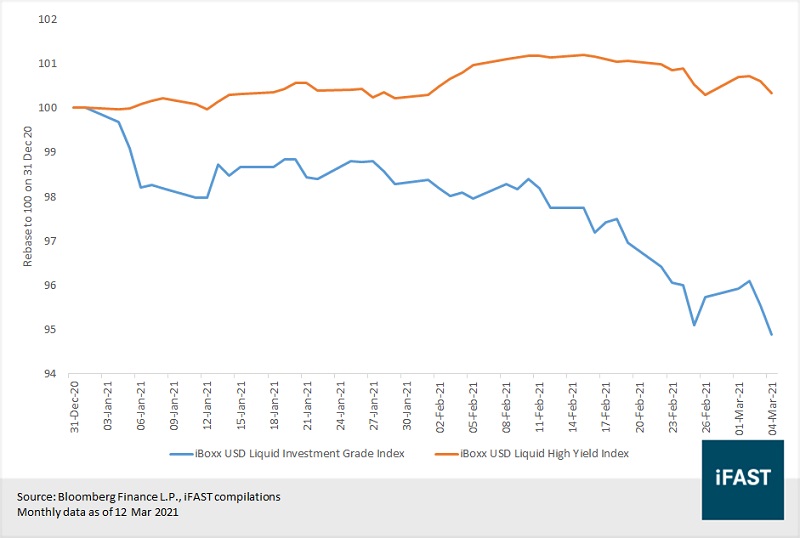
The simplest way to prepare will be to invest in short duration bonds. High yield bonds should also perform better as their high coupon rates can compensate for the fall in prices. Since the start of the year, high yield corporate bonds have outperformed and have withstood the decrease in prices, as compared to investment grade corporate bonds. In this article, we picked out sectors and issuers that are somewhat adaptable or less affected in an inflationary environment.
Figure 3: High yield bonds have been more resilient so far
Chinese real estate sector
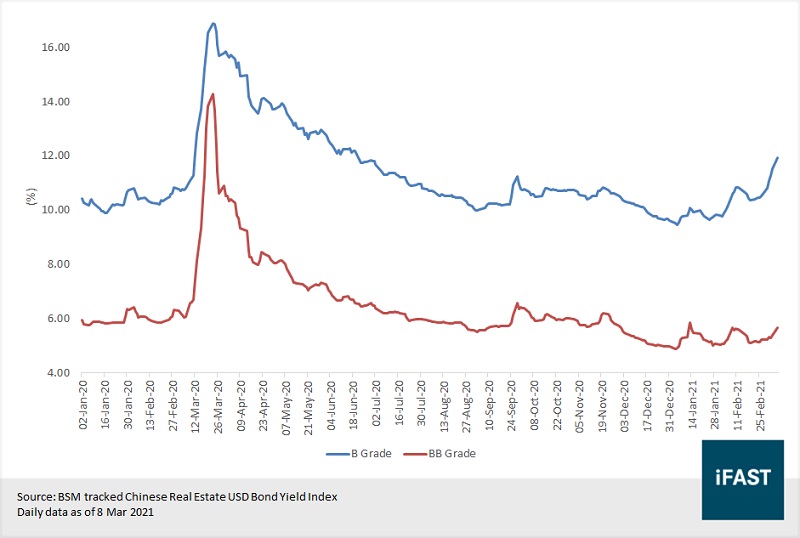
At this point you may be thinking our ideas are running stale, as we are always recommending the Chinese real estate sector, but the fact is real estate issuers in China dominate the Asian high yield space. Although the default by China Fortune Land sent ripples in the sector, there are once again opportunities to invest in Chinese real estate bonds as spreads have increased. We have a few names which we think are less prone to defaults and worth considering for high yield investments.
Figure 4: Credit spreads of high yield Chinese real estate bonds have increased again
We are positive on many Chinese real estate companies but have picked out three companies – Fantasia Holdings Group (“Fantasia”), LVGEM China Real Estate Investment (“LVGEM”) and China Evergrande Group (“Evergrande”). We have shortlisted one near-term bond from each issuer that are available on Bond Express with high yields that will offer you better protection in an inflationary climate – FTHDGR 7.950% 05Jul2022 Corp (USD), LVGEM 12.000% 10Mar2023 Corp (USD), EVERRE 8.250% 23Mar2022 Corp (USD) - ranked from least risky to the riskiest.
Fantasia’s bonds look the best out of the lot with lower gearing ratios and with more than enough cash to pay for their short-term debt. Its yield to maturity (“YTM”) of 9.89% on 10 Mar 2021 looks attractive to us given that it has a much healthier credit profile compared to other Chinese property developers. Kindly refer to the article “Fantasia — the small and charming property developer” for more details on the issuer.
While Evergrande’s credit ratios look poor with a very low cash/short-term debt ratio and its failure to meet the “Three Red Lines”, we remain positive on its short-term bonds due to its stronger contracted sales performance. Just to provide some context, the “Three Red Lines” are a set of criteria used by regulators to assess the financial situation of Chinese real estate developers. These include assessing the companies’ liability-to-asset ratios, net gearing ratios and cash-to-short term debt ratios.
In our view, Evergrande may still use asset sales to prop up its liquidity in the short-term, but its long-term performance and solvency are rather uncertain, leading us to have no confidence in its longer-term bonds. Investors may refer to an earlier article “The leader of Chinese real estate, Evergrande, is making headlines again” for our opinion on the company.
Unlike Evergrande, LVGEM is a smaller developer that is based in Shenzhen. The company was previously known as New Heritage Holdings Ltd. and was engaged in the property development and investment business in Suzhou. The company has participated in a number of urban redevelopment projects in Shenzhen and has been strategically expanding along the fringes of the Guangdong-Hong Kong-Macau Greater Bay Area, which is one of the fastest growing regions in China.
We think that LVGEM has an adequate liquidity profile. The firm had a cash balance of RMB 7.9 billion at the end of June, short of the RMB 10.9 billion of current debt, but we believe that it may monetize its RMB 3.0 billion of properties held for sale or part of its RMB 23.8 billion of investment properties for liquidity. Our article “This LVGEM USD bond is giving a handsome yield of 12%” explains why we think that the bonds are attractive.
Table 1: Our recommended bonds among Chinese real estate companies
|
Ask yield to maturity |
Years to maturity |
Modified Duration |
|
|
FTHDGR 7.950% 05Jul2022 Corp (USD) |
9.89% |
1.32 |
1.21 |
|
LVGEM 12.000% 10Mar2023 Corp (USD) |
12.23% |
2.00 |
1.72 |
|
EVERRE 8.250% 23Mar2022 Corp (USD) |
14.71% |
1.04 |
0.91 |
Source: Bondsupermart.com, 9 Mar 2021.
Note: Modified
duration extracted from Bloomberg on 10 Mar 2021
Table 2: Credit ratios of selected Chinese real estate companies
|
1H20 |
China Evergrande Group |
Fantasia Holdings Group Co Ltd |
LVGEM China Real Estate Investment Co Ltd |
|
Total debt/total assets |
36.3% |
41.6% |
54.2% |
|
Net debt/equity |
219.0% |
8.6% |
157.8% |
|
Cash/Short-term debt |
35.6% |
149.8% |
79.3% |
|
EBITDA/Interest expense (x) |
6.1 |
2.9 |
1.8 |
|
Current ratio (x) |
1.3 |
1.4 |
1.4 |
Source: Bloomberg Finance L.P., iFAST compilations, as of 1H20
Higher yields to benefit banks
Set against the backdrop of high benchmark rates, banks tend to benefit from rising yields as their net interest margins increase. With net interest income (“NII”) constituting 47.9% and 53.6% of their total revenue for the financial year ended 31 Dec 20 (“FY20”) and FY19 respectively, Deutsche Bank (“DB”) has potential to improve on its finances as yields pick up. Their sensitivity analysis showed that if the whole yield curve moves up by 100bps, their NII can potentially improve by EUR 0.9b and EUR 1.4b in the first and second year respectively. As a reference, DB’s revenue in FY20 was EUR24.0, and the yield curve shift can potentially grow its revenue by about 3.75%.
Furthermore, DB’s performance has been improving, reversing losses of EUR2.6b before taxes in FY19 and making a profit of EUR1.0b before taxes in FY20. Their cost reduction programme is making inroads too – non-interest expenses decreased by 15% YoY to EUR21.2b in FY20. The bank has also enjoyed twelve consecutive quarters of year-on-year reductions in quarterly adjusted costs excluding transformation charges and bank levies.
Their credit ratios are also decent, with CET1 capital ratio remaining at 13.6% while liquidity coverage ratio grew to 145% as of December 2020, compared to 141% in December 2019. Loan-to-deposit ratio also improved by 2 basis points (“bps”) to 76.0% in FY20. Provisions for credit losses have dropped in recent quarters, although they remain high relative to pre-COVID levels. The rollout of vaccinations should also improve the outlook for loan provisions, and hence, DB’s earnings too.
Comparing the DB 7.500% Perpetual Corp (USD) and DB 4.789% Perpetual Corp (USD), both notes have the same call date on 30 Apr 2025 but the yield difference on 11 Mar 2021 is about 64.5bps. Thus, if DB only decides to call back only one perp, the DB 7.500% perp has a higher chance of being called due to its higher interest expense. This situation is reflected in their pricing, with the DB 4.789% perp trading about 64.5bps higher than the DB 7.500% perp.
However, if we were to consider a more optimistic scenario where DB is able to call both perps, the DB 4.789% perp seems to be a more attractive investment as it will enjoy price appreciation as its yields get compressed to lower levels. We lean towards this scenario due to DB’s transformation being seemingly on track to hit their 2022 return on tangible equity target. A merger with Commerzbank could also allow the merged entity to have better access to capital markets, allowing them to redeem both perps in Apr 2025.
Figure 5: Deutsche Bank’s perps and Lloyd 12.000% PERP
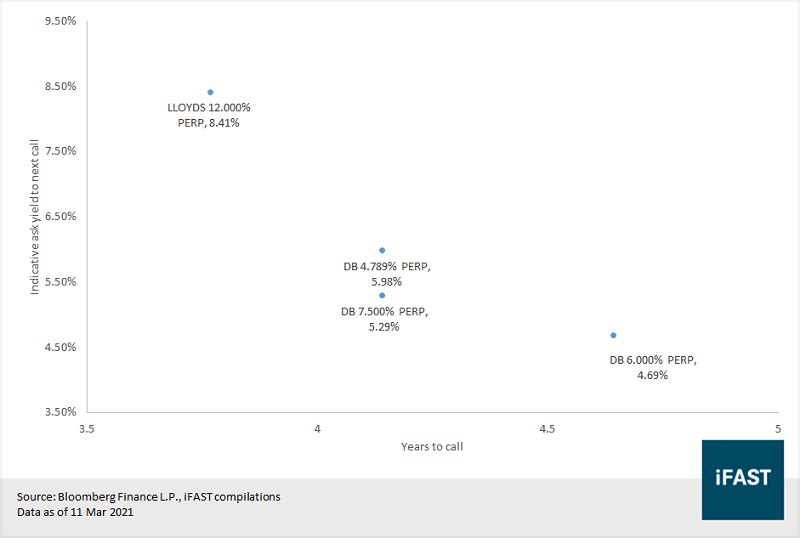
Besides DB, the LLOYDS 12.000% Perpetual Corp (USD) issued by Lloyds Bank PLC also looks interesting. However, we have realised that the perp is a legacy Tier 1 security which may not be qualify as Tier 1 capital once the Capital Requirements Regulation grandfathering ends this year. Thus, there is a chance that Lloyds Bank could call back the perp at 100, resulting in bondholders suffering a loss if bought at its current valuation. Hence, we will not be recommending the perp.
Other bond issues with upside potential
Below are two bonds that may see their prices appreciate even if yields were to rise. Investors can choose to invest in these bonds for higher-yielding names, capturing potential price returns. However, these bonds are considered high yield, thus price appreciation is not a guarantee.
Lippo Indonesian Malls Retail Trust
Lippo Malls Indonesia Retail Trust (“LMRT”) owns 22 malls and 7 retail spaces in Indonesia, located mainly in Greater Jakarta, Bandung and other cities. While their 9M20 operating results (for the nine month period ended 31 Sep 20) were not fantastic, the price of the LMRTSP 6.600% Perpetual Corp (SGD) looks attractive.
As operating conditions of shortened operating hours are expected to continue until at least 2Q21, LMRT’s operating results are not expected to improve drastically anytime soon. It also elected to not make distribution payments in December, shaking investors’ faith. However, its recent successful new issue - LMRTSP 7.500% 09Feb2026 Corp (USD) – shows that investors are still willing to take a shot at its bonds due to its high yields.
While we expect LMRT not to call the LMRTSP 6.600% Perpetual Corp (SGD) on its next call date, the pricing of the perp is rather attractive as shown in Table 1. Even if the perp were to be called almost 7 years later, it still gives an attractive yield-to-call (YTC) of 13.85%. When Indonesia reopens and relaxes the operating conditions of their malls, prices of LMRT’s bonds are bound to recover too.
Table 3: Yield-to-call at various call dates at a price of 68
|
Call date |
Yield-to-call |
|
Dec-22 |
31.33% |
|
Jun-23 |
25.99% |
|
Dec-23 |
22.62% |
|
Jun-24 |
20.32% |
|
Dec-24 |
18.64% |
|
Dec-25 |
16.36% |
|
Dec-26 |
14.88% |
|
Dec-27 |
13.85% |
Source: Bloomberg Finance L.P., iFAST compilations, as of 4 Mar 2021
Olam International Limited
Olam International Limited (“Olam”) is a large food and agribusiness supplier of food and food ingredients. Their operations is segregated into two groups – Olam Food Ingredients Olam Food Ingredients (“OFI”) and Olam Global Agri (“OGA”) – both of which are held by the parent firm Olam International Limited. OFI’s portfolio includes Cocoa, Coffee, Edible Nuts, Spices and Dairy, and other natural food products. On the other hand, OGA is made up of Grains and Animal Feed & Protein, Edible Oils, Rice, Cotton and Commodity Financial Services.
Olam will be a beneficiary of rising agricultural prices. The group recorded strong results in 2H20 (i.e. the 6-months period ended 31 Dec 20) with revenue increasing by 9.9% YoY to S$18.74 billion and operational profit after tax and minority interests (“PATMI”) growing by 90.1% YoY to S$475.7m. During FY20, operational PATMI grew 36.0% to S$677.8m but due to net exceptional items, reported PATMI declined by 22.3% YoY to S$245.7m. Olam also expects demand to continue to recover and with tight commodity supplies unlikely to abate anytime soon, Olam should continue to perform well in this market environment.
Figure 6: Agricultural prices have increased strongly
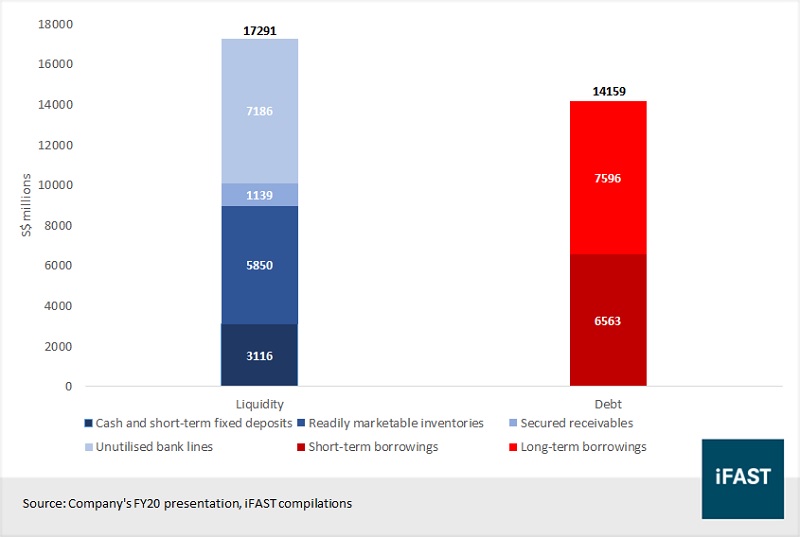
Olam also boasts a strong liquidity profile, with enough liquid assets to cover all of its debt. Thus, while Olam’s yields are not particularly exciting, investors may be comforted to know that Temasek Holdings (Private) Limited and Mitsubishi Corporation had respective stakes of 53.4% and 17.4% in the company. We think that the bonds are likely to continue to perform well. We recommend the OLAMSP 5.375% Perpetual Corp (SGD) as it offers a higher yield than its fixed-term notes, and a greater potential for capital gains.
Figure 7: Olam has sufficient liquidity for its debt
Our podcast series, Yield Hunters, is available on Spotify, iTunes Podcasts and Google Podcasts. We share our thoughts on new bond issues and hold discussions on the fixed income space. Listen to our latest episode below and follow us!
Declaration: For specific disclosure, at the time of publication of this report, IFPL (via its connected and associated entities) holds a position in FTHDGR 7.950% 05Jul2022 Corp (USD), LVGEM 12.000% 10Mar2023 Corp (USD), EVERRE 8.250% 23Mar2022 Corp (USD), LMRTSP 6.600% Perpetual Corp (SGD), OLAMSP 5.375% Perpetual Corp (SGD) and the analyst who produced this report hold a NIL position in the abovementioned securities.