Highlights
- Cypark Renewable Energy (CRE) has deferred their coupon payment scheduled to be paid on 4 March 2024. The reason given being they would like to conserve cash to accelerate completion of major projects, with the suggestion that cash flow will improve once the projects are completed.
- The current concern revolves around whether the parent company (Cypark Resources) is able to meet the coupon payment in the upcoming periodic distribution date (4 Sep 2024). Considering the tight liquidity and lacklustre earnings, there’s the likelihood that the company will continue to fail its coupon payment.
- Principal build-up for tranche 1 perps remains rather secure. Series 5 to 10 carry a higher risk compared against series 1 to 4, attributed by the need to deplete a significant portion in the reserve account if series 1 to 4 are called back in September 2027. Series 5-10 also have an extended 3 year period before their call date in September 2030, introducing further vulnerability. This leads to a more unfavourable view on these six series.
- Estimated recovery value is still okay at high 60s, in a worst-case scenario. Also, the alignment of interest with Cypark’s largest shareholder, Jakel Capital which subscribed to RM265 million of perps under the same programme does bring a degree of comfort to the current situation.
- Under the circumstances that LSS2 and LSS3 projects would be up and running hopefully before the second half of 2024, we see a chance for Cypark to turn the situation around as these projects should enhance the group's overall cash flow.
- At the current juncture, we think investors with series 1 to 4 may be better off to hold on to their holdings, while investors with series 5 to 10 may contemplate to pare down their positions if the perceived risk is deemed too substantial.
Background
Cypark Resources is a listed company on Bursa since 2010. The group engages in renewable energy, construction and engineering, green technology, waste management and waste to energy (WTE). Cypark Renewable Energy (CRE) is a wholly-owned subsidiary of the group.
Deferral notice
We were notified yesterday that Cypark Renewable Energy (CRE) has deferred their coupon payment scheduled to be paid today (4 March 2024) to the next periodic distribution date (4 September 2024). The reason given being the company would like to conserve cash to accelerate the completion of major projects within the group, with the suggestion that the cash flow of the group will improve once the projects are completed.
Ring-fenced with electricity sales from solar projects; zero completion risk for the projects
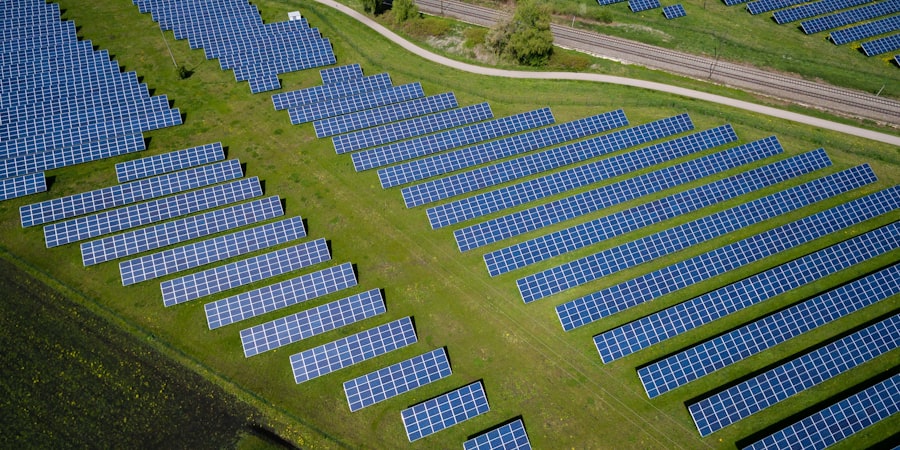
CRE’s tranche 1 perpetual sukuks are ring-fenced with electricity sales proceed from four eligible solar projects, namely Project Pajam, Project Gaya Dunia, Project Ambang Fiesta and Project Rentak Raya. The project has no completion risk as all plants have been successfully completed and in operating condition.
Table 1: Secured solar projects under CRE tranche 1 perps
|
No. |
Project - solar photovoltaic energy generating facility |
Capacity |
Location |
|
1 |
Project Pajam |
13.1 MWp |
Pajam, Negeri Sembilan |
|
2 |
Project Gaya Dunia |
3.16 MWp |
Bukit Palong, Negeri Sembilan |
|
3 |
Project Ambang Fiesta |
6.0 MWp |
Kuala Perlis, Perlis |
|
4 |
Project Rentak Raya |
2.0 MWp |
Rimba Terjun, Johor |
|
Source: Cypark, iFAST compilations. Data as of 20 February 2024. |
|||
Stable revenue from the four solar projects
Under the signed Renewable Power Purchase agreement, any electricity generated from the projects will be sold to Tenaga Nasional Berhad (TNB) for a period of 21 years conditional on the respective solar projects’ commencement year (earliest commencement year in the portfolio of these four solar projects is 2012).
The four solar projects have delivered a stable average monthly revenue of RM2.2 million since their inception. All the four solar projects are also insured with various insurance policies like fire consequential loss, machinery breakdown insurance, machinery breakdown loss of profits insurance, burglary insurance, to list a few. This risk mitigation strategy enhances the overall financial resilience of the solar projects.
Chart 1: Consolidated solar projects’ MoM output volume and
invoice amount
Ahead of principal redemption build-up schedule
Proceed from the electricity sales will be transferred to the revenue account, and then subsequently to the reserve account, which both accounts are operated by the security trustee. This is because the issuer CRE is mandated to build-up required minimum amount in the reserve account as stated in the table below.
Currently, they are ahead of the schedule, accumulating RM86.5 million in the reserve account as of 31 Jan 2024 when the requisite amount is RM80.3 million as of February 2024, attributed by the consistent proceed from the solar projects. Assuming the monthly proceed from the solar projects remain as such, CRE should be able to meet the necessary capital build-up per se, although with narrow margin for error.
Table 2: Tranche 1 required build-up in reserve account
|
|
Required cumulative build-up in reserve account (RM) |
|
Nov-23 |
74,160,000 |
|
Feb-24 |
80,280,000 |
|
May-24 |
86,400,000 |
|
Aug-24 |
92,520,000 |
|
Nov-24 |
98,640,000 |
|
Feb-25 |
104,640,000 |
|
May-25 |
110,730,000 |
|
Aug-25 |
116,730,000 |
|
Nov-25 |
122,820,000 |
|
Feb-26 |
128,880,000 |
|
May-26 |
134,880,000 |
|
Aug-26 |
140,940,000 |
|
Nov-26 |
146,940,000 |
|
Feb-27 |
152,970,000 |
|
May-27 |
158,970,000 |
|
Aug-27 |
165,000,000 |
|
Nov-27 |
5,800,000 (Suppose that Cypark redeem Series 1-4 in Sep 2027 ) |
|
Feb-28 |
11,700,000 |
|
May-28 |
17,500,000 |
|
Aug-28 |
23,400,000 |
|
Nov-28 |
29,200,000 |
|
Feb-29 |
35,100,000 |
|
May-29 |
40,900,000 |
|
Aug-29 |
46,700,000 |
|
Nov-29 |
52,500,000 |
|
Feb-30 |
58,400,000 |
|
May-30 |
64,200,000 |
|
Aug-30 |
70,000,000 |
|
Source: Cypark, iFAST compilations. Data as of 20 February 2024. |
|
Table 3: CRE’s tranche 1 reserve account balance as of 31 Jan 2024
|
Mandated build-up (RM) |
Available amount (RM) |
|
|
Reserve Account |
80.3 mil (Feb 24) |
86.5 mil |
|
Source: Cypark, iFAST compilations. Data as of 20 February 2024. |
||
Periodic distribution (coupon payment) relies on the financial contribution from parent company
While the revenue generated from these solar projects is adequate for meeting the principal build-up schedule, there is limited additional capacity for periodic distributions. As a result, the periodic distribution is and will continue to be dependent on the financial contribution from the parent company, Cypark Resources. The recent deterioration in Cypark Resources’ financial is the reason we are seeing a coupon payment deferral.
Continuous delay in projects; recent earnings have been lacklustre
Cypark has been in a hard spell in recent years. We see continuous delay in its renewable energy projects, namely the LSS2 and LSS3 projects which the former project’s completion date should be at end of 2021 while the latter project at early 2022. While Cypark has expressed the completion of LSS2 and LSS3 projects in the latest quarter, the group has yet to announce the commercial operation date (COD) which imply potential further delay till the deliverance of revenue by the projects.
Cypark posted a revenue of RM91.8 million and loss before taxation of RM1.6 million in 6 months ended 31 October 2023. This is in the back of lower contribution from LSS construction revenue and the outage in WTE’s plant. Interest paid has also ballooned to RM49.9 million for 6 months ended 31 October 2023, primarily the result of increase in term loans.
Table 4: Cypark’s financial result
|
RM (mil) |
31-Oct-23 (6M24) |
30-Apr-23 * |
31-Oct-21 |
31-Oct-20 |
31-Oct-19 |
31-Oct-18 |
|
Revenue |
91.8 |
312.0 |
315.3 |
304.0 |
376.7 |
352.8 |
|
Operating (loss)/profit |
16.6 |
(330.0) |
101.2 |
109.0 |
130.6 |
110.8 |
|
Interest paid |
(49.9) |
(88.0) |
(55.8) |
(56.9) |
(16.1) |
(10.5) |
|
*30 April 2023 covers a period of 18 months due to change in the financial year end. Source: Cypark, iFAST compilations. Data as of 22 February 2024. |
||||||
Cypark’s earning turnaround takes time
The management has cited that Cypark’s financials will see improvement with the future recurring income generated from LSS2 and LSS3 projects. Our back of the envelope calculation suggests that the additional recurring revenue (for the delayed projects) could be in the vicinity of RM50 to RM55 million per year.
While there is suggestion that the two projects could be operational by 1Q24, there’s no guarantee that the projects would be up and running by then. Plus, Cypark also expects the waste-to-energy (WTE), which historically contributed to around 17% of total revenue to only breakeven in financial year ended 2025. Hence, Cypark is still expected to continue delivering losses in the near term.
Increasing debt level
From a gearing level perspective, their adjusted DE ratio and net debt to equity ratio (including perpetual sukuk as debt) has swelled to 2.49 times and 2.12 times respectively. The increase could have been more pronounced if not for the fundraising exercise the group did over the years that result in the rise in the number of ordinary shares (2019: 467.4 million in shares; 6 months ended 31 October 2023: 799.3 million in shares). Net debt to market capitalisation is also high at 2.4 times, which means the current net debt amount is more than twice of Cypark’s current market cap.
Table 5: Cypark’s adjusted DE and net DE ratio
|
31-Oct-23 (6M24) |
30-Apr-23 |
31-Oct-21 |
31-Oct-20 |
31-Oct-19 |
31-Oct-18 |
|
|
DE ratio (adjusted for perps) |
2.49 |
2.13 |
1.59 |
1.61 |
1.55 |
0.92 |
|
Net DE ratio (adjusted for perps) |
2.12 |
1.93 |
1.29 |
1.18 |
0.86 |
0.79 |
|
Source: Cypark, iFAST compilations. Data as of 22 February 2024. |
||||||
Cypark’s largest shareholder is in the same boat as tranche 1 perpetual sukukholders
Jakel Capital, the largest shareholder of Cypark Resources is in the same boat as tranche 1 perpetual sukukholders due to them subscribing to the RM265 million CRE perpetual sukuk issuance under the same programme on September 2023. This somewhat brings a degree of comfort that the largest shareholder shares the same common interest in seeing Cypark resume coupon payment in the next distribution date.
Principal build-up is still on track despite the chaos
The first call date for CRE’s tranche 1, series 1 to 4 perpetual sukuk is at 03 September 2027. Should Cypark resumes the payment at the next distribution date (Sep 2024), we think the likelihood of calling is still decent as principal build-up is still on track.
However, if Cypark fails to meet the coupon obligation on September 2024, this would only made it more challenging for them to call back the sukuk as they would need to repay all the accrued coupon before a call-back. Likelihood of call will diminish with each deferral of coupon payment.
As for series 5 to 10 with a first call date at 04 September 2030, the risk is comparatively higher as the redemption of series 1 to 4 will deplete a substantial portion of the reserve account balance by Sep 2027. Additional risks include the degradation in solar cells where the efficiency of solar cells gradually diminishes over time and extra uncertainty regarding the financial health of the parent company.
Table 6: CRE’s tranche 1 perps issuance size and first call date
|
CRE tranche 1 perps |
Issued size (in RM mil) |
Total issued size (in RM mil) |
First call date |
|
Series 1 |
97.3 |
165.0 |
3-Sep-27 |
|
Series 2 |
22.1 |
3-Sep-27 |
|
|
Series 3 |
30.2 |
3-Sep-27 |
|
|
Series 4 |
15.4 |
3-Sep-27 |
|
|
Series 5 |
30.1 |
70.0 |
4-Sep-30 |
|
Series 6 |
8.0 |
4-Sep-30 |
|
|
Series 7 |
6.5 |
4-Sep-30 |
|
|
Series 8 |
10.4 |
4-Sep-30 |
|
|
Series 9 |
6.6 |
4-Sep-30 |
|
|
Series 10 |
8.4 |
4-Sep-30 |
|
|
Source: Cypark, iFAST compilations. Data as of 20 February 2024. |
|||
Cumulative coupon
While CRE has opted to defer their coupon payment on this occasion, the coupon payment is on a cumulative basis. Hence, in the next distribution date (4 September 2024), CRE will not only have to settle the coupon payment for 4 Sep 2024 but also the accrued coupon payment from the deferred period. However, CRE is not subject to any limit as the number of times they want to defer the coupon payment. Hence, they do have the option to defer perpetually.
We estimate the recovery value to be at high 60s, in a worst-case scenario
We estimate in the case of liquidation, sukukholders can recover approximately 67% on their principal. This is based on the total of current cash in reserve account (RM86 million) and an estimated fire sale of the four solar plants (RM84.1million – 15% haircut) = RM71 million. That would bring to a recovery value of 67% as aforementioned.
Table 7: Calculation of estimated recovery value using discounted cash flow (DCF)
|
year |
KWh |
RM/ KWh |
Revenue (RM mil) |
Operating profit (RM mil) |
10% discount rate |
RM mil |
|
2024 |
27,895,571 |
0.9 |
25.1 |
12.6 |
1.00 |
12.6 |
|
2025 |
27,756,094 |
0.9 |
25.0 |
12.5 |
0.91 |
11.4 |
|
2026 |
27,617,313 |
0.9 |
24.9 |
12.4 |
0.83 |
10.3 |
|
2027 |
27,479,227 |
0.9 |
24.7 |
12.4 |
0.75 |
9.3 |
|
2028 |
27,341,831 |
0.9 |
24.6 |
12.3 |
0.68 |
8.4 |
|
2029 |
27,205,122 |
0.9 |
24.5 |
12.2 |
0.62 |
7.6 |
|
2030 |
27,069,096 |
0.9 |
24.4 |
12.2 |
0.56 |
6.9 |
|
2031 |
26,933,750 |
0.9 |
24.2 |
12.1 |
0.51 |
6.2 |
|
2032 |
26,799,081 |
0.9 |
24.1 |
12.1 |
0.47 |
5.6 |
|
2033 |
23,825,553 |
0.9 |
21.4 |
10.7 |
0.42 |
4.5 |
|
2034 |
7,587,577 |
0.9 |
6.8 |
3.4 |
0.39 |
1.3 |
|
|
|
|
|
|
Total |
84.1 |
|
Assumption made in the table: (1) electricity generated goes exactly as stated in information memorandum (2) tariff rate per KWh at RM0.9, which is the lower of the tariff rates given by TNB under the contracts (3) operating profit being 50% of revenue (4) 10% discount rate used for present value calculation |
||||||
Our thought
The current concern revolves around whether the parent company (Cypark Resources) is able to meet the coupon payment in the upcoming periodic distribution date. Considering the tight liquidity and lacklustre earnings, there’s the likelihood that the company will continue to fail its coupon payment.
On the other hand, the capital build-up aspect for the perps remains rather secure, particularly for series 1 to 4. Series 5 to 10 are relatively riskier due to the reasons discussed above, leading to a more unfavourable view on these six series.
However, if Cypark fails to meet the coupon obligation on September 2024, this would only made it more challenging for them to call back the sukuk as they would need to repay all the accrued coupon before a call-back. Likelihood of call will diminish with each deferral of coupon payment.
We are cognisant that the estimated recovery value is still okay at high 60s, in a worst-case scenario. Also, the alignment of interest with the Cypark’s largest shareholder, Jakel Capital does bring a degree of comfort to the current event.
Under the circumstances that LSS2 and LSS3 projects would be up and running hopefully before the second half of 2024, we see a chance for Cypark to turn the situation around as these projects should enhance the group's overall cash flow.
Investors can further monitor on any news regarding the issuer’s LSS2 and LSS3 project. At the current juncture, we think investors with series 1 to 4 may be better off to hold on to their holdings, while investors with series 5 to 10 may contemplate to pare down their positions if the perceived risk is deemed too substantial.
Declaration: For specific disclosure, at the time of publication of this report, IFPL (via its connected and associated entities) and the analyst who produced this report holds a NIL position in the abovementioned securities.
Our podcast series, Yield Hunters, is available on Spotify, iTunes Podcasts and Google Podcasts. We share our thoughts on new bond issues and hold discussions on the fixed income space. Listen to our latest episode below and follow us!