- Teva Pharmaceutical, though known as the world’s largest generic drug manufacturer, has been rapidly expanding its innovative medicine portfolio. Medications such as Austedo, Uzedy, and Ajovy are expected to become key growth engines for the company.
- While Teva is set to face the impact of the end of exclusivity period for gRevlimid, it has already formulated strategies to mitigate the effect, including a cost-cutting plan and a more optimized product mix. Therefore, its profit margin is likely to improve instead, potentially reaching the highest level since 2016.
- The company continues to deleverage, and its credit rating has been upgraded. Although the bond yields have declined, credit spreads remain decent. Notably, the 2029 and 2030 bonds offer yields to maturity of over 5%, making them relatively attractive.
We previously covered Teva in the article “Bond Yield at 5.5%! Teva Pharmaceutical—An Absolute Leader of Generic Drugs”, highlighting its dominance in the generic drug sector. But beyond generics, Teva is also actively involved in other types of medication. Some of these have grown rapidly, fueling a strong rally in the company’s stock price since the beginning of 2024.
Let’s have a look of Teva’s latest operational and financial performance, and analyze the current appeal of its USD bonds.
Led by Austedo, the Innovative Medicine Portfolio Fuels a Promising Growth Story
Teva’s generics business remains the foundation of its operations and serves as a significant moat. However, the actual growth catalysts come from its innovative medicine portfolio—including Austedo (for Tardive Dyskinesia), Uzedy (for schizophrenia), and Ajovy (for migraine).
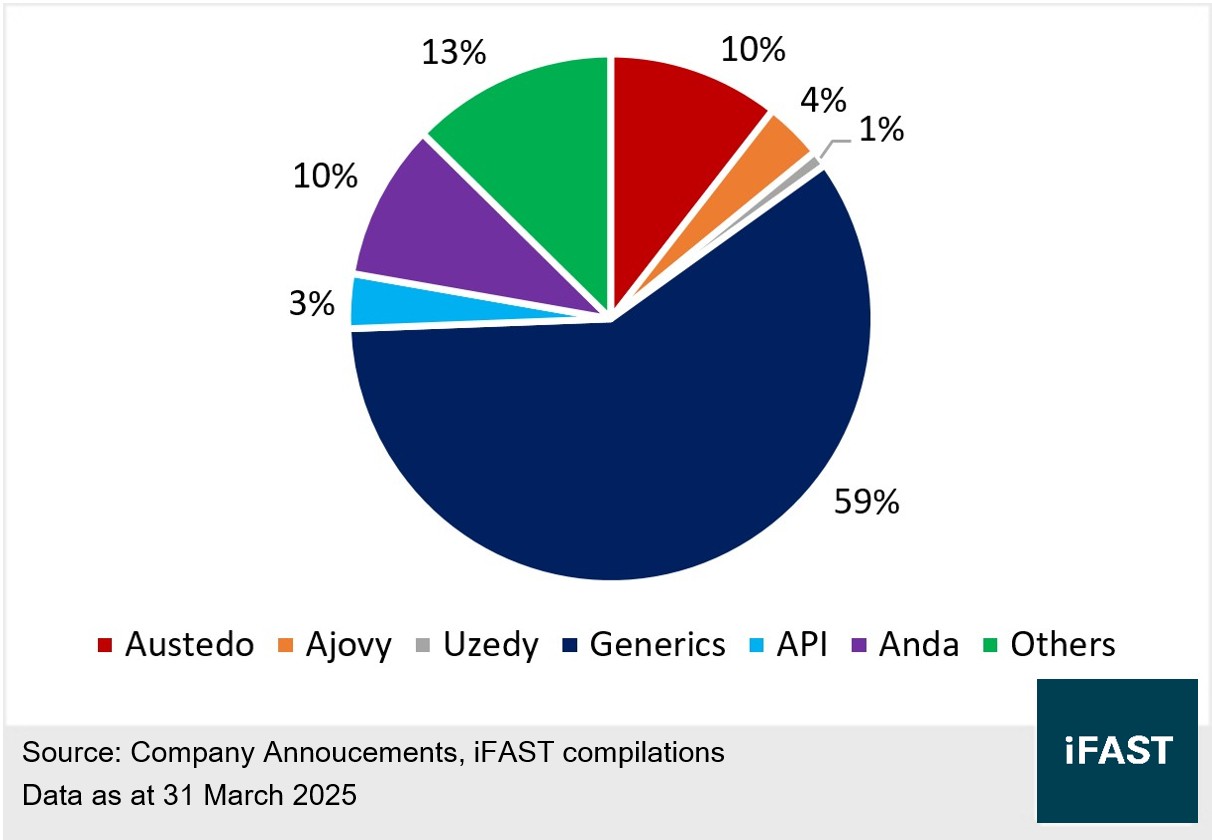
Starting with Austedo, since receiving the approval in 2023 and being found effective for symptoms related to Huntington’s Disease, this medication has become Teva’s largest revenue growth driver. In Q1 2025, Austedo has already generated US$410 million in revenue, marking 39% YoY growth, and accounting for 10.6% of the company’s total revenue (see Chart 1).
Chart 1: Teva’s Segment Revenue Distribution
Currently, Austedo’s main competitor is Ingrezza, which is developed by Neurocrine Biosciences and has been approved since 2017. However, following Austedo’s strong entry into the market, Neurocrine has already lowered its full-year sales forecast for Ingrezza in February this year, while on the other hand, Teva raised its full-year sales target for Austedo to US$1.95-2.05 billion, with a 2027 target reaching US$2.5 billion. This number already exceeds one-fourth of the company’s current revenue from generics, highlighting Austedo’s immense growth potential.
Meanwhile, Uzedy and Ajovy also saw impressive revenue growth of 156% and 26% YoY, respectively, in the first quarter of 2025 (see Table 1). Together, they are expected to contribute US$760 million in revenue for the full year. Looking ahead, TEV-’749, an Olanzapine LAI also for the treatment of schizophrenia, is expected to receive FDA approval in 2H26. Given the limited competition in this specific area, the combination of Uzedy and TEV-’749 has a strong chance of becoming Teva’s second major revenue growth driver, tapping into a market worth nearly US$3 billion.
Table 1: Teva’s Segment Revenue Performance
| (USD million) | 2025 Q1 | YoY Change | 2024 | YoY Change |
| Austedo | 411 | +39% | 1,688 | +36% |
| Ajovy | 139 | +26% | 507 | +18% |
| Uzedy | 39 | +156% | 117 | / |
| Generics | 2,306 | +3% | 9,461 | +11% |
| Active Pharmaceutical Ingredients | 130 | +2% | 553 | +3% |
| Source: Company Annoucements, iFAST Compilations Data as of 31 March 2025 | ||||
Cost Reduction Plan to Offset the Impact of the Loss of Exclusivity for gRevlimid
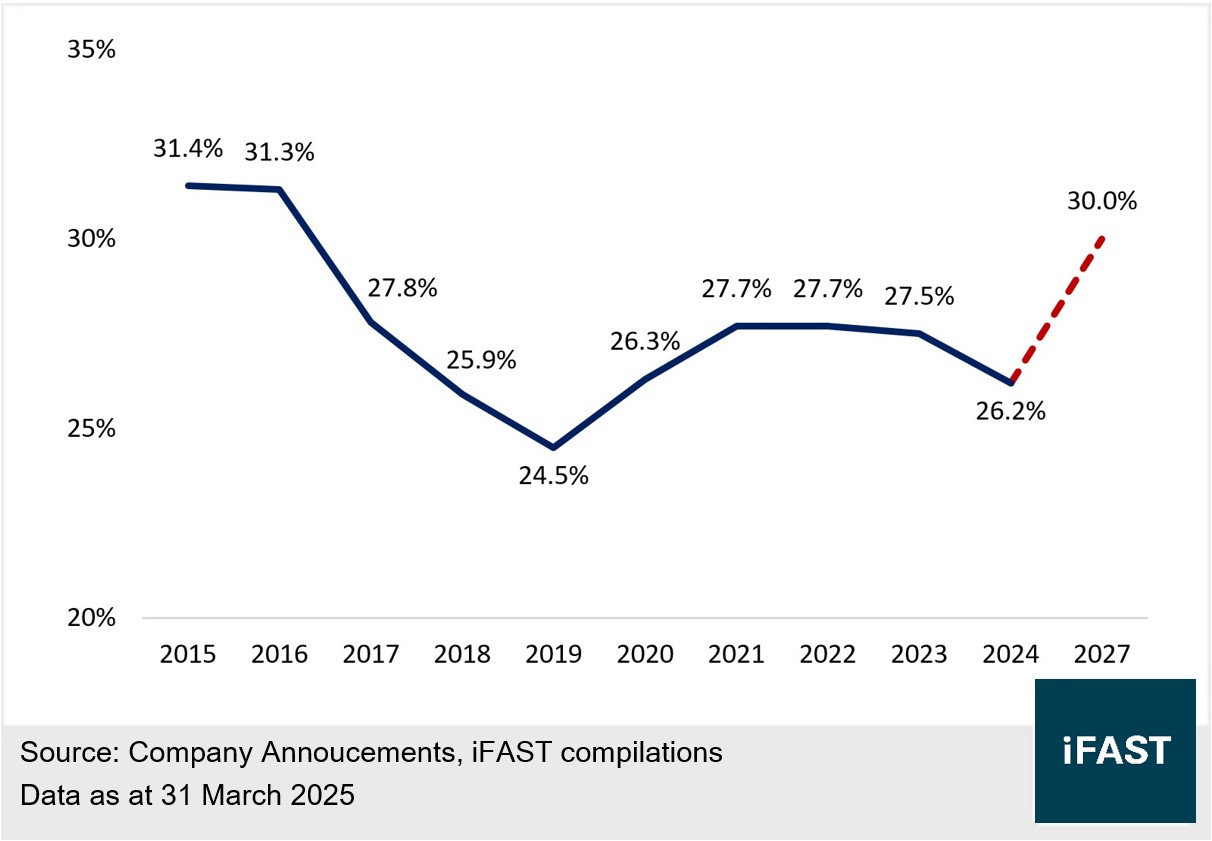
One of the major controversies Teva has faced in recent years is its lack of consistent profitability, especially due to several one-off asset impairments that have led to consecutive net losses. But even if we exclude these factors, Teva’s operating profit margin has been on a downward trend in recent years, reaching 26.2% in 2024, which is not very impressive compared to peers.
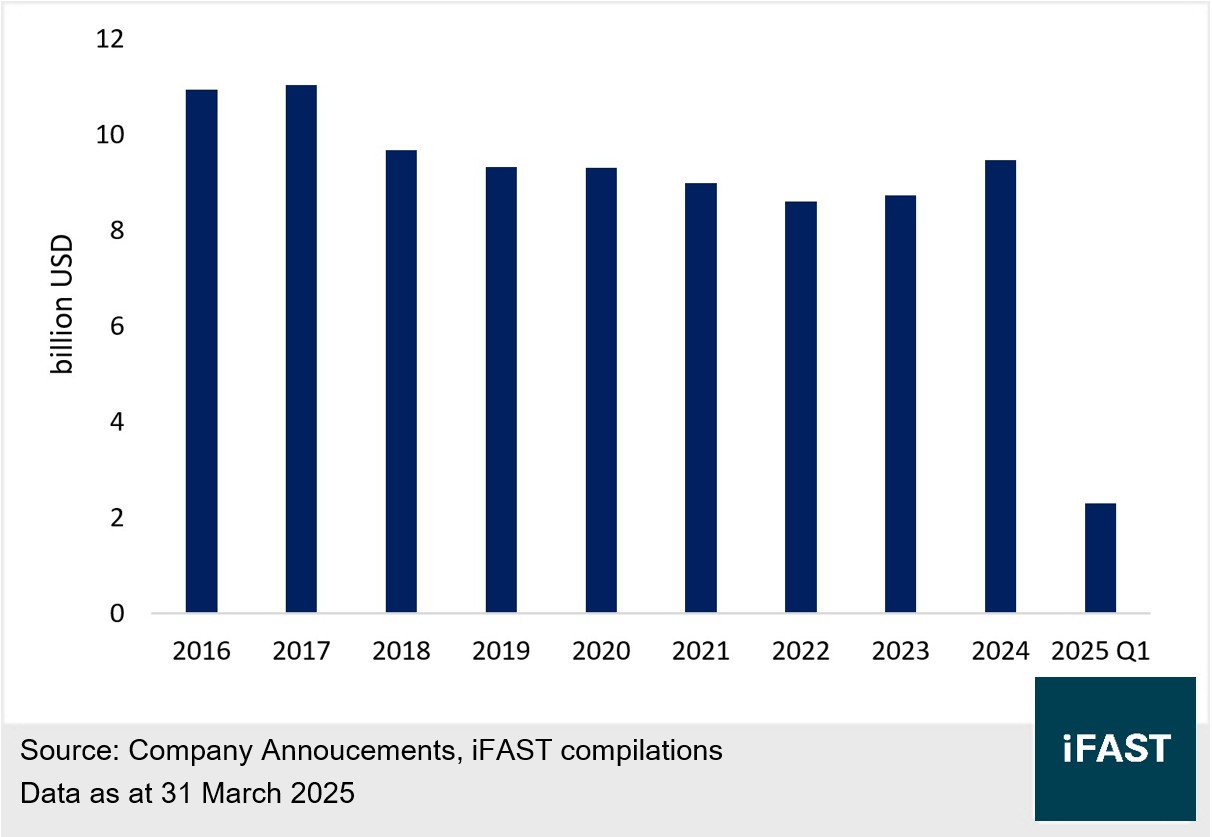
What’s more concerning to the market is that among the company’s 500+ generic products, gRevlimid, which is used in the treatment of multiple myeloma, is one of the products with largest revenue and highest margin. However, Teva’s sales exclusivity to gRevlimid will expire in 2026, and the expected revenue loss could be as much as US$1 billion, placing significant pressure on its generics business (see Chart 2).
Chart 2: Teva’s Generics Business Revenue
Nonetheless, the company has already developed strategies to mitigate the impact, including a US$700 million cost reduction plan. This involves organizational transformation, leveraging AI to enhance efficiency, and cutting supply-related spend. The goal is to release 8% headcount within two years, reduce general and administrative expenses by 100bps, and cut other costs by around 10%.
In addition, with the high profit margin contributed by a more optimized product mix led by Austedo and other innovative medications, Teva projects that by 2027, both total revenue and margin can actually increase, with operating margin expected to rise to 30% — the highest level since 2016 (see Chart 3).
Chart 3: Teva’s Operating Margin
Decent Credit Performance amid Continuous Deleveraging
In recent years, Teva has been steadily reducing its debt. At the end of March, its net debt has decreased to US$15 billion, down from US$34 billion in 2017. The net debt to EBITDA ratio has also fallen to 3.1 times (see Table 2), indicating solid progress in its deleveraging efforts.
Table 2: Teva’s Key Credit Indicators
| (billion USD) | 2025 Q1 | YoY Change | 2024 | 2023 |
| Total Debt | 16.7 | -15% | 17.8 | 19.8 |
| Net Debt | 15.0 | -10% | 14.5 | 16.6 |
| Adjusted EBITDA | 1.0 | +3% | 4.8 | 4.8 |
| Net Debt / EBITDA | 3.10x | / | 3.03x | 3.45x |
| Free Cash Flow | 0.1 | +238% | 2.1 | 2.4 |
| Cost of Borrowing | 4.55% | / | 4.65% | 4.6% |
| Source: Company Annoucements, iFAST Compilations Data as of 31 March 2025 | ||||
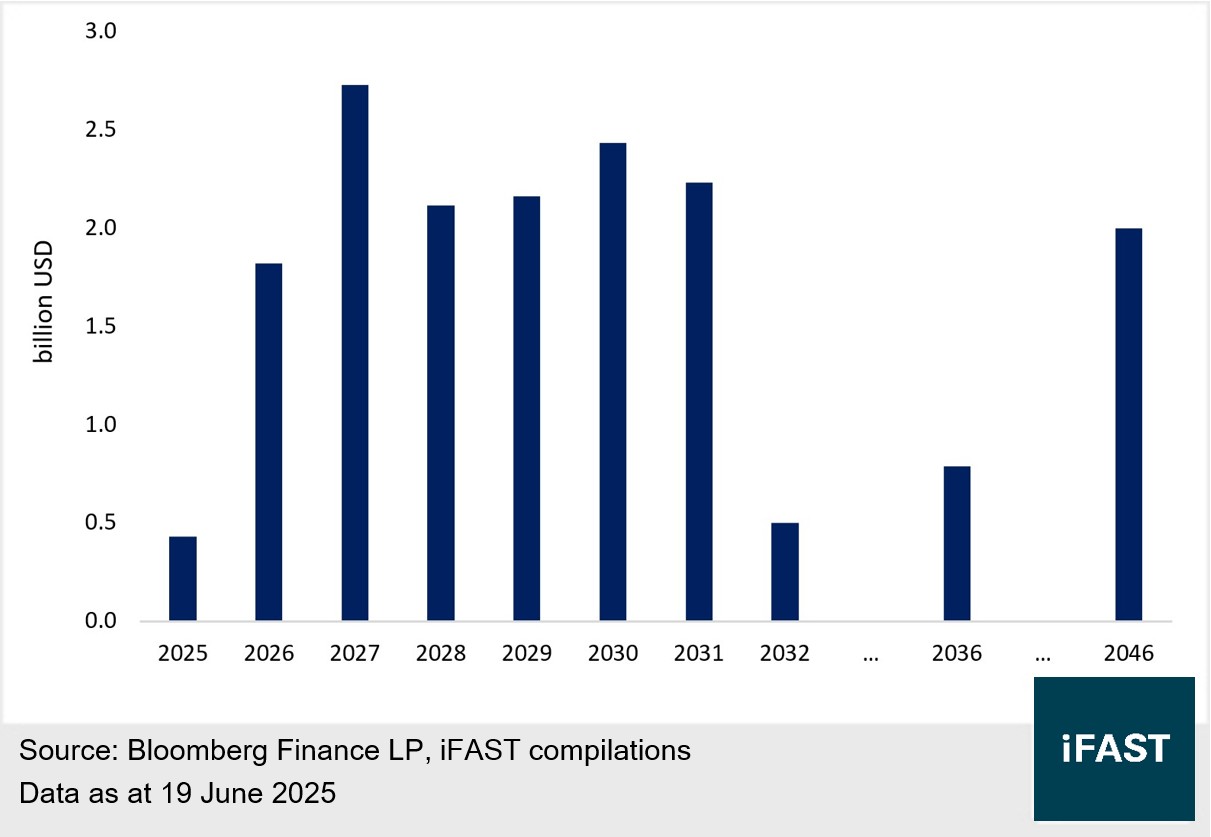
On the other hand, Teva expects its free cash flow for this year to be in the range of US$1.6-1.9 billion, which is lower than the US$2 billion-plus levels seen in previous years. However, since the company completed tender offers for several bonds and issued approximately US$2.35 billion in new bonds in May, its overall debt maturity profile becomes healthier (see Chart 4). We believe that Teva’s US$1.7 billion cash on hand, combined with expected cash flow, should be sufficient to cover principal repayments over the next two years. Additionally, the company still has US$1.8 billion in unused credit facilities at end-March, and its relatively low cost of borrowings provides further room to refinance through new bond issuance. Overall, the credit risk appears manageable.
In light of trade tensions, the company also reiterated that its import/export exposure to India and China is lower than most of its peers, with the majority of its imports coming from Europe and US allies such as Israel. Moreover, Austedo, which is primarily sold in the US market, is manufactured locally, so the overall impact is limited and has already been integrated in the company’s full-year guidance.
Chart 4: Teva’s Debt Maturity Profile
2029 and 2030 Bonds Look More Attractive
With Teva’s strong efforts in deleveraging, both S&P and Fitch have upgraded its credit rating over the past seven months. Currently, the USD bonds issued by the company are rated BB/BB+ (S&P/Fitch).
We believe the 2029 and 2030 bonds are particularly worth considering, as they carry lower duration risk compared to those longer-dated bonds, while still providing yields to maturity of over 5% (see Table 3).
Table 3: Teva’s USD Bonds
| Bond Name | Tenor | Yield to Maturity |
| TEVA 3.150% 01Oct2026 Corp (USD) | 1.3 years | 4.79% |
| TEVA 4.750% 09May2027 Corp (USD) | 1.9 years | 4.87% |
| TEVA 5.125% 09May2029 Corp (USD) | 3.9 years | 5.19% |
| TEVA 5.750% 01Dec2030 Corp (USD) | 5.5 years | 5.52% |
| TEVA 6.000% 01Dec2032 Corp (USD) | 7.5 years | 5.72% |
| TEVA 4.100% 01Oct2046 Corp (USD) | 21.3 years | 6.68% |
| Source: Bondsupermart Data as of 19 June 2025 | ||
Corporate Risks
The generics market is highly competitive, and rivals may lower prices to gain market share, which could put pressure on Teva’s profit margins.
Although Teva’s main production line and customer base are located in the US and other international markets, the company is still based in Israel. If tensions between Israel, Iran, and Palestine further escalate, it could still have some impact on the company’s operations.
Teva’s debt is primarily composed of bonds with fixed rate. In a high interest rate environment, the company will need to refinance at higher rates, leading to a gradual increase in interest expenses.
Declaration: For specific disclosure, at the time of publication of this report, IFPL (via its connected and associated entities) and the analyst who produced this report hold a NIL position in the abovementioned securities.