1. A conglomerate with four distinctive business divisions
In 1968, Temasek Holdings founded Keppel Corporation Limited’s (“KCL”) predecessor, Keppel Shipyard, after the sovereign wealth fund took over Keppel Harbour from British colonials. The company has since then underwent significant business transformations to expand into the conglomerate it is today. Temasek Holdings remained as a key shareholder with a 21.2% ownership in the group.
A constituent of the Straits Times Index, KCL is listed on the SGX mainboard with a huge market cap of S$11.2 billion as at 12 Sep 19.
KCL reports four business segments, namely offshore & marine (“O&M”), property, infrastructure and investments, with operations spanning across mainly Singapore, China, Brazil and ASEAN countries. A home-grown conglomerate, 73.1% of KCL’s revenue in 1H19 was generated from Singapore (see Figure 1).
Figure 1: KCL's revenue breakdown by geography
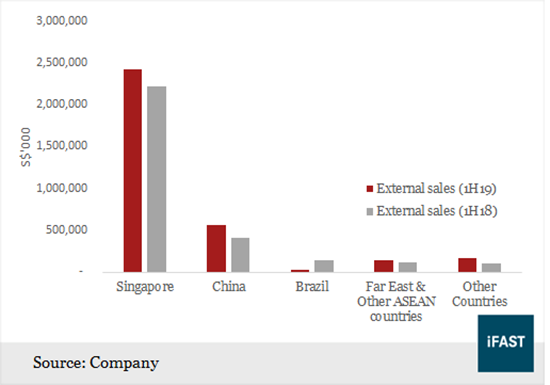
Overall, all regions saw revenue growth in 1H19 except Brazil, with revenue down 78% YoY to S$31.9m. This is no surprise in our view, as the group is still recovering from its painful chapter in Brazil, after recording S$476m of cumulative losses in relation to its rig contracts with Sete Brasil and paying S$619m in financial penalty and related costs as part of a global resolution for corruption probes into the group’s O&M business in Brazil. That said, KCL’s O&M business is still seeing growth overall, with net orderbook rising to S$5.5 billion, the highest since 2016.
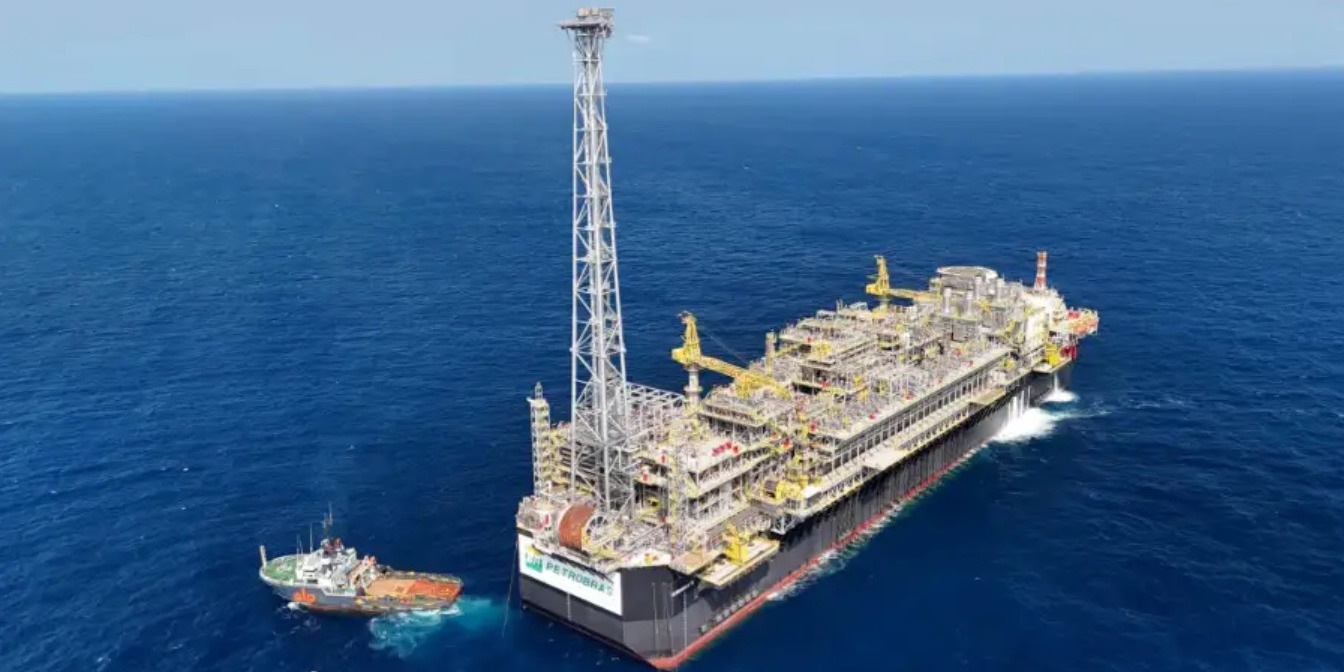
KCL’s four business segments have distinctive business models. The O&M division has operations in Brazil, China, Singapore, the US and other countries. It is principally involved in offshore rig design, construction, repair and ship building.
The property division is involved in property development and investments as well as property fund management across several countries including China, Vietnam, Singapore and Indonesia. In recent years, most of KCL’s property sales are made in China and Vietnam.
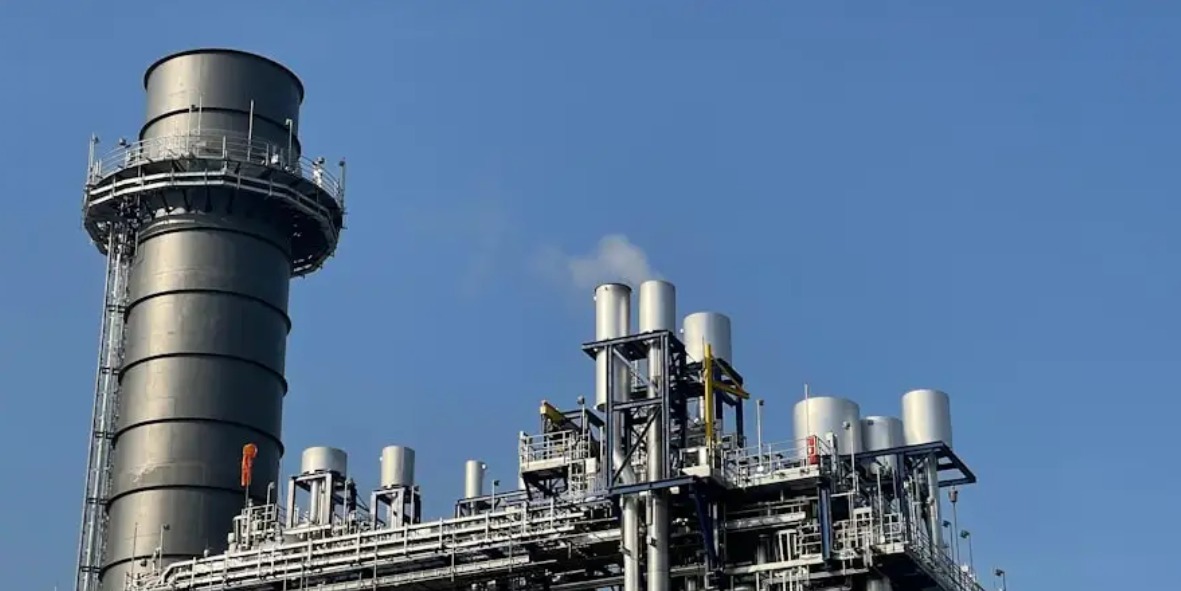
The infrastructure division mainly comprises KCL’s engineering business, with activities ranging from power generation and environmental engineering to data centres and logistics. The segment is active in China, Qatar, Singapore and the UK.
Finally, KCL’s investments division consists mainly of the group’s investments in fund management, M1 Limited, k1 Ventures Ltd, Sino-Singapore Tianjin Eco-City Investment and Development Co., Limited and equities. The segment also draws earnings from 40%-owned KrisEnergy Limited, a financially distressed oil and gas company that has recently filed for court protection. We will elaborate on the KrisEnergy situation in a later section.
Earlier this year, KCL announced a joint offer with Singapore Press Holdings Limited (“SPH”) to acquire majority control of M1, the Singapore-based telecommunications company. The transaction led to a 100% ownership in M1 mainly via Konnectivity (a joint venture between KCL and SPH). We will discuss more about the deal in a later section.
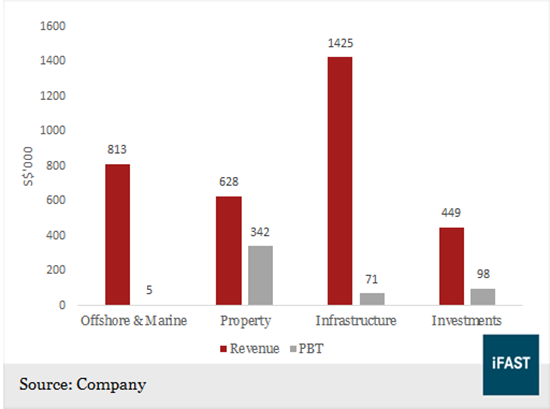
Overall, infrastructure is the top segment in terms of revenue (see Figure 2), contributing S$1.43 billion of sales in the six months ended 30 Jun 19. The O&M and property segments trail behind, contributing S$813m and S$628m of revenue respectively. In terms of profitability, the property division stands out with S$342m of profit before tax (“PBT”) in 1H19, contributing around 70% of the group’s PBT.
Figure 2: KCL's revenue and PBT mix in 1H19
2. Growing recurring income base
A well-diversified conglomerate, KCL owns and operates several business units that enable it to earn recurring income. The group derives a significant portion of its recurring income from investment properties held under its umbrella of REITs and business trusts, including Keppel REIT, Keppel-KBS US REIT and Keppel Infrastructure Trust. These asset platforms hold iconic properties around the globe such as Bugis Junction Towers (Singapore), The Plaza Buildings (Washington, the US) and a number of data centres and energy plants both locally and overseas.
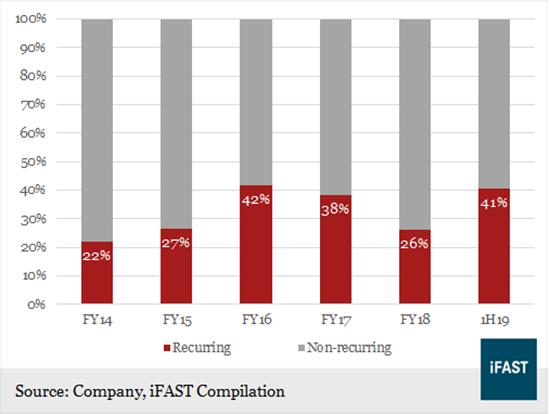
As depicted in Figure 3, KCL’s recurring income base has been growing over the years. In 1H19, 41% of net profit was derived from recurring income streams. We like KCL’s multiple sources of recurring income, which may help to offset the occasional underperformance of divisions such as the O&M business.
Figure 3: KCL's net profit by income type
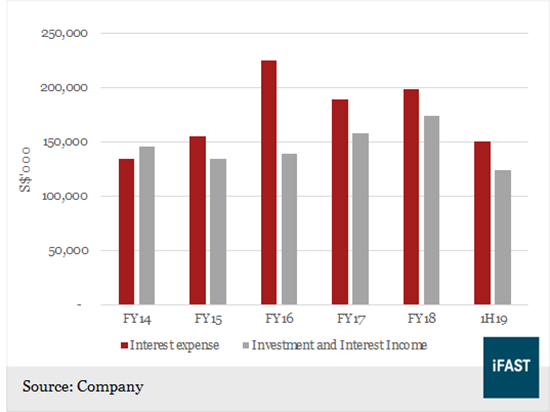
A substantial portion of KCL’s recurring income is derived from the group’s investment activities. Distributions from the group’s investment in bonds, debentures, deposits and associated companies made up most of its investment income. Over the years, KCL has been able to generate substantial amounts of investment and interest income that can cover a large part of the group’s interest expenses (see Figure 4).
Figure 4: KCL's interest expenses relative to its investment and interest income
3. 1H19 results highlights
Group revenue for the six months ended 30 Jun 19 rose 10.8% YoY to S$3.3 billion, mainly lifted by the consolidation of M1’s results. However, there was mixed performance across KCL’s four divisions.
Revenue from O&M was down 13.4% YoY to S$813.3m due to the absence of revenue recognition from the sale of jackup rigs to Borr Drilling Limited in previous year’s corresponding period. That said, KCL’s O&M business is gradually recovering, and major jobs delivered in 2019 include two jackup rigs, two floating production storage and offloading (“FPSO”) conversions and three dredgers. The division swung to a net profit of S$8.7m in 1H19, a significant improvement from the net loss of S$41.3m in 1H18.
We think the encouraging trend at KCL’s O&M business is likely to continue given its healthy orderbook. As at 30 Jun 19, KCL has a net orderbook of S$5.5 billion, with S$1.3 billion in net contract value scheduled to be delivered by 2020. The orderbook is the highest since 2016, and a significant 44% comprises of contracts for FPSOs and floating liquefied natural gas vessels, which to our understanding carry higher profit margins than other projects such as semi-submersible and jackup rigs.
Nonetheless, KCL’s CEO Mr Loh Chin Hua shared in the 1H19 results briefing that while the group is pleased to see improving results from the O&M division, management does not expect a rapid recovery to healthy profitability. “The trend is encouraging, but in terms of profitability, we do not see a V-shaped recovery,” Mr Loh said.
In the previous quarter, Mr Loh shared a target of hiring 1,800 full-time staff over 2019 for the O&M division. As of 2Q19, KCL is sticking to that plan and has hired 1,190 new personnel in the O&M segment. Group staff costs consequently rose 18.2% YoY to S$536.3m in 1H19, and were likely to increase further given the company’s plan to boost headcount.
Revenue from the property division fell 21% YoY to S$628m, mainly due to lower revenue from Singapore projects, which was partly offset by higher revenue from China projects. Meanwhile, net profit fell at the faster pace of 57% YoY to S$262m due to the absence of en-bloc sales of development projects, which amounted to S$416m in 1H18. The sizeable earnings decline in KCL’s property division was the primary factor behind the 34% YoY fall in the group’s 1H19 PBT to S$390m (1H18: S$586m).
Nonetheless, the property division saw robust sales volume with 2,100 units sold in 1H19 (1H18: 1,385), mostly in China (1,140 units) and Vietnam (610 units). Around 15,000 units will be ready to launch from 2H19 to 2021 and the group has a huge residential land bank of about 46,000 units as at 30 Jun 19.
Revenue from the infrastructure division rose by 17% YoY to S$1.42 billion on the back of increased sales in the power and gas businesses, progressive revenue recognition from the Keppel Marina East Desalination Plant project and the Hong Kong Integrated Waste Management Facility.
Notably, the Open Electricity Market (“OEM”) initiative launched by the Energy Market Authority last year have also contributed to the increase in revenue. According to KCL’s media release for its 1H19 financial results, the group has secured over 150,000 household customers in Singapore. Based on the statistic of 1.33 million of resident households (as of 2018) reported by the Department of Statistics Singapore, that number translates to an impressive market share of 11.3% within a year since the launch of the OEM.
The investments division reversed from a net loss of S$46.0m in 1H18 to a net profit of S$25.0m in 1H19. Fair value gains from the revaluation of existing interests in M1 as at the acquisition date, and higher contributions from Keppel Capital (which holds the group’s interests in its REIT management and fund management entities) and M1 were the primary profit contributors. Conversely, a higher fair value loss on KrisEnergy warrants, charges related to the M1 acquisition, and impairment provision for an associated company detracted from earnings.
We expect several recent developments to contribute positively to KCL’s investments division. The group is a cornerstone investor in Prime US REIT, which made its debut on the SGX in July, taking up 6.8% of equity interest at the initial public offering. KCL also owns 30% of equity interest in Prime US REIT’s manager. In addition, Keppel REIT completed in May the acquisition of T Tower, an office building in Seoul.
4. Credit highlights
In 1H19, the group’s total debt rose to S$11.2 billion, up significantly from S$7.5 billion as at 4Q18. The increase in debt was mainly due to additional borrowings for the acquisitions of M1 (S$1.23 billion) and remaining interest in Keppel Telecommunications & Transportation (S$0.22 billion), as well as consolidation of M1’s net debt of S$0.41 billion.
Meanwhile, cash fell by S$213 million to S$1.77 billion over the same period primarily due to dividend payment. Net gearing (net debt/equity) consequently rose to 0.82x from 0.48x over the same period, reflecting the increased debt load. While net gearing is significantly higher, we take comfort from the vast tangible asset base of KCL, which should help to reduce refinancing risk.
As at 30 Jun 19, secured borrowings stood at just S$1.01 billion. In contrast, KCL has S$2.90 billion of investment properties and S$6.10 billion of investments in associated companies, which are mainly its equity interests held in Keppel REIT (47%), Keppel Infrastructure Trust (18%), Keppel DC REIT (25%) and Sino-Singapore Tianjin Eco-City Investment and Development Co., Ltd (50%). In addition, the group also carries S$5.66 billion of inventories, comprising mostly of properties held for sale.
Net gearing may still increase slightly as KCL settles several transactions announced after June. These include the acquisitions of a 60% interest in three land parcels in Vietnam (S$76m); a 25% equity interest in a mixed-use development project in Nanjing, China (S$49.5m in acquisition consideration and S$91.9m in shareholders’ loan); and Shangdi Neo (a commercial property) in Beijing (S$35.1m). In their 1H19 results briefing, management shared their expectation of keeping net gearing below 1x.
Corresponding to the increased borrowings, interest expenses rose from S$99.3m in 1H18 to S$150.6m in 1H19. As a result, interest coverage (EBIT/interest expenses) fell from 8.5x to 4.2x over the same period. That said, we think the current level of interest coverage is still healthy. If we look at the net finance costs of just S$24.1m in 1H19 (1H18: S$29.5m) instead by subtracting investment income and interest income from interest expenses, we find adjusted interest coverage (EBIT/net interest expenses) at about 21.3x (1H18: 26.3x).
5. Cash flows declined sharply due to higher working capital requirements and acquisitions
The group’s net operating cash flow swung to negative S$896.4m in 1H19 from positive S$356.8m in 1H18 due to higher working capital requirements. Particularly, cash receipts from contract assets (value of contract work that is invoiced but not yet received) were S$43.4m, down from S$557.3m in 1H18. Meanwhile, KCL also recorded a cash outflow of S$419.6m (1H18: outflow of S$453k) due to an increase in trade debtors. We understand that these receivables are mainly attributable to KCL’s O&M business, and a large part of them are either due for more than six months or carry higher counterparty risks.
Net cash flow from investing activities likewise swung to negative S$1.42 billion in 1H19, compared to a cash inflow of S$460.1m in 1H18. In the six months ended 30 Jun 19, the group incurred cash outflows on acquisitions and capital expenditure (primarily deployed for the M1 acquisition) of S$1.78 billion, which were partly offset by divestment and dividend income of S$171.9m and advances from associated companies of S$189.9m.
KCL plugged the cash flow gap by drawing down on S$3.19 billion of term loans, which led to S$2.10 billion of financing cash inflow. The group paid out S$282.4m of dividends in 1H19 (1H18: S$254.3m). We note that KCL has recorded dividend payout ratios of more than 50% since 2014, which may continue to pressure its cash flows.
6. The M1 acquisition
KCL shared in its 2018 annual report that one of the group’s focus for this and next year will be to transform M1’s business, harnessing synergies to grow its business-to-consumer market. Some of these implementations have already taken place, with KCL’s energy unit Keppel Electric bundling its power solutions with M1’s mobile services for customers.
Other innovative plans include partnering with Infocomm Media Development Authority and PSA Corporation Ltd to test fifth generation cellular network technology in a live environment for port applications. M1’s customer base grew to 2.25m at the end of June from 2.16m in 1H18, while revenue climbed 10.7% YoY to S$561.0m.
The M1 acquisition has brought net gearing to a record high level of 0.82x since 2002, up from the decent range of 0.11- 0.56x in the previous five financial years. At this juncture, we think it is too early to comment on the monetary benefits that the M1 acquisition can bring to the group.
Figure 5: Will a higher gearing translate to better ROE eventually?
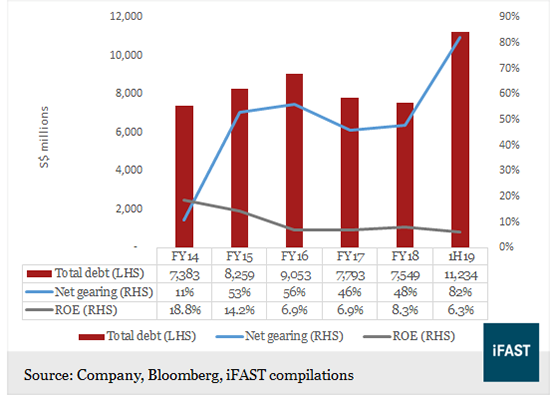
Looking into the past, Keppel had undertaken similar big-ticket deals, such as when it offered to buy out minority shareholders of its property arm, Keppel Land Limited, for as much as S$3.6 billion. Net gearing as a result jumped from 0.11x in 4Q14 to 0.53x in 4Q15. Meanwhile, return on equity (“ROE”) fell from 18.8% to 14.2% over the same period, and gradually slipped to 6.3% (annualised) as at 30 Jun 19.
The biggest earnings detractor over the period was clearly the O&M division, which suffered from low oil prices. To put KCL’s performance into perspective, another Singapore-based conglomerate Sembcorp Industries Limited (“SCI”) likewise saw a decreasing trend in ROE, registering a ROE of 5.1% in 2018.
We take comfort that M1 is already generating a ROE of 20% (as per KCL) and as mentioned earlier, t transforming M1’s business is on KCL’s key agenda for the coming years. Some of the plans ahead include a digital transformation and cost management initiatives. As a group, management expects ROE to improve to about 15% in the medium-to-long term.
7. Potential impact from distressed associate KrisEnergy
On 14 Aug 19, KrisEnergy revealed that it has applied for a six-month debt moratorium, seeking protection from the company's creditors while it tries to restructure debt totalling some USD476.8m. KCL is a substantial shareholder and a creditor of KrisEnergy, owning a 40% equity stake in the upstream oil and gas operator.
Besides the equity interest held, there is a bilateral contract between KCL and DBS, pursuant to which the key economic risk in a USD200m revolving credit facility (“RCF”) extended by the bank to KrisEnergy, is held by Keppel Corp. KCL has expressed support for KrisEnergy’s debt moratorium, noting that without the moratorium, there would be significant risk that legal actions initiated by KrisEnergy’s creditors may jeopardise its ability to formulate a viable debt restructuring plan.
According to KCL, a value of approximately S$131m is attributed to its direct investments in KrisEnergy. Including the USD200m exposure to the RCF, the group’s total exposure to KrisEnergy is still just a small fraction of its total assets (S$30.48 billion).
Owing to KrisEnergy’s debt moratorium, we are likely to see further impairments in KCL’s investments in KrisEnergy. That said, we do not think such impairments would affect KCL’s overall financials substantially, even assuming a worst case scenario where the group write down the carrying amount of its investments to zero. Nonetheless, if KrisEnergy’s restructuring plan involves KCL putting up additional capital (e.g. via an equity injection), it might have a negative impact on KCL’s credit profile depending on the quantum of the transaction.
8. Bond recommendations
We initiate research coverage on KCL with a neutral view on its credit outlook. We think KCL will be able to maintain its good financial health in the foreseeable future, although we are mindful of the surge in net gearing arising from the M1 acquisition.
We like KCL’s well-diversified business segments that generate multiple income streams. In addition, the association to Temasek due to its substantial shareholding allows KCL to enjoy good access to the capital markets.
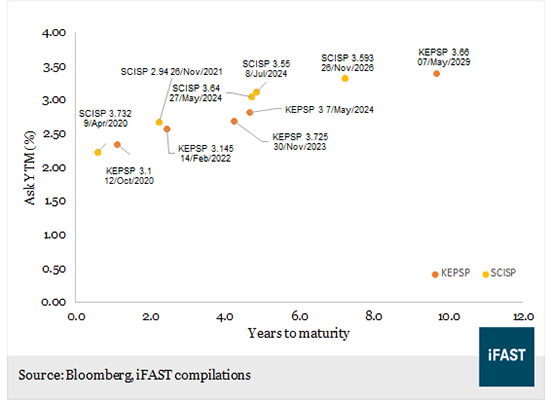
We are mostly neutral on KCL’s bonds as they seem to be trading on the tight end. Among the KEPSP bonds, we prefer the S$300m KEPSP 3.800% 23Apr2027 Corp (SGD) that has an indicative ask yield to worst of 3.08% (Z-spread: 147bps). The note is scheduled to mature on 23 Apr 27 and is first callable on 23 Apr 22. If the bond is not redeemed on its first call date, the coupon rate will increase from 3.8% to 4.2%.
Given current interest rates and credit spreads on KCL’s bonds, we think there is a good chance that the company will choose to call the KEPSP 3.8% ‘27s on first call. As a reference, KCL issued a five-year senior unsecured note—the S$150m KEPSP 3.000% 07May2024 Corp (SGD)—in April at a coupon rate of 3%, which has subsequently traded up to yield 2.81% as at 12 Sep 19.
We also like the shorter-dated S$500m KEPSP 3.100% 12Oct2020 Corp (SGD) that is indicating at an ask yield to maturity of 2.34% (Z-spread: 69bps), representing a decent return in our view for a remaining maturity of about one year.
The bonds of SCI provide a good pricing reference for the KEPSP curve. SCI is also a Singapore-based conglomerate operating in many of the same areas (O&M, property development and utilities), and is likewise geographically diversified.
While we note that the KEPSP curve is trading slightly tighter (see Figure 6) than the SCISP curve, this can be explained by SCI’s relatively higher credit risk. SCI has a net gearing of 1.1x (as at 30 Jun 19), and its business profile is less diversified, with 97% of its 1H19 revenue coming from the energy (65%) and marine (32%) segments.
Figure 6: Relative valuation
For specific disclosure, at the time of publication of this report, IFPL (via its connected and associated entities) and the analyst who produced this report hold a NIL position in the abovementioned securities.