Bond Name
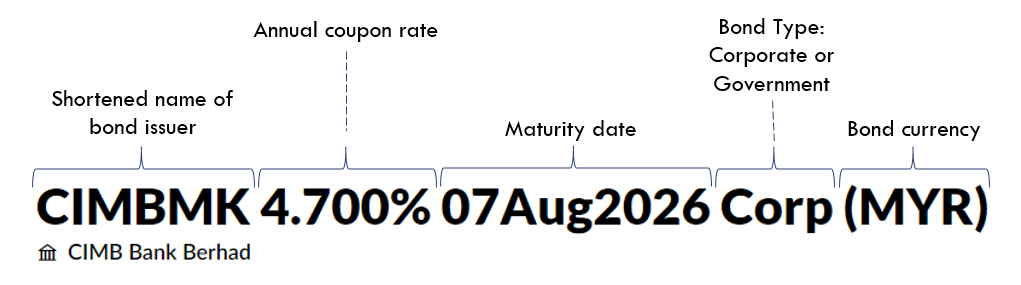
All bonds available here follow the same naming convention:
- In all caps, shortened name of bond issuer
- Full name of bond issuer is listed under the bond “name”
- Annual coupon rate
- Maturity date
- Bond type: corporate or government
- In parentheses, currency of bond
Latest Bond Yield, Prices, and Key Features
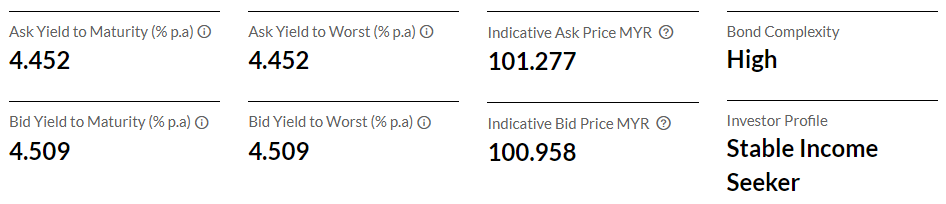
Ask Price: The minimum price that a seller is willing to take
for the bond, or the price that an investor looking to acquire the bond will be
paying.
Bid Price: The maximum price that a buyer is willing to pay for
the bond, or the price that an investor looking to sell the bond will be
receiving.
Ask/Bid Yield: Yield refers to the annualised return an investor expects to receive from a bond. Yield to Maturity (YTM) measures this based on assumptions that the bond is held to maturity. Yield to Worst (YTW) in turn measures the lowest possible yield that can be expected from the bond. Investors looking to buy should look at Ask Yield, and those looking to sell at Bid Yield.
Also available at a glance are information on the bond’s complexity and suitability.
Bond Complexity
All bonds listed on Bondsupermart are accorded one of three complexity ratings – low, medium or high – to aid in your selection process.
|
Complexity rating |
Description of bonds |
|
Low |
Simple, plain vanilla bonds with no optionality. |
|
Moderate |
Bonds with embedded options. |
|
High |
Bonds with equity-like features. |
Investor Profile
Bonds listed on Bondsupermart are also assessed based on their compatibility for three groups of bond investors – fixed income alternatives, stable income seekers, and high yield seekers.
|
Investor Profile |
Description of bonds |
|
Fixed Deposit Alternative |
Certificate of deposits, investment
grade government or quasi-sovereign bonds. |
|
Stable Income Seeker |
Investment grade corporate bonds. |
|
High Yield Seeker |
High yield corporates and
non-investment grade government or quasi-sovereign bonds. |
Bond Express

Bond Express is an initiative that allows you to trade a selected list of wholesale and retail bonds with firm executable prices and volumes (as seen above). You can also trade in lot sizes (nominal values) from as little as 1,000 for retail bonds, and 5,000 for wholesale bonds.
Bond Information
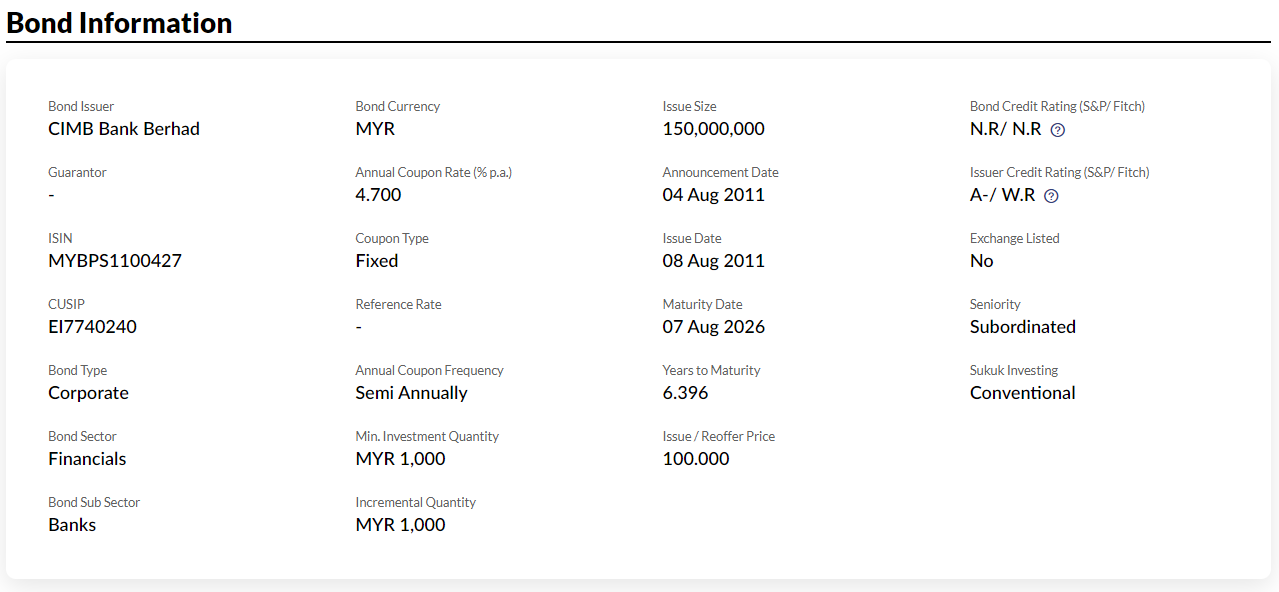
Key information on the bond, such as its coupon rate, bond issuer sector and minimum investment amount, is contained here in the Bond Information table. You may wish to refer to Your Cheatsheet to Common Terms and Jargon for Bonds for further explanation on the significance of these information and how they relate to your investment in the particular bond.
Bond Performance
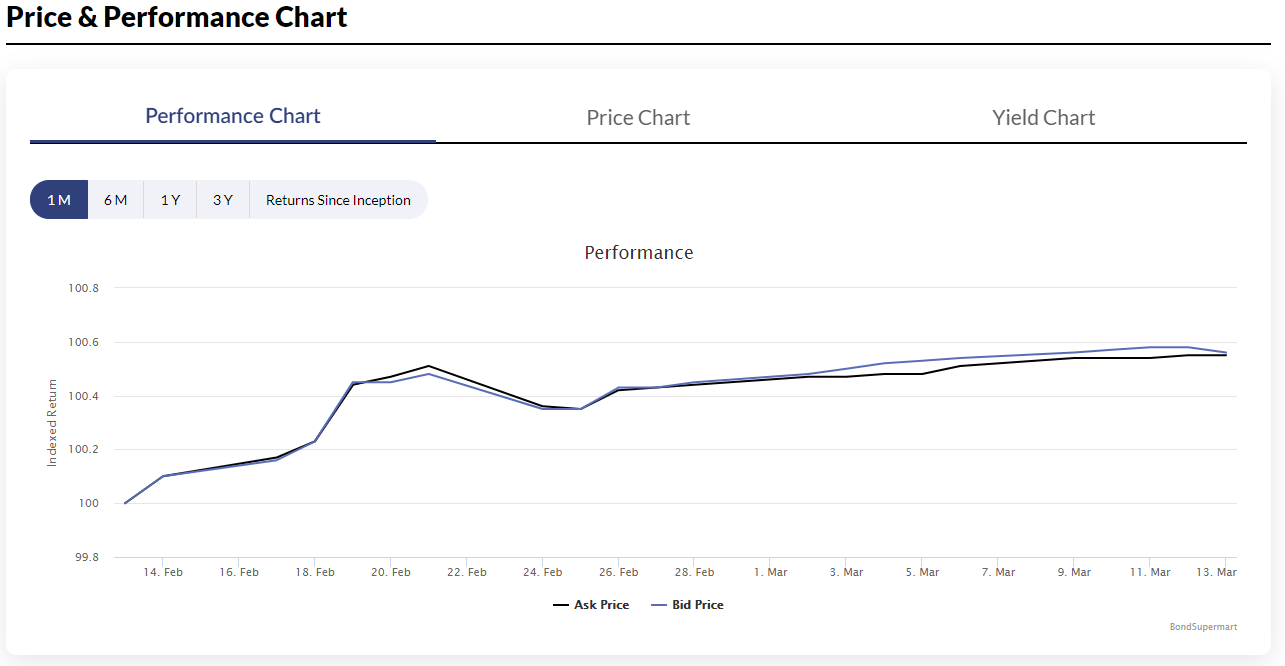
View the bond’s performance over various time periods using the charting functions. You can also toggle between the bond’s price and yield charts easily using the tabs on top. To view the exact data points – date and the bond’s corresponding bid and ask prices – simply mouse over the chart.
Special Features
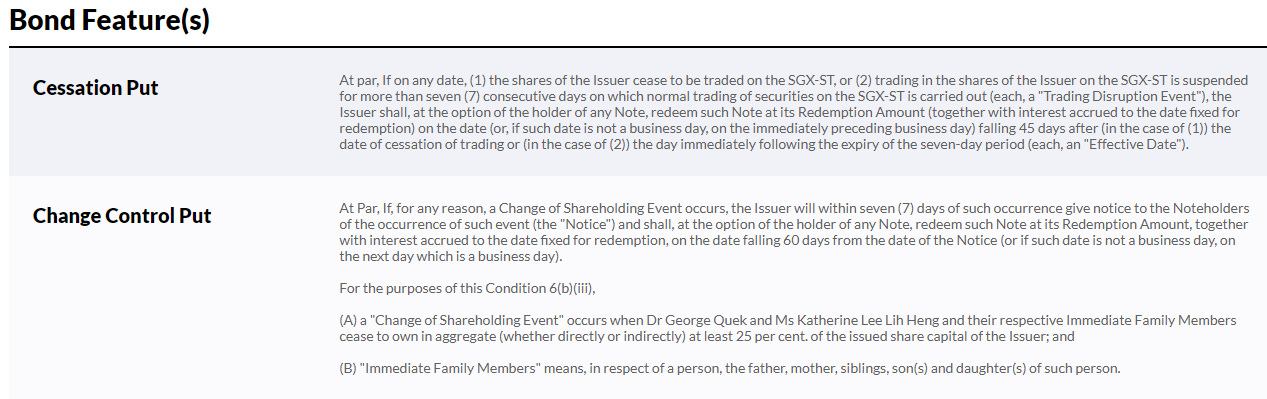
Should the bond have embedded options or other special features that may affect its performance, these features and their provisions will be detailed in this area.
Related Documents
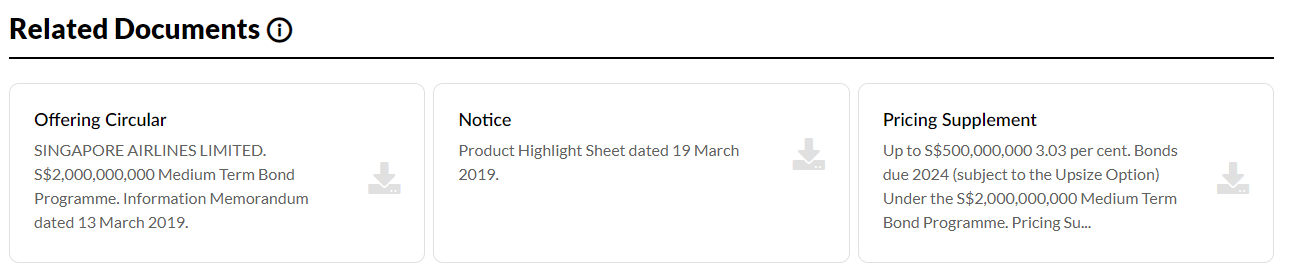
Within each factsheet, you can find the bond’s Offering Circular, Pricing Supplements and Notices where applicable. The Offering Circular effectively functions as a prospectus for listing the bond and the Pricing Supplement offers finalised terms of the bond. Notices are Product Highlight Sheets and essentially highlight the key information and risks relating to the offer of the bonds.
Bond Calculator
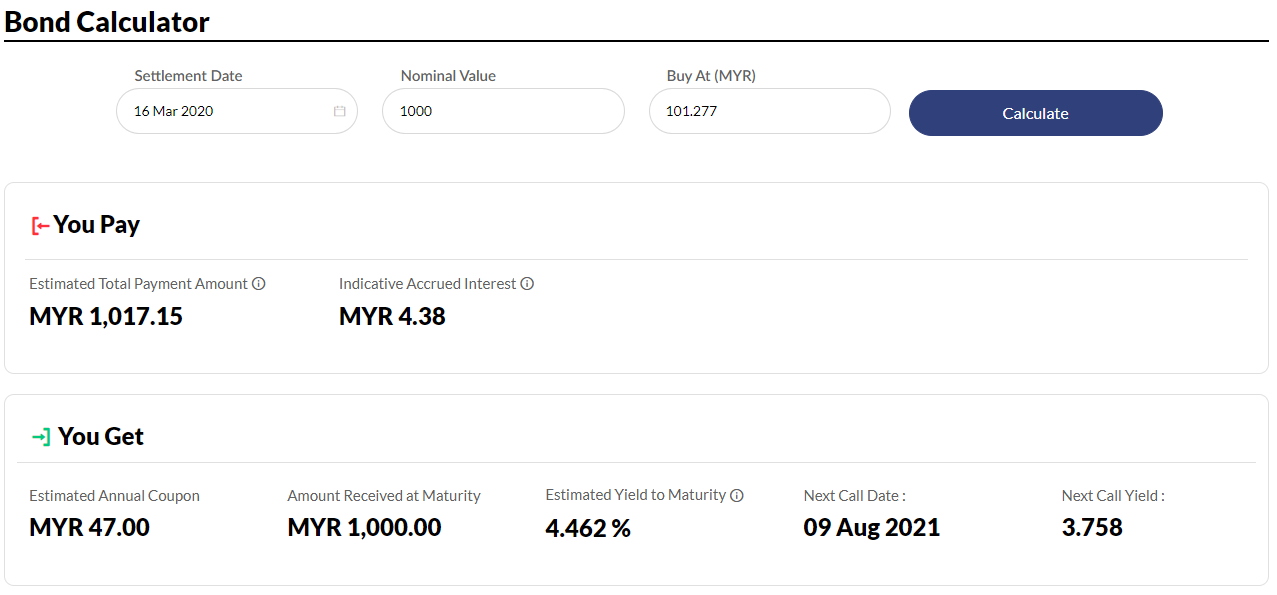
Compute your potential gains with this bond using the Bond Calculator. Key in the settlement date, nominal value of your investment, and the purchase price. By default, the settlement date, nominal value, and purchase price are set to today’s date, the minimum purchase amount as instructed by the bond’s offering document, and the latest indicative ask price respectively.
What You Pay and What You Get – the numbers below will immediately reflect the changes in the calculator, giving you a quick assessment of your potential investment. In addition, you can mouse over the information icons to receive further explanation on the various fields such as Indicative Accrued Interest and Estimated Yield to Maturity.
Related Insights
Our in-house analysts cover a variety of issuers and sectors to provide you with timely updates and new bond ideas. Under this tab, you’ll easily find articles and videos relevant to the bond.