2024 in review
2024 turned out to be a year as we had expected. Global interest rates have been staying higher for longer, despite recent rate cuts. In the nine months of holding policy rate at the peak, uncertainties in economic data have translated into volatility for the yields – one that we see across the US Treasuries (“UST”) and Singapore Government Securities (“SGS”) (Chart 1).
As a result, we saw rather varied performance for SGS across the year. Collectively, the SGD sovereigns saw almost no gains across the first half of 2024. The tide turned from July onwards after yields fell in anticipation of rate cuts (Chart 2). This did not last long as SGD sovereigns surrendered the positive returns as longer-end yields rose after the first Federal Reserve cut.
Despite gyrations across bond markets, the shopping list for SGD bonds got longer than ever as 2024 saw a record level (across the past decade) of new issuances for investors (Chart 3). Despite yields still staying relatively high, the need for debt financing drove issuers to the primary markets.
2024 saw a significantly higher issuance amount in contrast to the maturing debt (Chart 4) with new entrants coming to the primary markets. Throughout the year, we saw new issuers like Toronto-Dominion Bank, Ho Bee Land and Sabana Industrial REIT, while past issuers like Banco Santander and Manulife have also re-entered the SGD debt space after a hiatus.
Financials continue to form the bulk of new issuance in 2024, with new issuance climbing even higher than the previous year. Banks have demonstrated resilient financial performance year-to-date, with the delay in rate cuts allowing them to maintain their strong profitability. New issuances were mostly contributed by major and regional banks (Table 1) with approximately SGD 10b of issuances this year.
Chart 1 – Yields on the Singapore Government Securities (%)
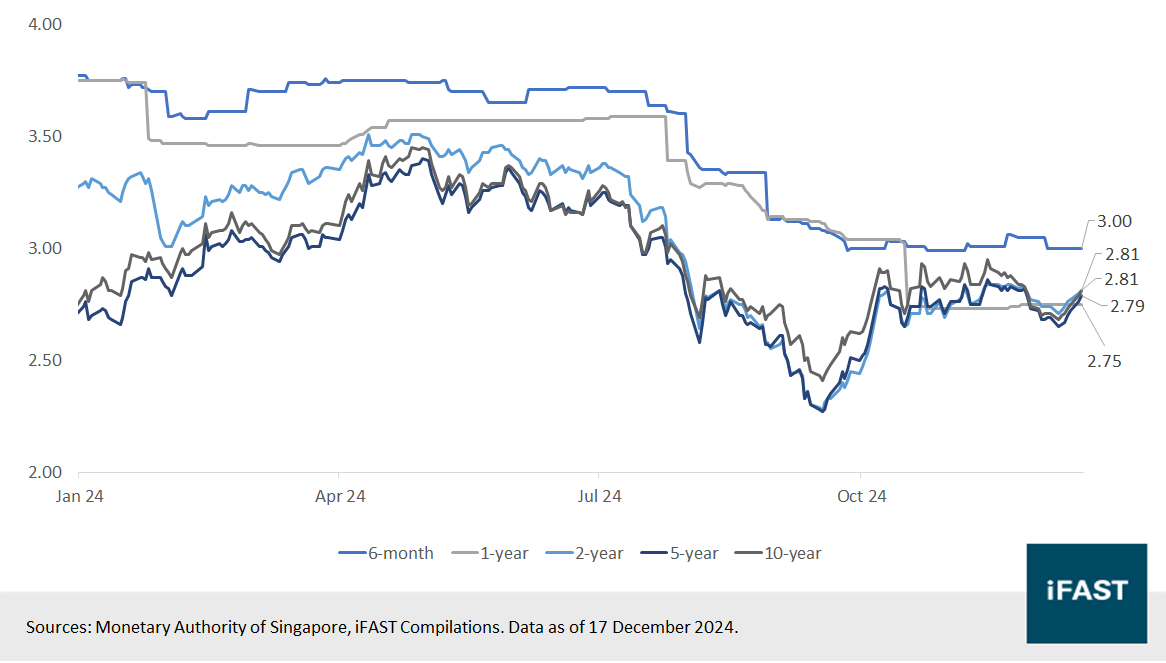
Chart 2 – Year-to-date performance of SGD bonds (%)
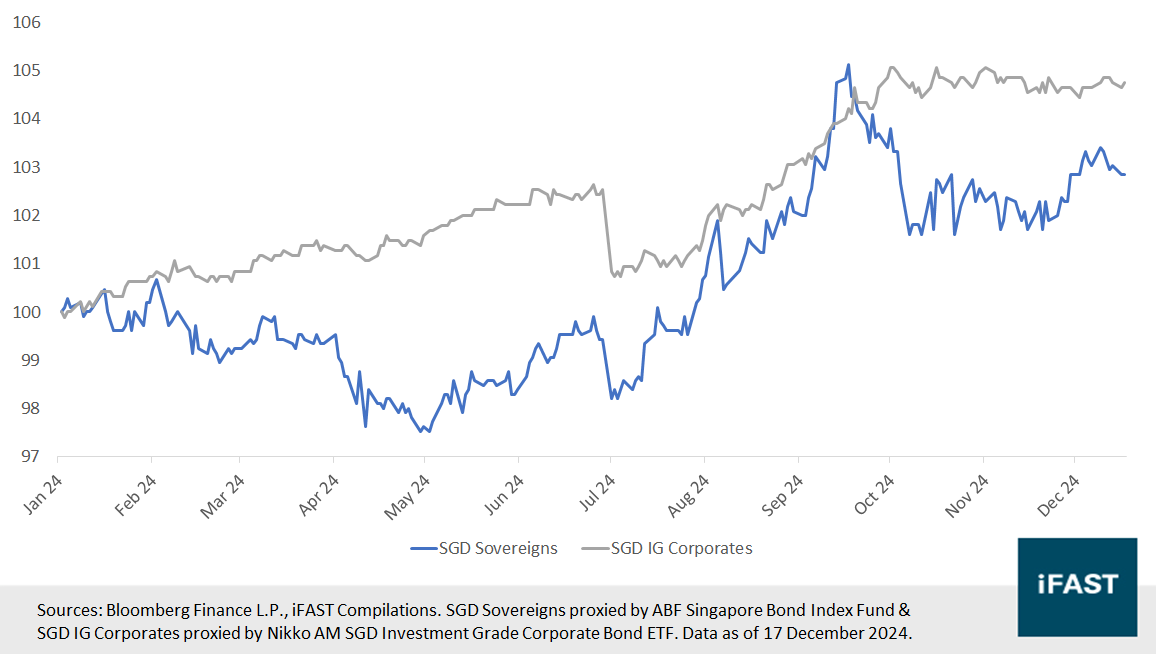
Chart 3 – SGD Issuances organized by bookrunners across past years (SGD m)
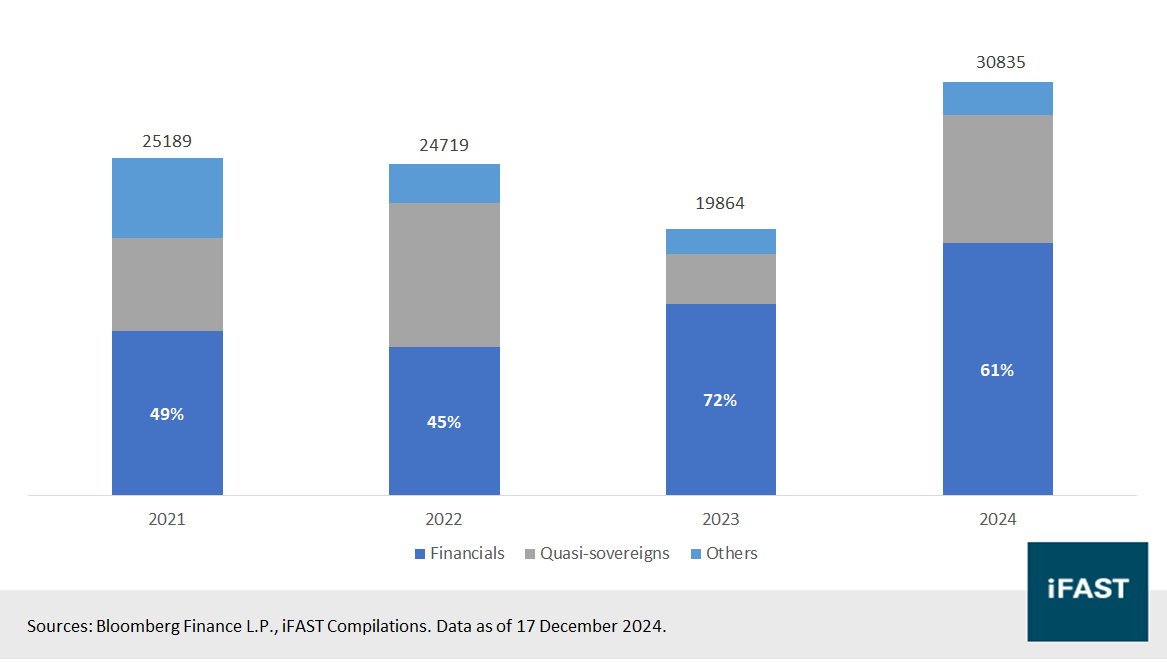
Chart 4 – SGD Corporate issuances by maturity and issuance year (SGD m)
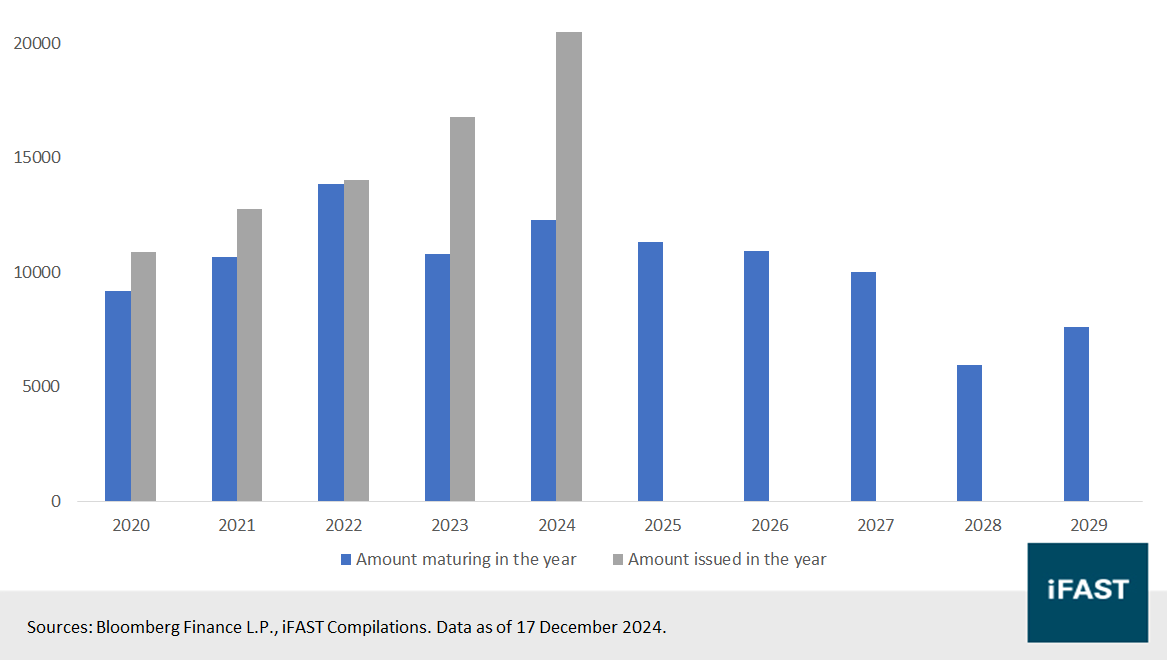
Table 1 – Top ten SGD corporate issuers in 2024 (issuers in bold are banks)
Issuer | Total Amount Issued (SGD m) |
HSBC Holdings PLC | 2,379 |
UBS Group AG | 1,325 |
BNP Paribas SA | 1,200 |
Standard Chartered PLC | 1,095 |
City Developments Ltd | 1,085 |
Oversea-Chinese Banking Corp Ltd | 950 |
Cagamas Holdings Bhd | 775 |
Capitaland Group Pte Ltd | 775 |
ANZ Group Holdings Ltd | 600 |
Barclays PLC | 600 |
Sources: Bloomberg Finance L.P., iFAST Compilations. Data as of 17 December 2024. | |
Our view on the Singapore Government Securities in 2025
Heading into 2025, we stand steadfast in our view of interest rates staying elevated. Echoing the opinions from our 2025 Global Fixed Income Outlook, global benchmark rates are likely to stay high even though we see rate cuts across the major central banks. Particularly in the US, we expect both core inflation and labour data to stay considerably resilient, motivating the Federal Reserve to take on a more cautious approach towards rate cuts.
With the SGS largely mirroring the movement of the USTs, the SGS yield curve has begun to flatten across 2024, albeit still largely inverted. We expect the curve to gradually normalize in 2025.
With this in mind, our emphasis will be focused on the shorter ends of the curve – specifically the 6-month Singapore Treasury Bills (“T-bills”). At the daily average yield of 3.00% (as of 16 December 2024), the 6-month T-bills offer the most value to investors looking at the SGD sovereign bonds. In spite of the recent rate cuts, yields on the 6-month T-bills continue to hover at around 3.00% while we believe it is likely to hold at this level across the first half of 2025, especially based on our view of a cautious Fed stance towards additional cuts.
The longer-duration SGS remain unappealing to us, both in terms of yields and potential volatility. Given the uncertainty of Fed cuts, even today, adjustments in rate cut expectations have often resulted in volatile UST yields which bleeds over to the SGS. We expect volatility to continue as markets continue to reprice their rate cut expectation which should have mark-to-market impact on longer-duration sovereign bonds. We look to turn positive on the longer-tenor sovereigns when the yield curve steepens sufficiently and longer-tenor sovereigns offer relatively higher yields as investors are properly compensated for the additional duration risk.
Our view on SGD Corporates in 2025
Credit spreads for SGD corporates tightened substantially across 2024. On one hand, this greatly bolstered the performance of SGD corporate bonds year-to-date, but on the other, it makes bond investment a “hunt for treasure”. That said, we still have gems within the SGD bond space, and more options for investors next year with a potentially strong issuance pipeline.
We see two reasons that allow for such a strong supply. Firstly, Singapore’s economic growth has progressed relatively well post-COVID, recording an annualized GDP growth of 5.4% year-on-year for 3Q24. The recent results have motivated the government to revise its growth projections from 2.0% to 3.0%, up to around 3.5% for the full year 2024. With Singapore companies forming the other bulk of SGD issuances (aside from banks), the positive economic momentum should be a tailwind for the potential issuers. This is further helped by tighter credit spreads and a slight decline in interest rates, both of which should suggest a lower potential cost of debt for issuers.
The other reason is a fairly straightforward one - we continue to see very strong demand across investors for SGD bonds with no signs of moderation. We believe this has been a big reason for the supply of new issuances this year, which also drew the interest of new entrants into the SGD debt space. As it seems, this trend is likely to extend into 2025, encouraging further supply of new SGD issuances.
Across the SGD credit space, we continue to prefer quality issuers, as opportunities appear to be thinner among the higher-yielding papers. Despite a (very) gradual unwinding of interest rates, we think investors should continue to exercise caution in their bond selection for unrated/higher-yielding issuers. We believe elevated interest rates will continue to weigh on the issuers’ financial performance.
Table 2 – Investment-grade rated SGD bonds
Issue | Ask Price | Yield to Call/ Maturity | Years to Call/ Maturity | Bond Credit Rating (S&P/Fitch) |
CMZB 6.500% 24Apr2034 Corp (SGD) | 108.65 | 4.18% / 4.94% | 4.10 / 9.35 | BBB- (S&P)/ Baa3 (Moody’s) |
CMZB 5.700% 03May2033 Corp (SGD) | 104.65 | 4.10% / 4.86% | 3.13 / 8.38 | BBB- (S&P)/ Baa3 (Moody’s) |
BNP 4.750% 15Feb2034 Corp (SGD) | 102.85 | 4.00% / 4.61% | 4.16 / 9.17 | BBB+/ A- |
ACAFP 5.250% 07Sep2033 Corp (SGD) | 104.23 | 4.01% / 4.33% | 3.72 / 8.73 | BBB+/ A- |
HSBC 4.750% 12Sep2034 Corp (SGD) | 103.50 | 3.93% / 4.13% | 4.74 / 9.74 | BBB/ A- |
HSBC 5.300% 14Mar2033 Corp (SGD) | 104.30 | 3.87% / 4.19% | 3.24 / 8.24 | BBB/ A- |
DB 4.400% 05Apr2028 Corp (SGD) | 101.63 | 3.65% / 3.78% | 2.30 / 3.30 | BBB/ A- |
OUECT 4.100% 14Jun2027 Corp (SGD) | 101.28 | - / 3.56% | - / 2.49 | BBB-/N.R. |
Sources: Bondsupermart, iFAST Compilations. Data as of 17 December 2024. | ||||
For the investment-grade issuances, the majority of them are still dominated by banking papers – mostly Tier 2 subordinated notes offering ~4% yields.
Among the various bank bonds, spreads compressed most significantly for Commerzbank’s Tier 2 papers across the year, owing to the credit rating upgrade by S&P that lifted the papers into a full investment-grade rating. Despite the compression, Commerzbank’s Tier 2 papers remain highly attractive in our view, offering one of the highest yields among the investment grade issuances. We previously covered Commerzbank’s 9M24 performance in this article here - Idea of the Week: Investment grade and >4% yields? It’s right here.
For the Tier 2 subordinated banking papers, loss absorption features are embedded within – although we believe these clauses are highly unlikely to be triggered for the banks above. However, given the risk associated with loss absorption, this might not be suitable for all investors, especially for risk-averse investors.
Lastly, we wish to highlight Tier 2 securities are typically expected to be redeemed on the first call date owing to relevant regulations. Under the Basel III framework for Tier 2 capital (for European banks, may refer to Article 64 of the Regulation (EU) No 575/2013), Tier 2 securities uncalled past the first call/reset date will have to be amortised in the remaining five years towards maturity. This means that the banks are incentivised to re-issue new Tier 2 capital, rather than allowing the Tier 2 capital to diminish with the amortisation while still having to incur costs for such capital.
Table 3 – Unrated and higher-yielding SGD papers
Issue | Ask Price | Yield to Maturity | Years to Maturity |
MSFSSP 6.250% 24Sep2027 Corp (SGD) | 99.80 | 6.32% | 2.77 |
TMGSP 5.500% 31May2028 Corp (SGD) | 103.55 | 4.38% | 3.45 |
TMGSP 5.250% 13May2027 Corp (SGD) | 102.35 | 4.21% | 2.40 |
OLAMSP 4.000% 24Feb2026 Corp (SGD) | 99.65 | 4.30% | 1.19 |
Sources: Bondsupermart, iFAST Compilations. Data as of 17 December 2024. | |||
For the unrated and higher yielding papers, a large number of bonds fell out of our list across the year either due to (1) upcoming maturity in 2025 and hence, lower yield or (2) substantial compression in credit spreads.
Table 3 includes the higher-yielding bonds we find appealing currently, although liquidity can be limited from time to time. For Thomson Medical Group, we believe the Group will benefit from the development of the Johor-Singapore Economic Zone in Johor Bahru, given the upcoming healthcare project across the straits. More information regarding Thomson Medical Group’s FY23/24 results may be found here - Idea of the Week: Thomson Medical Group sees value to be unlocked.
For Olam Group, the issuer continues to see improved operational performance amidst higher working capital requirements, owing to the fluctuations across commodity markets. With that said, Olam’s outlook remains relatively optimistic in our view, with the variations in its credit metrics being largely temporary. Do refer to our article here – Idea of the Week: Why Olam 2026 bond is one of our favourite short-term SGD bond right now – for the credit update on Olam’s 1H24 performance.
Declaration: For specific disclosure, at the time of publication of this report, IFPL (via its connected and associated entities) hold a position in CMZB 6.500% 24Apr2034 Corp (SGD), CMZB 5.700% 03May2033 Corp (SGD), BNP 4.750% 15Feb2034 Corp (SGD), HSBC 5.300% 14Mar2033 Corp (SGD), OLAMSP 4.000% 24Feb2026 Corp (SGD), TMGSP 5.500% 31May2028 Corp (SGD) and the analyst who produced this report hold a NIL position in the abovementioned securities.