

- Our constructive outlook for emerging markets (EM) implies strengthening fundamentals for EM hard currency issuers. Supported by our bearish USD view, this suggests improving ability to service sovereign USD debt and lower refinancing risks.
- While fiscal risk and macro vulnerabilities do exists for EM issuers, our findings show that risk should be relatively low and manageable moving forward. EM credit default swap index and sovereign credit ratings, are also pointing to a declining default probability as well as a moderating ratings downgrade trend.
- EM hard currency debt still provides attractive yield pickup over both investment grade and high-yield peers. We also see further scope for spread tightening and spread suggests a decent annualised return of 6.4% over the next 2 years.
- The main challenge will likely come from EM hard currency debt’s stiff valuation and relatively higher duration risk. As such, have dialed back our initial optimism, but hold a cautiously optimistic view on the asset’s outlook. We believe EM hard currency may still offer tactical upside from further spread tightening and yield pickup.
Emerging markets (EM) hard currency debt - bonds issued predominantly in USD - was one of consensus‘ favorite fixed income sector entering 2021. Many had expected a goldilocks scenario this year where the asset is uplifted by positive global macro, rising commodity prices and weakness in USD. Unfortunately, such expectation ended prematurely as EM hard currency debt was hit hard by a stronger USD, rising US treasury yields and mounting macro concerns by way of fiscal fears and monetary tightening risk.
This eventually culminated in a disappointing -4.7% return (in USD) in 1Q21 and had many investors questioning the outlook of EM hard currency. In this article, we outline our updated view on this asset as well as positive factors and key challenges lying ahead.
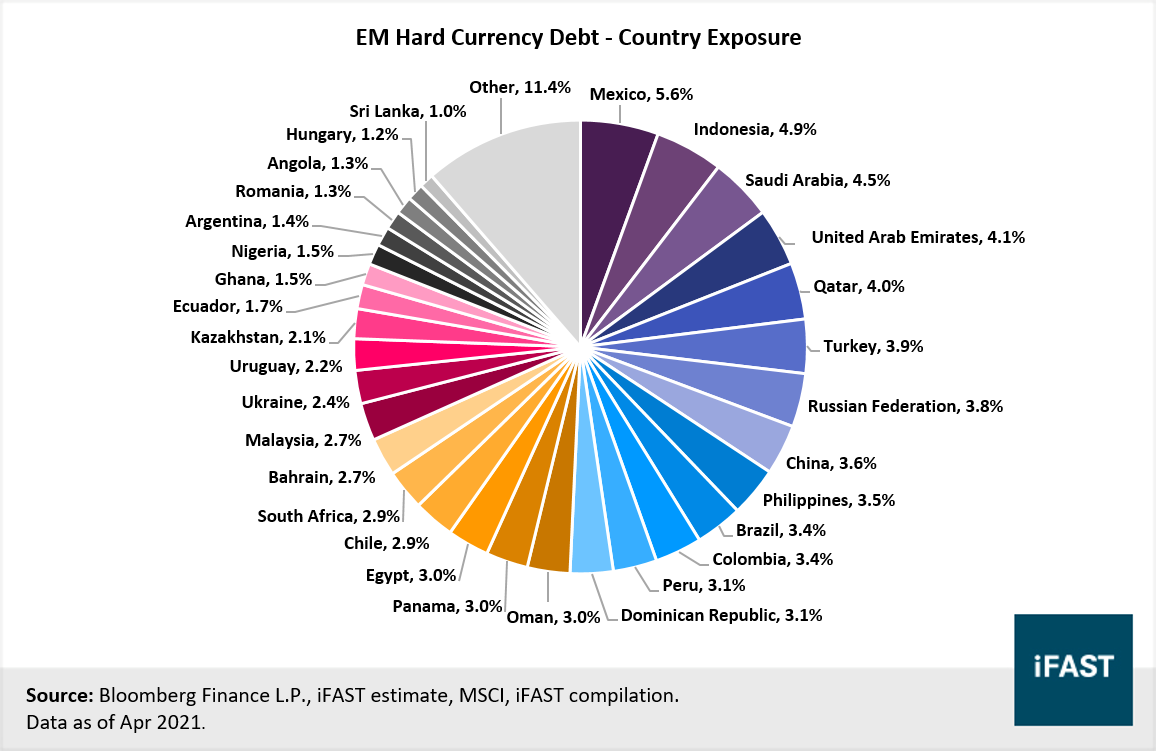
Chart 1: Country exposure for EM hard currency debt
Robust macro outlook lowers credit risk
Across recent months, worries regarding EM’s macro fragility have been brewing in the background. Investors have become increasingly worrisome about the macro health of EMs - and rightly so - as sovereign bonds comprised the lion share of the hard currency universe (around 70-80%). While we acknowledge the growing concerns, we argue that the macro backdrop of EMs is still largely a positive one.
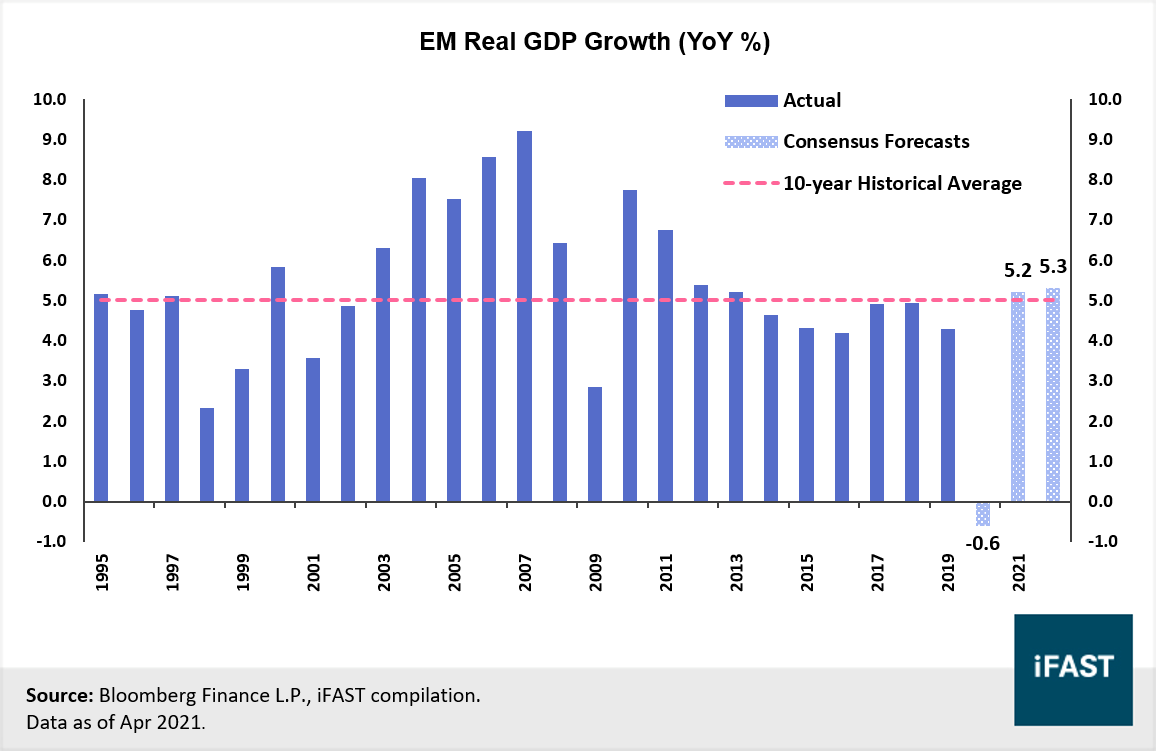
Firstly, we hold a constructive view on EM growth outlook (as highlighted in prior EM updates). We are anticipating robust growth year-round, chiefly supported by solid China growth, the ongoing manufacturing and export upswing, expectations of higher commodity prices and loose monetary conditions. Forecasts also reinforce EM’s rosy growth outlook as GDP is expected to grow by 5.2% YoY in 2021 from -0.6% YoY in 2020 (chart 2). Secondly, we foresee stronger growth momentum from 2H21 onwards. We think the growth impulse generated by Europe’s pending re-opening, US fiscal stimulus (bleeding into EMs) and accelerating EM vaccination will coincide in the coming quarters.
In totality, an improving macro whilst supported by a weakening USD (we hold a bearish USD view), should bolster EM’s ability to service sovereign USD debt and curtail refinancing risks. This is further helped by the fact that majority of these debt mature only in the longer-term (7 to 10+ years later).
Our EM growth outlook does not come without risk. Key headwinds to our constructive view comprised of a i) Covid resurgence and growth shock, ii) slowing China growth and iii) persistently higher USD. Nonetheless, in our opinion, such risks muted and tailwinds are still winning this tug-of-war.
Chart 2: EM GDP growth forecasted to rebound above 10-year average
Fiscal risk and out-of-control external debt?
To delve deeper on EM’s ability to service sovereign USD debt, we took a closer look into EM’s public finances by assessing the largest sovereign issuers within the EM hard currency universe. Through our findings, we deem most of these issuers to be low-risk from a macro stability perspective. Our reasons, as supported by chart 3 and 4, are as such:
- Most issuers possess an external debt ratio that is around the global EM average, which is also less than DM average (chart 3).
- About 35% of the issuers have higher FOREX reserves than external debt, generally indicative of less macro vulnerabilities (chart 3).
- Those 'higher risk' and with FOREX reserves less than external debt – Bahrain, Chile, Egypt and Ukraine – comprised only 11% of the EM hard currency universe. Even so, the outlook of Bahrain, Egypt and Ukraine were rated stable by all 3 credit rating agencies (Moody’s, Fitch, S&P) (chart 3).
- Budget deficit (% of GDP) is projected to decline across most issuers this year, a sign of improving public finances (chart 4).
To reinforce our findings, we note that the EM credit default swap (CDS) index has tightened since early-March and is back to pre-Covid level (chart 5). Given recent trend and current level (near historical lows, at the 11th percentile), this implies a low probability of default priced in by market participants.
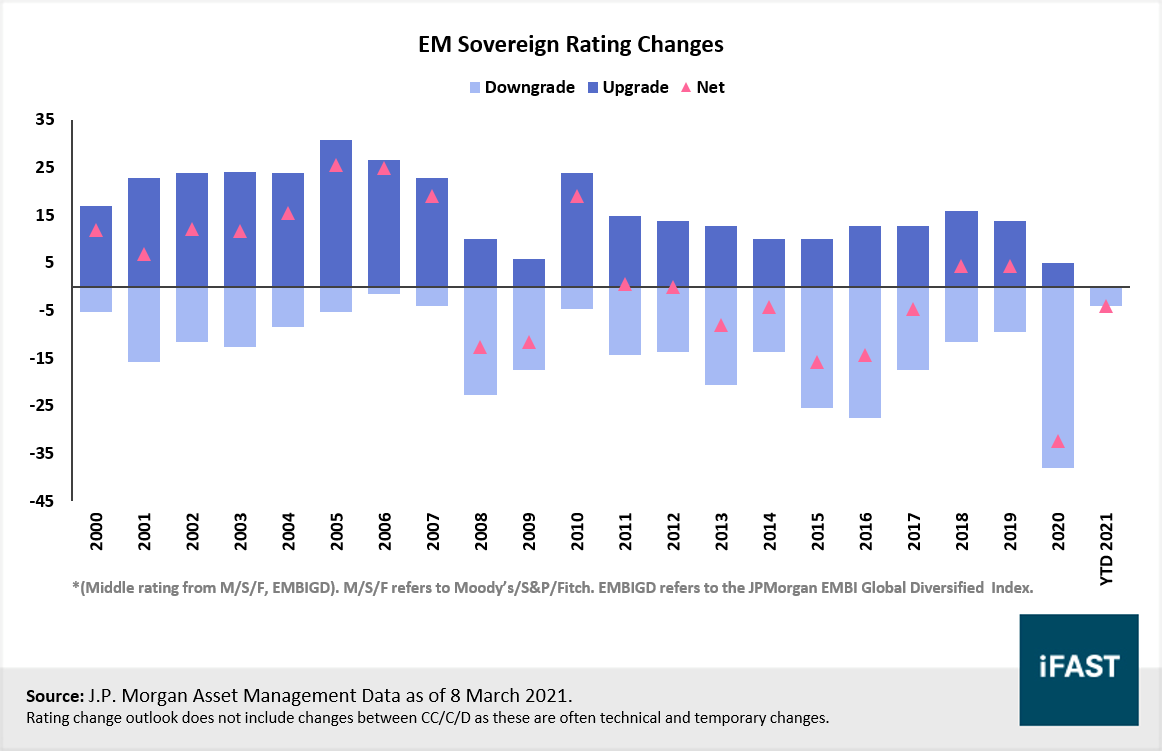
EM sovereign credit ratings, in the year thus far, are also painting the same picture. After the mass downgrades last year, the trend is seemingly fading (chart 6). With an improving EM growth momentum and less than 3 quarters left in the year, we expect to see fewer downgrades in 2021.
Chart 3: Assessing riskiness via external debt and foreign exchange reserves
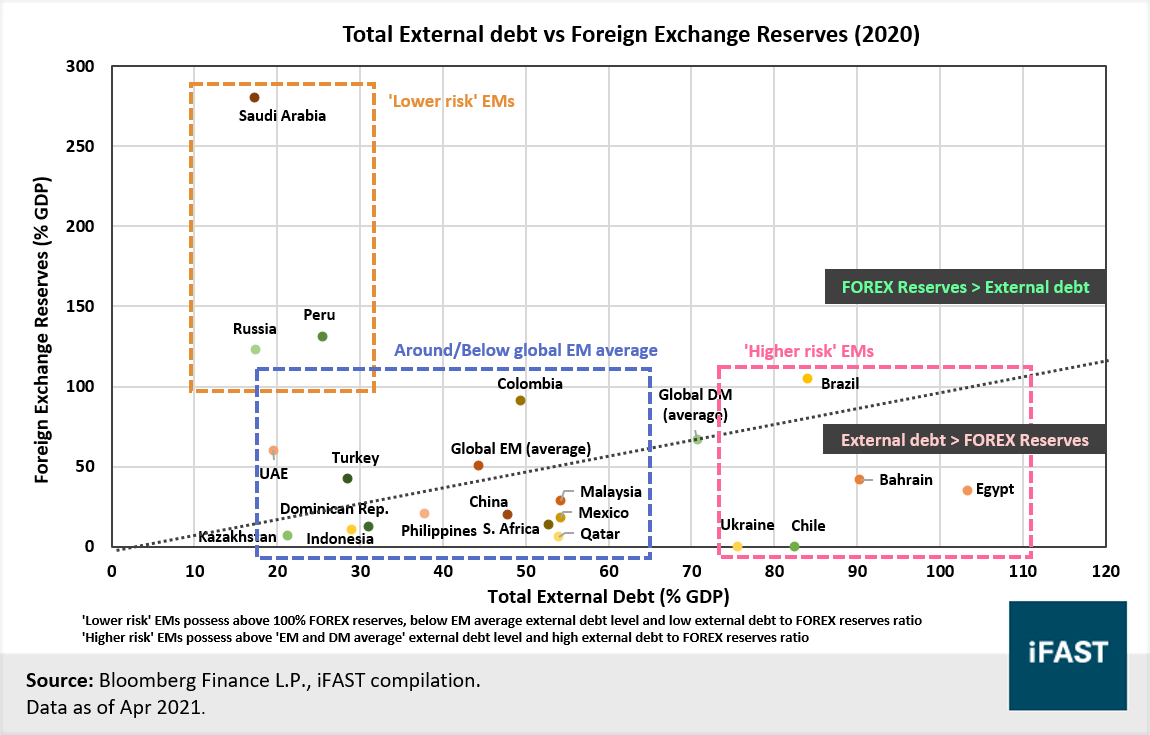
Chart 4: Assessing riskiness via budget deficit forecast
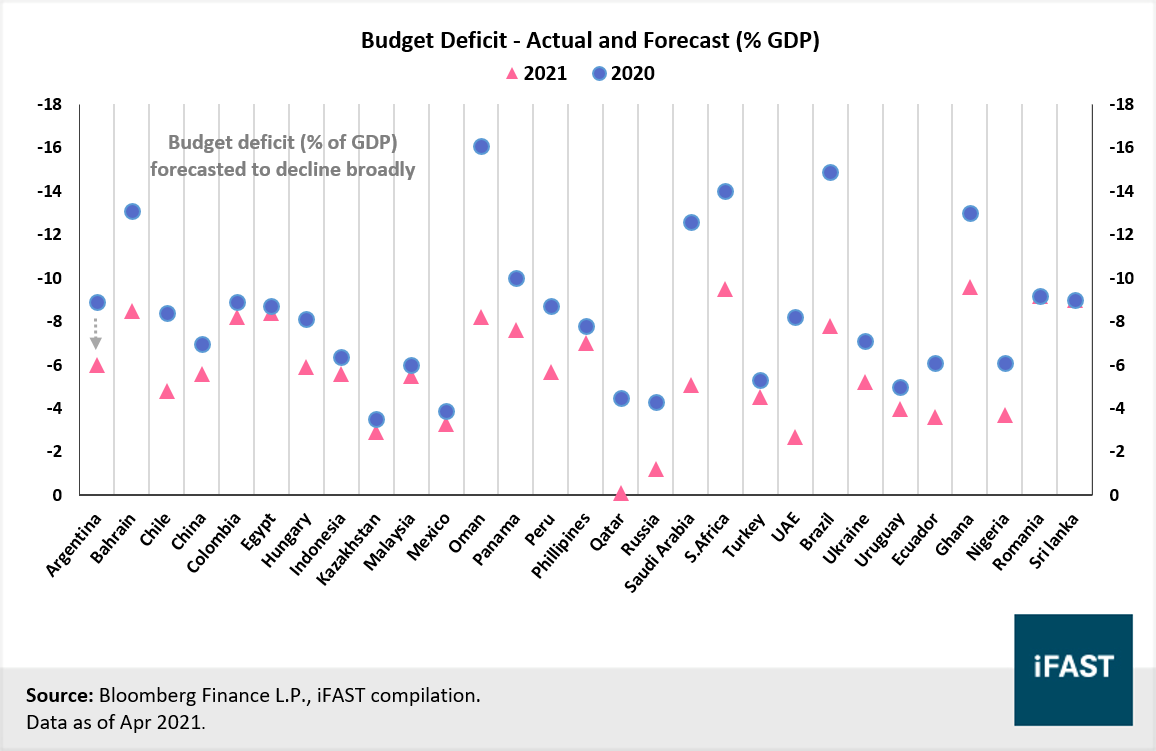
Chart 5: Credit default swap index for EM back to pre-Covid level and implying low probability of default
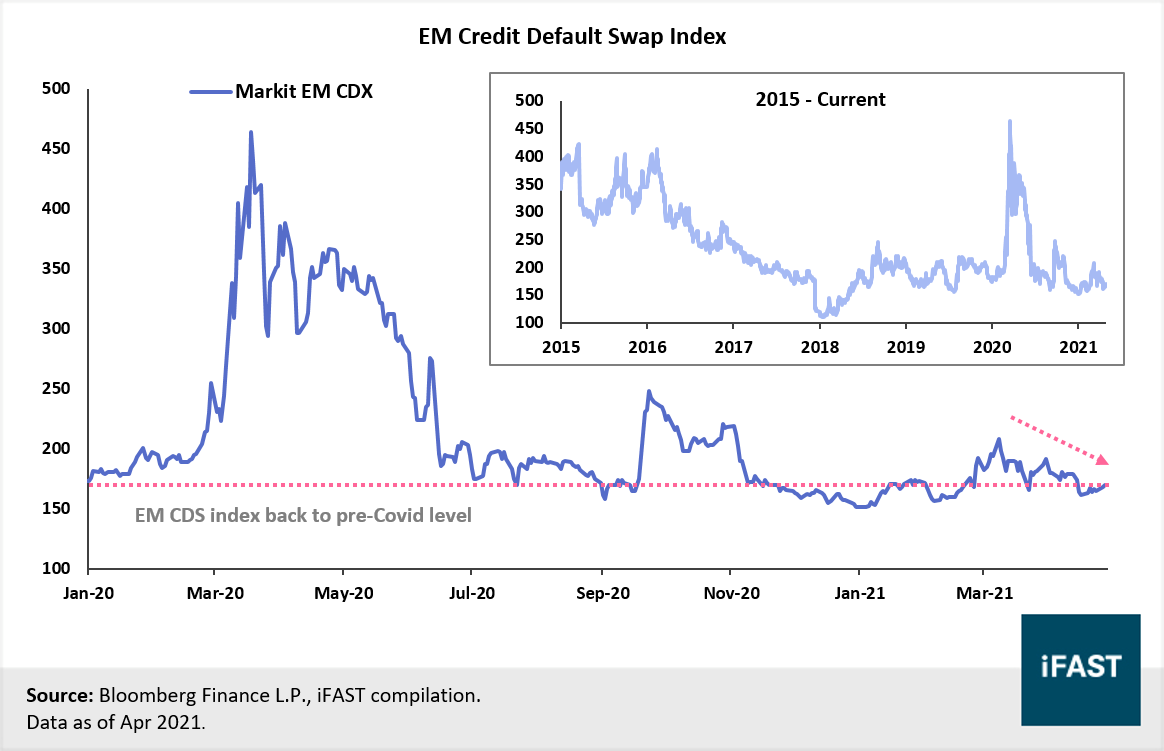
Chart 6: Trend in sovereign credit rating downgrades is fading
Decent yield pickup vs IG and HY sectors
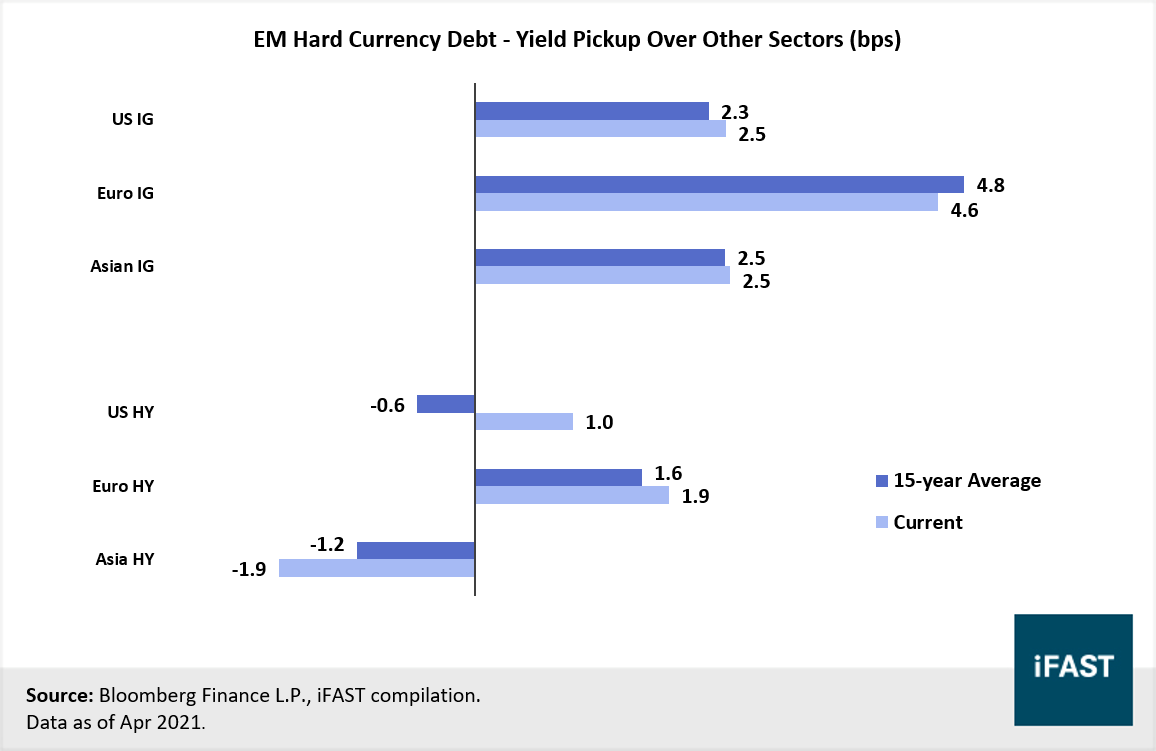
EM hard currency debt is currently offering a yield between 4.8% to 5.1%. Despite yielding below its 15-year historical average of 5.5%, the asset still offers substantial yield pickup over most investment grade (IG) and most high-yield (HY) counterparts (chart 7).
A yield pickup against HY sectors is an attractive draw for EM hard currency debt as this meant that additional yield do not come at the cost of higher credit risk (EM hard currency possesses a higher aggregate credit rating than most HYs).
Chart 7: Decent yield pickup from EM hard currency debt
Decent long-term return prospects
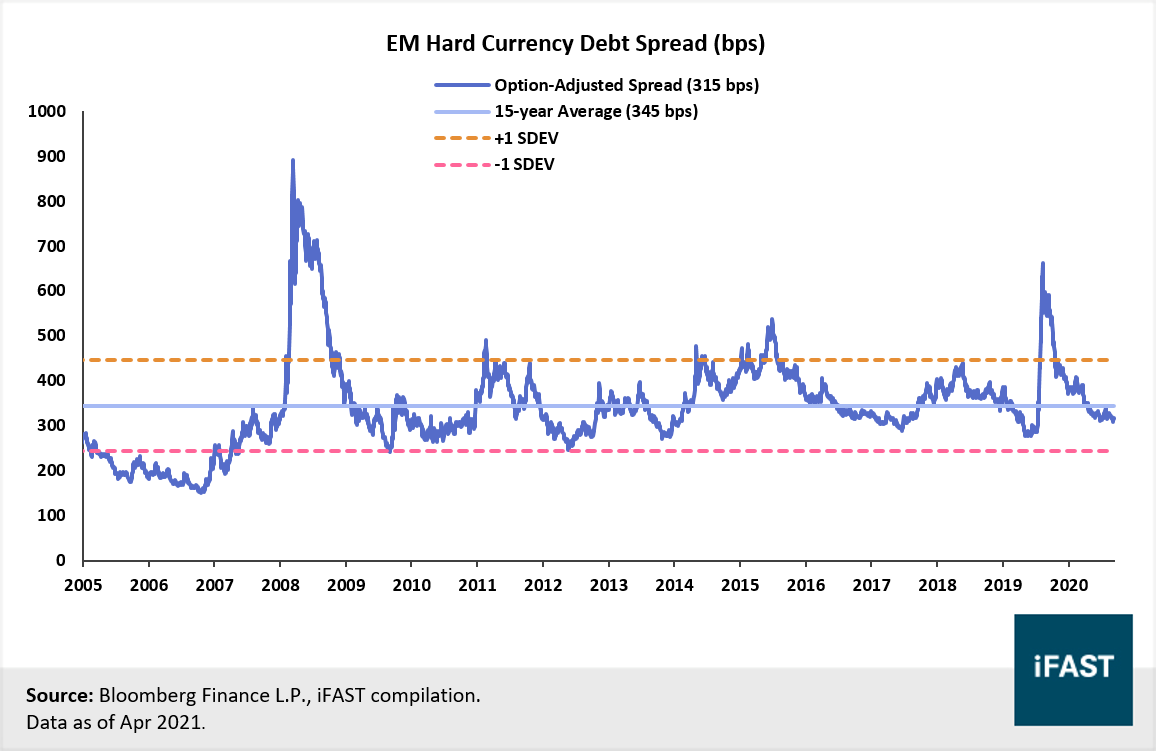
Credit spread (over treasuries) tightening is a key driver of return for fixed income - the wider the spread, the higher the potential returns over time. Moving ahead, we see room for EM hard currency spread to compress further as current spread (310 – 320bps) remains slightly above its pre-Covid low and approximately 165 bps from the all-time low (chart 8).
Looking ahead, we think the compression will likely be macro-driven. The combination of improving EM growth momentum in 2H21, further USD weakness and easy US financial condition can trigger more tightening. We note, however, that the caveat is the limited room for compression, which is a result of the asset’s challenging valuation level (outlined below).
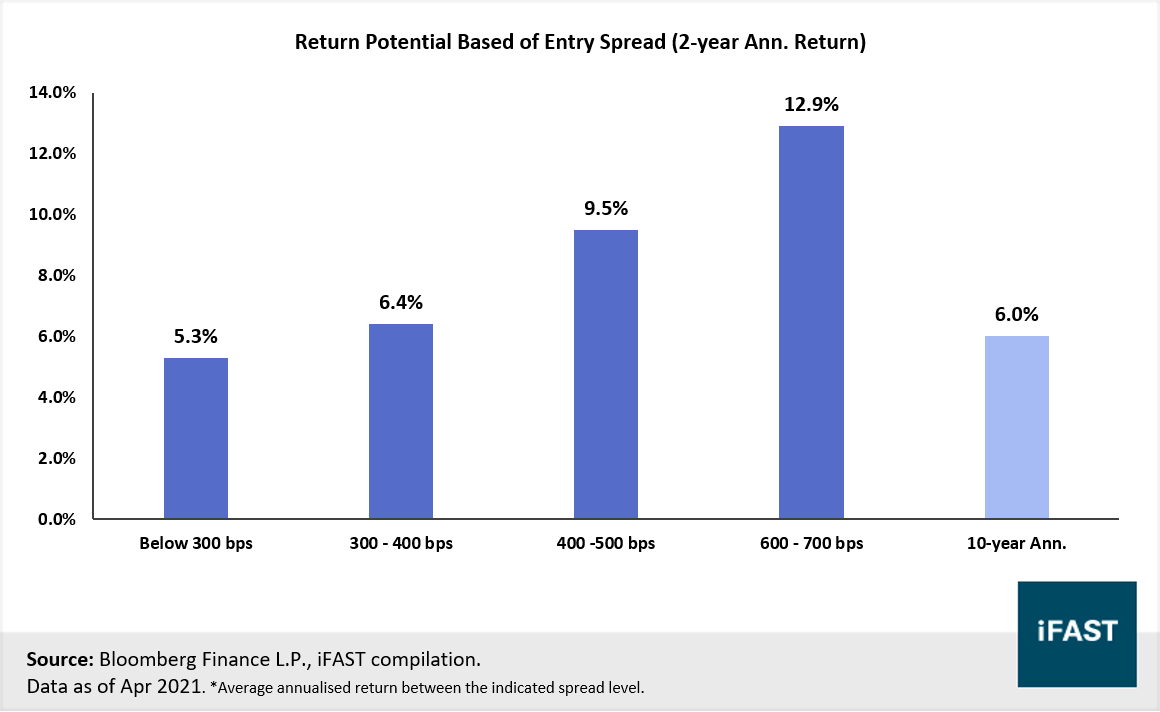
That said, the good news is that investors should still see decent return prospects entering at current spread levels. History shows, an entry (spread) level of 300-400 bps suggest a return of 13% (in USD terms) over the next 2 year or 6.4% annualised (chart 8) - above the 10-year annualised return of 6%.
Chart 8: Return potential for spread of 300 - 400 bps still higher than 10-year annualized return
Key challenges moving forward – Stiff valuation and interest rate risk
While fundamentals are certainly improving, valuation for EM hard currency debt, to a large extent, are already reflecting that. Spread have repriced lower on the basis of improving EM outlook and the current level is now below the historical average (345 bps), with a Z-score of -0.3 (0.3 standard deviation below mean) (chart 9). We find valuation for the asset to be increasingly expensive and will likely be a main drawback moving ahead.
Nevertheless, spreads across other fixed income sectors have also tightened dramatically, and the asset class, as a whole, faces stiff valuation. Comparing across peers, we think valuation for EM hard currency debt is still cheap given its low Z-score for credit spread and may yet offer relative value.
Another challenge that may hold back the asset is the duration risk – it possesses a relatively higher duration of around 7.5-8.5 years. With the recent shift in macro backdrop, our direction bias for US treasury yield lies to the upside and this may pressure EM hard currency debt due to the associated price risk.
Chart 9: Spread is below historical average (Z-score of -0.3) – valuation increasingly expensive
Cautiously optimistic view moving ahead
Looking ahead, we expect the constructive outlook for EM to uplift fundamentals of EM hard currency issuers. Supported by our bearish USD view, this suggests improving ability for EMs to refinance USD-denominated debt. Fiscal risk and macro vulnerabilities do exists, but we expect it to remain manageable and do not see it as a concern currently.
We believe the appeal in EM hard currency debt is the decent yield pickup and scope for spread compression. Spread further suggests a decent 13% return over next 2 years, which we deem attractive for long-term investors. However, the drawbacks are the asset’s stiff valuation and relatively higher duration risk.
All things considered, we hold a cautiously optimistic view on the outlook of EM hard currency debt. While we have dialed back our initial optimism due to the ongoing challenges, the attractiveness of the asset firmly stands out against other fixed income sectors. We believe EM hard currency may still offer tactical upside from further spread tightening and yield pickup.