
Key Highlights
- RBA Nearing Peak Rates: Following five consecutive rate hikes to 4.85%, increasing policy divergence and weakening economic conditions suggest the RBA is approaching the end of its tightening cycle, although one further hike to 5.10% remains an upside risk.
- Inflation Remains Sticky: Headline CPI increased to 4.3% YoY in September, driven mainly by higher fuel prices. However, moderating housing inflation could gradually ease domestic price pressures.
- Labour Market Showing Signs of Weakening: Employment declined by 43,500 in October, while the unemployment rate increased to 4.9%, its highest level since October 2021 much faster than forecast by RBA.
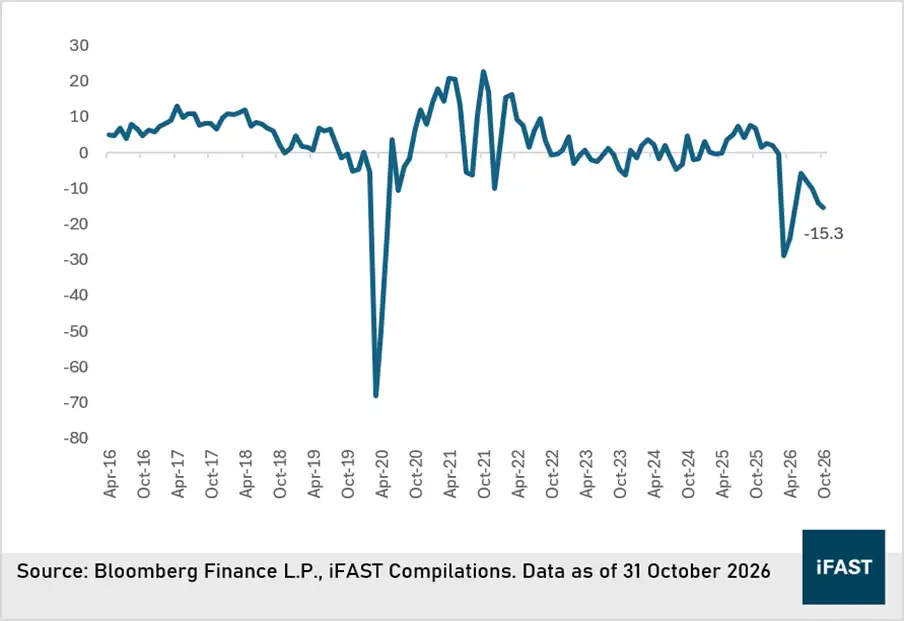
- Weakening Domestic Demand: Consumer sentiment declined to 78.3 in October, while business confidence remained negative at around -15.3, pointing towards increasingly cautious household and business spending.
- Potential Monetary Easing in 2H27: We expect the RBA to maintain its policy rate in the near term, with potential rate cuts in 2H27 as economic conditions soften and inflation gradually moderates.
Inflation Remains Sticky, While Fuel and Climate-Related Risks Add Upside Pressure
Headline CPI rose to 4.3% YoY in September, from 4.0% in August, mainly reflecting higher fuel prices. Transport contributed an additional 0.353 percentage points to annual inflation compared with the previous month, raising concerns over potential second-round inflationary effects as higher fuel costs are passed through to other goods and services. Meanwhile, trimmed mean inflation increased to 3.6% YoY, from 3.5% in August, remaining above the RBA's 2–3% inflation target range and highlighting persistent underlying price pressures.
Looking ahead, the potential development of El Niño could pose additional upside risks to food inflation, as adverse weather conditions may disrupt agricultural production and food supply. Against this backdrop, we do not rule out a further 25bps rate hike to 5.10% in 1H27 should underlying inflation remain elevated.
Nevertheless, inflationary pressures across major components remain mixed. Housing inflation moderated, with its contribution declining by 0.095 percentage points, supported by softer property market conditions amid elevated borrowing costs and property tax reforms. According to Cotality, October property prices declined 4.8% YoY, while the combined capital cities' auction clearance rate fell to 46.9% as of 22 November 2026 compared to 62.9% last year ago.
Overall, elevated fuel prices and potential climate-related food supply disruptions continue to pose upside risks to inflation. However, weakening housing market conditions and softer domestic demand could gradually ease underlying inflationary pressures over the medium term.
Table 1: September 2026 CPI major breakdown by group, contribution to the 4.3% YoY
|
Group |
Weight (%) |
Contribution (pts) |
Change vs Aug (pts) |
Share of total |
Trend |
|
Housing |
21.39 |
1.117 |
-0.095 |
25.7% |
Moderating, supported by property tax reforms and elevated borrowing costs. |
|
Transport |
11.49 |
1.003 |
+0.353 |
23.1% |
Accelerating, reflecting higher fuel prices and potential second-round inflation effects. |
|
Recreation and culture |
13.09 |
0.584 |
+0.212 |
13.4% |
Increased due to seasonal holiday-related spending. |
|
Food and non-alcoholic beverages |
17.40 |
0.559 |
+0.036 |
12.9% |
Slightly elevated, with El Niño posing further upside risks to food prices. |
|
Source: Reserve Bank of Australia (RBA), iFAST compilations. Data as of 28 October 2026. |
|||||
RBA: Fifth Rate Hike Signals Growing Policy Divergence
The RBA raised its cash rate by another 25bps to 4.85% in November, marking its fifth-rate hike in the current tightening cycle. However, the decision revealed increasing policy divergence, with three of nine Board members voting to maintain the cash rate at 4.60%.
Importantly, the RBA removed its explicit tightening bias, placing greater emphasis on incoming economic data and the evolving inflation outlook. While inflation remains elevated and higher fuel prices are increasingly being passed through to other goods and services, the Board also acknowledged that economic growth is slowing and is expected to moderate further over the coming year.
Table 2: Changes in RBA Statement Wording
|
Theme |
29 Sep 2026 (hike to 4.60%) |
3 Nov 2026 (hike to 4.85%) |
What it signals |
|
Board Consensus |
Unanimous |
Spit (6 members voted hike, 3 members voted hold) |
Increasing policy divergence |
|
Forward guidance |
Will do what is necessary, "including increasing the cash rate target further if needed" |
Will do what is necessary; "attentive to the data"; policy "well placed to respond to developments" |
Explicit hiking bias dropped suggesting a more data-dependent approach. |
|
Reason for hiking |
"Inflation is still too high"; tightening warranted to return inflation to target "in a reasonable period" |
"The Board is conscious of the period in which inflation has been too high"; tightening warranted given the "revised inflation outlook and the continuing upside risks" |
Maintaining its credibility in controlling inflation |
|
Inflation assessment |
"Inflation remains elevated and some of the upside risks flagged in August are materialising." |
"Inflation remains elevated and recent data indicate that it is broadly based." Outlook "revised materially higher". |
From isolated risks to broad-based inflation |
|
Inflation expectations |
"The Board remains focused on ensuring that high inflation does not become embedded." |
"There is an increasing risk that higher inflation expectations will become embedded" |
Expectations risk upgraded |
|
Fuel pass-through |
"Higher fuel prices have partially been passed through to prices of other goods and services." |
"There are indications that higher fuel prices are being passed through to prices of other goods and services." |
Second-round effects ongoing |
|
Growth |
"Growth and inflation in Australia have been higher than expected." |
"The economy is slowing"; growth to slow further over the coming year |
Growth view turned weaker |
|
Source: Reserve Bank of Australia (RBA), iFAST compilations. Data as of 29 September 2026 and 3 November 2026 statements. |
|||
Weakening Economic Conditions Could Limit Further Monetary Tightening
Several economic indicators point towards a gradual weakening in domestic economic conditions:
- Labour market deterioration: Employment declined by 43,500 in October, while the unemployment rate increased to 4.9%, its highest level since October 2021. The deterioration in labour market conditions appears to be occurring faster than previously anticipated by the RBA, raising concerns over household income and spending resilience.
- Housing market weakness: Declining property prices and lower auction clearance rates, as highlighted above, suggest subdued housing demand. Continued weakness in the housing market could weigh on household wealth and consumption, particularly amid elevated borrowing costs.
- Subdued Consumer and Business Confidence: Consumer sentiment remained subdued at 78.3 in November, close to levels observed during the pandemic period (Chart 1). Meanwhile, NAB business confidence remained firmly in negative territory at around -15.3 (Chart 2), reflecting persistent pessimism among businesses and potentially weaker investment and hiring intentions.
Taken together, softer labour market conditions, a weakening housing market and subdued consumer and business confidence point towards more cautious household spending and business activity. If these trends persist, they could gradually ease domestic demand and underlying inflationary pressures, providing the RBA with greater flexibility to maintain its current policy rate with potential monetary easing.
Chart 1 Westpac–Melbourne Institute Consumer Sentiment Index
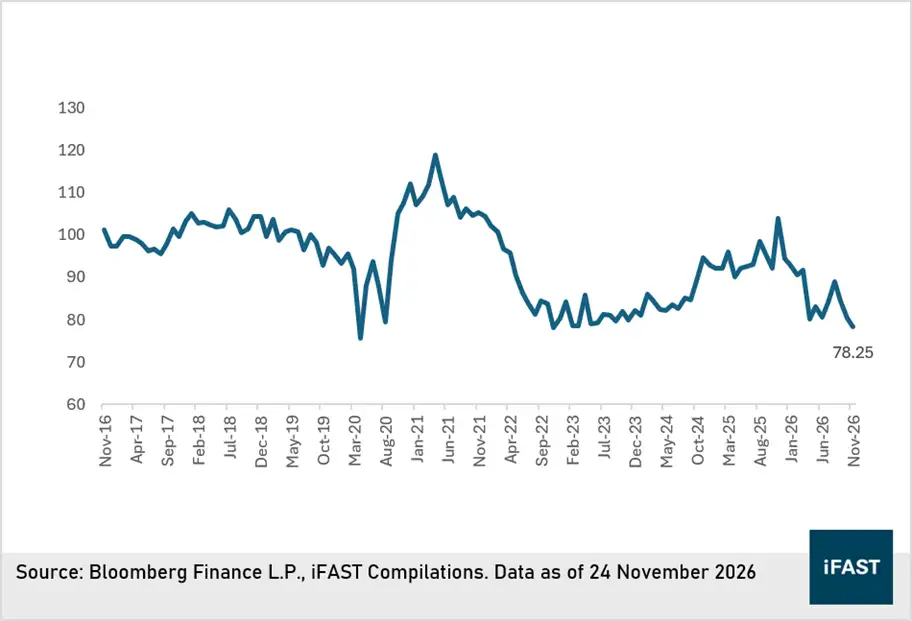
Chart 2 National Australia Bank Business Confidence
RBA Forecasts: Slower Growth and Moderating Inflation Through 2028
The RBA's November projections indicate slower economic growth and gradually moderating inflation over the medium term. GDP growth is forecast to ease to 1.3% by December 2027, while the unemployment rate is expected to increase to 4.9% over the same period and further to 5.1% by December 2028.
Meanwhile, trimmed mean inflation is projected to remain elevated at 3.6% in December 2026 before moderating to 2.9% by December 2027 and 2.4% by December 2028. This suggests that underlying inflation is expected to gradually return within the RBA's 2–3% target range towards the end of 2027.
These projections suggest that restrictive monetary policy is gradually weighing on domestic economic activity, while inflation is expected to moderate over the medium term.
Table 3: RBA Output Growth, Unemployment and Inflation Forecasts
|
Dec 26 |
June 27 |
Dec 27 |
June 28 |
Dec 28 |
|
|
GDP growth |
1.6% |
1.6% |
1.3% |
1.3% |
1.5% |
|
Unemployment rate |
4.7% |
4.8% |
4.9% |
5.0% |
5.1% |
|
CPI inflation |
4.5% |
3.7% |
2.7% |
2.5% |
2.4% |
|
Trimmed mean inflation |
3.6% |
3.5% |
2.9% |
2.5% |
2.4% |
|
Source: Reserve Bank of Australia (RBA), iFAST compilations. Data as of 3 November 2026. |
|||||
Our View: RBA Likely Near Its Peak, with Potential Rate Cuts in 2H27
Following the RBA's fifth rate hike to 4.85% in November, we believe monetary policy is likely approaching its peak, with the RBA expected to maintain its current policy rate in December 2026.
Nevertheless, upside inflation risks remain. We do not rule out one additional 25bps rate hike to 5.10% in 1H27, particularly if December-quarter trimmed mean inflation remains above expectations or higher fuel prices generate further second-round inflationary pressures.
Looking further ahead, we believe the RBA could begin easing monetary policy in 2H27 as domestic economic conditions gradually soften. Weakening housing market conditions, elevated borrowing costs, rising unemployment and subdued consumer and business confidence are expected to weigh on household spending and domestic demand, gradually easing underlying inflationary pressures.
Overall, the combination of moderating economic growth and gradually easing inflationary pressures could provide the RBA with room to begin monetary easing in 2H27. This broadly consistent with expectations among Australia's Big Four banks and market expectation.
Table 4: Bank and Market Cash Rate Forecast
|
Bank and Market Projection |
Forecast Peak Cash Rate |
2027 Easing Forecast (Cuts) |
|
Commonwealth Bank of Australia |
4.85%- Nov 26 |
2 cuts: Aug & Nov 2027 |
|
Westpac Banking Corp (WBC) |
4.85% – Nov 26 (Feb 27 hike an upside risk) |
2 cuts: Aug & Nov 2027 2 cuts: Mar & June 2028 |
|
National Australia Bank (NAB) |
4.85%- Nov 26 |
First cut expected from Aug 2027 |
|
Australia and New Zealand Banking (ANZ) |
4.85%- Nov 26 |
2 cuts: June & August 2027 1 cut: February 2028 |
|
ASX 30 Day Interbank Cash Rate Futures Implied Yield |
4.84% - Dec26 |
Gradual easing implied from around Feb 2027 |
|
Source: Respective bank economics publications, ASX, iFAST Compilations. Data as of 23 November 2026 |
||
All in One
Australia's inflation remains elevated, with headline CPI rising to 4.3% in September and trimmed mean inflation edging up to 3.6%, keeping upside inflation risks in focus. Higher fuel prices and potential El Niño-related food supply disruptions could create further inflationary pressures, potentially prompting one additional 25bps rate hike to 5.10% in 1H27.
Nevertheless, the RBA's November rate hike to 4.85% revealed growing policy divergence, with three of nine members voting to hold rates. Meanwhile, weakening labour market conditions, a softer housing market and subdued consumer and business confidence suggest that restrictive monetary policy is increasingly weighing on domestic economic activity. The RBA also expects GDP growth to slow to 1.3% by December 2027, while trimmed mean inflation is projected to moderate to 2.9%.
Overall, we believe the RBA is approaching the peak of its tightening cycle and is likely to maintain rates at 4.85% in December 2026. While another hike remains possible if inflation proves more persistent than expected, weakening economic conditions and moderating inflation should provide room for monetary easing in 2H27, broadly in line with expectations among Australia's Big Four banks and market expectation.