Highlights
· Trafigura is a global commodities trader, with an industry-leading position in oil and metals trading.
· Our investment thesis is underpinned by strong bottom-line growth, adequate interest coverage and attractive bond pricing.
· The TRAFIG 6.875% Perpetual Corp (USD) is first callable in March 2022 and has a yield to call of 10.1%.
“He was certain that private company status and employee ownership constituted the right model for a trading company, as it ensured a perfect alignment between the interests of managers and owners, a prudent focus on risk management and proper attention to the long-term sustainability of the company.”
- Obituary of Claude Dauphin, billionaire co-founder of Trafigura
Introduction
By the time Claude Dauphin — a genteel Frenchman who co-founded Trafigura Beheer BV with five other colleagues — passed away in September 2015, he had amassed an estimated fortune of USD 1.4 billion, the fruit of a long and illustrious career in commodities trading. The funeral was held in Eglise de Saint-Joseph, a low-key Catholic church in the picturesque district of Eaux Vives in Geneva, Switzerland — home to the Jet D’Eau and renowned for a calm way of life. Almost 1,000 individuals were in attendance: Trafigura colleagues, friends, and officials from countries as far as Angola and Abu Dhabi. The vice-president of Angola was there, so was Sheikh Hamdan bin Zayed, a high-level official from Abu Dhabi. Claude Dauphin was certainly no ordinary man.
One week before, Dauphin had succumbed to cancer in Bogota, Columbia, despite a valiant effort over two years. Hardworking right to the very end, Dauphin was in the country for business reasons.
His storied career began in 1977. A native of France born in Houlgate, Normandy, Dauphin made the acquaintance of Felix Posen, then head of non-ferrous trading at the commodities trading firm Marc Rich + Co. Sensing something special in the young Dauphin, Posen hired him to work at Marc Rich and dispatched him to La Paz, Bolivia, to occupy the post of country manager.
Dauphin proved his worth and rose quickly through the ranks, eventually becoming head of petroleum trading in London. He was also inducted into the executive committee of the firm. After a series of controversies engulfed Marc Rich, Dauphin left the firm and founded a partnership with five former senior Marc Rich employees.
In March 1993, Dauphin acquired a shell business incorporated in the Netherlands — Trafigura Beheer BV. Some of the very first things the firm did were to establish a profitable oil trading book, and secured a series of important contracts in countries such as Argentina and China, firmly entrenching itself as a key player in the oil trading sector.
Later in 2000, Trafigura marked its maiden foray into the mid- and downstream sector by acquiring Puma Energy, whose assets were mostly in Latin America. The subsidiary expanded rapidly. By 2014, it was present in 45 countries and posted revenues in excess of USD 13 billion.
At the front seat of Trafigura’s ambitions was Dauphin, a man who was no less intolerant of mediocrity than he was of any hint of casualness. Male Trafigura employees were obliged to wear a suit and tie to the office. At one point, Dauphin even decreed that brown shoes were not allowed.
His non-conformist approach to business was also legendary. As Trafigura’s business grew, the firm found itself presented with many opportunities to take its business public, a move that would have increased its visibility and allowed its founders to cash out. Yet Dauphin resisted. His philosophy was that a private company best aligned the interests of owners and management, and fostered an environment in which risk management and long-term sustainability took precedence. He also declined to follow the example of competitors like Glencore, which had ventured into commodities production, arguing that Trafigura was at its core, a trader, and that the production of raw materials required different shareholder models and financial structures.
In Trafigura, Claude Dauphin leaves his greatest legacy. The firm is still privately owned, with the company run by and in large part for the benefit of its employees. The year before Dauphin passed away, Trafigura reported a net profit of some USD 1 billion, of which almost USD 900m was distributed to its employees. Also, the company is one of the few remaining pure-play commodities trading firms around, with its operations centered on physical trading and logistics.
About Trafigura
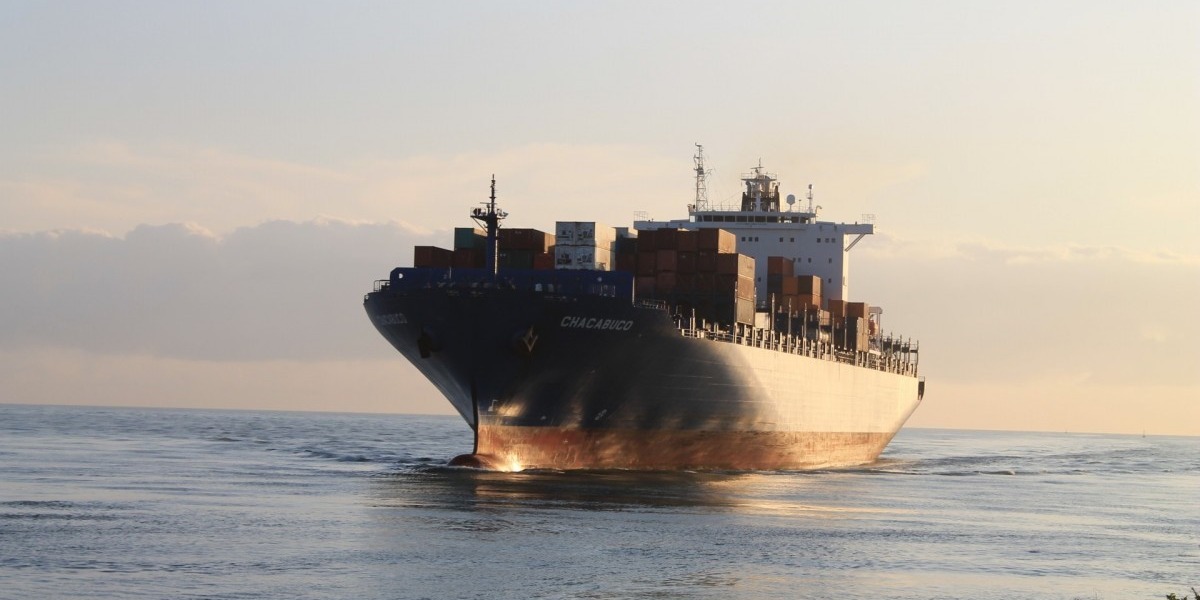
Trafigura is a commodities trader. In other words, its core business is the physical trading of raw and processed commodities, and the associated logistics involved in transporting these commodities from buyer to seller. To facilitate the movement of vast quantities of commodities, oftentimes Trafigura owns all or part of the transport infrastructure required. However, the company regards its ownership of these assets as merely complementary to its main business of trading.
Trafigura’s trading activities span three distinct domains: oil and petroleum products, metals and minerals, and shipping and chartering. Trafigura has been involved in oil and petroleum trading since its inception and for some industry players, the Trafigura brand is even synonymous with oil trading itself. In Trafigura’s financial year 2018, the firm traded an average of 5.8 million barrels per day of oil and petroleum products, making it one of the world’s largest oil trader.
Trafigura is placed just a notch lower in its influence on metals and minerals trading. As one of the world’s leading metals traders, Trafigura negotiates offtake and supply agreements with miners and smelters, improving market access to these commodities. In FY18, Trafigura traded 95.9 million metric tons (‘mmt’) of metals and minerals, comprising 18.5 mmt of metals and 77.4 mmt of minerals.
The third major business segment of Trafigura is in the area of shipping and chartering, which enjoys significant synergies with its other commodity trading arms. Trafigura arranges shipping fixtures for the benefit of internal stakeholders as well as external clients. In FY18, Trafigura organized 4,190 wet and dry shipping fixtures. For readers unacquainted with shipping terminology, wet shipping refers to the portion of the voyage that occurs at sea, whilst dry shipping concerns all other shipping matters such as charter agreements, ship construction and funding.
Having provided a brief overview of what Trafigura does, let us now look at some of the key petroleum products that Trafigura trades in. Readers who have read our previous article on commodities trading would recall that we alluded to the non-homogeneous nature of oil and the significant number of derivatives that exist. Trafigura trades across the entire spectrum: crude oil, condensates, liquefied petroleum gas, liquefied natural gas (‘LNG’), gasoline, fuel oil, naphtha and biodiesel, among others.
In the area of metals trading, Trafigura primarily operates in the concentrates and refined metals space. As highlighted earlier in this article, the company does not extract the raw materials, but rather connects miners with smelters and refined metal fabricators, buying and selling various metal products. Trafigura trades in concentrates — which refers to raw metal ore finely ground for the purpose of increasing the metal content — and refined metals such as copper cathodes, copper blister, copper wire rods, aluminum, zinc, and nickel.
A defining characteristic of Trafigura’s business model is the company’s propensity to offer financial assistance to producers and smelters through offtake agreements, structured finance, and tolling arrangements. In a tolling agreement, Trafigura agrees to convert an input product for a fee, and ownership of the raw material or input product continues to reside with the supplier. In an offtake agreement, Trafigura commits to buying a contractually defined quantity of raw material over a certain period.
It is now time to take a look at some of Trafigura’s key subsidiaries and what they do, starting from the next section.
Key subsidiaries
Trafigura makes trades happen, connecting producers and refiners, buyers and sellers all over the world. This would not be possible without its global presence spread across Europe, the Middle East, Africa, Asia, and Australia. In this section, we take a look at some of its principal subsidiaries operating across the globe.
Impala Terminals is probably one of the most essential subsidiaries in Trafigura’s stable of investments. A multimodal logistics provider focused on export-driven emerging markets, it owns and operates most of Trafigura’s transport infrastructure. By this we mean ports, port terminals, warehouses, and other transport assets. Impala Terminals provides its clients the means to move vast quantities of commodities — at short notice if called upon — by rail, river, road, or sea, and can reach almost every corner of the globe; its multimodal logistics chain spans 20 countries.
In the metals space, we have Trafigura Mining Group, which manages mining operations, develops projects, and conducts technical audits of existing and potential partner projects. Trafigura is also the controlling shareholder of Nyrstar, a global operation that trades in different metals with a market-leading position in zinc and lead trading. Nyrstar has mining and smelting (the process of extracting metal from its ore through heating) operations in Europe, North America, and Australia. A restructuring of Nyrstar is underway, and Trafigura is expected to own a 98% stake in the operating companies of Nyrstar once the restructuring is completed.
Another key Trafigura subsidiary changing the way metal is traded is Lykos in India. Its key value proposition is two-fold: customers may not only choose from a catalogue of aluminum, copper, lead, nickel, tin, and zinc, they can also order these metals on a just-in-time basis. According to Trafigura, no more than six minutes are required for a transaction to be completed.
Galena Asset Management is Trafigura’s private investment arm, oftentimes partnering with other companies to finance investments in the energy, metals, and minerals space through private equity funds and private investments. To give readers an idea of what this means in concrete terms, we turn our eyes to a recent deal signed by Galena.
In October 2018, Finnish Minerals Group and its subsidiary Terraframe Ltd announced their decision to construct a battery chemicals plant on Terraframe’s industrial site in Sotkamo, Finland. With an estimated investment cost of EUR 240m, a consortium consisting of Terraframe, Finnish Minerals Group, Galena, Trafigura, and Sampo Plc agreed to extend additional financing totaling some EUR 100m. The parties had agreed in 2017 to provide USD 200m in financing.
In the next section, we provide an update of Trafigura’s recent financial performance.
Recent financial performance
Trafigura reported revenue of USD 86.3 billion for the six months ended 31 Mar 19 (‘1HFY19’), which was roughly unchanged from the USD 86.9 billion recorded in the previous year’s corresponding period. Gross profit reached USD 1.47 billion, taking its gross profit margin for 1HFY19 to 1.70% (1HFY18: 1.13%). Earnings before interest, taxes, depreciation, and amortization climbed close to a record high of USD 1.11 billion (1HFY18: USD 658m), while earnings before interest and taxes (‘EBIT’) surged 55.4% to reach USD 893.7m (1HFY18: USD 575.2m).
The sharp increase in profits was largely due to a stellar performance by the group’s oil trading division, which saw significantly improved margins. Gross profit in oil and petroleum products more than tripled to USD 1.04 billion, and the company reported significantly improved performance at its crude oil, gasoline, LNG, and wet freight divisions. Profitable business was prioritized over revenue and volume growth, and this strategy has clearly borne fruit as evidenced by Trafigura’s results.
In contrast, the metals and minerals segment posted a relatively weak performance for the six months ended March 2019. Gross profit in metals and mining slipped by a third to USD 437m (1HFY18: USD 680m), reflecting a slow start for non-ferrous concentrates and refined metal trading. As a whole, the strong performance of Trafigura’s core oil trading segment more than compensated for the weakness in its metals segment: group net income jumped 92% YoY to reach USD 425.7m (1HFY18: USD 221.8m).
Despite the strong bottom-line growth, investors should not expect such double-digit net income growth to persist indefinitely. The perspicacious reader would have noticed that revenue growth has flat-lined and inferred that volume growth was also flat-lining, especially given that commodity prices have stayed flat in the period.
Indeed, data from Trafigura confirms this hypothesis. Total volume traded in oil and petroleum products during the six months ended March 2019 declined 7% YoY to an average of 5.5m barrels per day, while total volume of metals and minerals increased 3% YoY. Given that profit growth is ultimately determined by volume growth in the long run, it is important for investors to remain conservative in their expectations.
At this juncture, we turn our attention to the company’s credit metrics and cash flow.
Credit highlights
On the back of improved earnings, interest coverage has improved. For the six months ended March 2019, the EBIT-to-net financing costs ratio improved to 2.82x from 2.42x reported in the comparable period in 2018. The improvement in interest coverage was primarily due to the earnings component, not the financing component — net financing costs rose 28.0% YoY to USD 316.2m.
Leverage — as measured by dividing net debt by EBIT — declined from 49.4x in 1HFY18 to 31.1x in 1HFY19. Net debt refers to the sum of short-term and long-term debt less cash, cash equivalents, and deposits. The net debt over EBIT metric tells us how many years it would take for a company to pay back its debt if net debt and EBIT were held constant. In Trafigura’s case, at its current EBIT level, the company would require slightly more than 15 years to pay off its debt. (Note: our estimates above have used EBIT over a half-year period in the calculation of net debt over EBIT.)
Gearing is a multi-faceted matter in the context of Trafigura. Let us explain.
Traditionally, in determining indebtedness, analysts like to include the company’s short-term and long-term debt plus finance leases. Based on this traditional definition of indebtedness, we estimate that Trafigura’s gearing ratio (defined here as the sum of short-term debt, long-term debt, and finance leases divided by total assets) was 58.3% as of 31 Mar 19, down 1.6 percentage points compared to the level reported as of 30 Sep 19.
Incidentally, Trafigura has also signed a number of non-cancellable operating lease agreements, the details of which are laid out in Figure 1.
Figure 1: payments linked to non-cancellable operating lease contracts
|
Period Due |
Amount Payable in USD Million (As of 31 Mar 19) |
|
Less than one year |
1,621.1 |
|
Later than one year and less than five years |
4,061.9 |
|
Later than five years |
1,346.5 |
|
Total |
7,029.5 |
|
Source: Trafigura |
|
As these amounts are material and pertain to payment commitments that are not cancellable on the part of Trafigura, we consider it appropriate to include these operating leases as part of Trafigura’s overall debt load. Thus, including non-cancellable operating lease rental commitments, we estimate Trafigura’s adjusted gearing as of end-March 2019 at 70.9%.
Investors might wish to note that Trafigura has USD 800m in perpetual bonds outstanding, which are carried on its balance sheet as equity, under the ‘capital securities’ category. Of this amount, USD 600m was originally issued in March 2017, with an additional issuance — also known as a ‘retap’ in bond parlance — of USD 200m occurring in November 2017. These bonds carry a 6.875% annual distribution, with a first call date in March 2022. If we were to consider these perpetual securities as debt — particularly under the assumption that the company would call the perp on one of its call dates — and additionally include the previously mentioned operating lease commitments, we may place Trafigura’s adjusted gearing ratio at 72.3%.
For the reader’s convenience, we have compiled these gearing ratios into a single table.
Figure 2: Trafigura’s gearing and adjusted gearing ratios (as of 31 Mar 19)
|
Liabilities |
Gearing Ratio |
|
Short-term debt, long-term debt, and finance leases (1) |
58.3% |
|
(1) + operating lease payments |
70.9% |
|
(1) + operating lease payments + perpetual securities |
72.3% |
|
Source: Trafigura, iFAST estimates |
|
Disregarding operating leases and perpetual securities, approximately 74.2% of Trafigura’s loans and borrowing are due within a year. At first glance, Trafigura’s adjusted gearing ratio of 72.3% and adjusted debt load of about USD 40 billion appear high. Nonetheless, we note that Trafigura held total credit lines of USD 59 billion from a record total of some 135 banks, constituting a significant buffer of unused credit to meet its ongoing debt obligations.
Furthermore, we observe that Trafigura has had little difficulty in the area of refinancing thus far. In fact, financing costs have declined for the group, possibly reflecting increased market confidence in Trafigura. In March 2019, Trafigura refinanced a 365-day European revolving credit facility worth USD 2.05 billion, which saw the participation of a larger and more diverse syndicated lending group, and tighter pricing to boot.
In so far as credit analysis is concerned, the final aspect which we would like to touch on is Trafigura’s cash flow. The reader is first referred to Figure 3, which shows the operating cash flows of Trafigura for the six-month period ended 31 Mar 19.
Figure 3: Trafigura’s operating cash flows
|
Category |
Amount in USD million |
|
|
1HFY19 |
1HFY18 |
|
|
Operating cash flow before working capital changes |
1,078.7 |
681.1 |
|
Changes in: |
||
|
Inventories |
(165.7) |
(700.8) |
|
Trade and other receivables and derivatives |
(1,633.0) |
(3,421.6) |
|
Prepayments |
(1,495.0) |
(512.0) |
|
Trade and other payables and derivatives |
1,426.0 |
1,829.5 |
|
Cash generated from/(used in) operating activities |
(699.0) |
(2,123.8) |
|
Source: Trafigura |
||
Even though Trafigura reported positive operating cash flow of USD 1.08 billion before working capital changes, overall cash generated from operating activities (before interest and taxes) was negative USD 699.0m after taking into account working capital changes. The conventional interpretation is that negative operating cash flow after working capital changes is not ideal. However, the question on our minds is whether this traditional interpretation is appropriate in Trafigura’s context.
Before we arrive at a premature conclusion on Trafigura’s cash flow, we feel that it is important for readers to understand the company’s business model on relying on prepayments as its key value proposition to producers and buyers. In certain instances, commodity producers might be cash-strapped or might not have substantial assets. Having no or little access to capital markets, these producers rely on Trafigura for access to short-term financing. For Trafigura, these deals represent a way for the trading house to get close to its suppliers and lock in a ready supply of crude, copper, zinc, or whatever the commodity may be.
In 2015, shortly after the United States imposed sanctions on Russia-based Rosneft, Trafigura arranged a series of pre-pay oil deals with Rosneft that lifted the trading house to being the world’s second largest exporter of oil from Russia (after China). The financing was short term in nature, a permitted arrangement as US government sanctions provided the relevant exemptions for financing deals of no more than 30 days.
In September this year, Trafigura joined forces with a group of lenders to extend a USD 1 billion facility backed by future oil sales, to Shandong Qingyuan — an independent oil refiner in the Shandong province of China. Shandong Qingyuan operates a 104,000 barrel per day refinery and specializes in the production of lubricants. We mention these deals because we feel that they are illustrative of how the industry operates, and how Trafigura relies on prepayments to maintain its edge in the sector.
Given this context, we now return to the subject of Trafigura’s cash flow. Based on our understanding of Trafigura’s business model, we would discount the impact of prepayments on Trafigura’s operating cash flow. Not just because the level of prepayments is discretionary, subject to business cycles and central to Trafigura’s business model of locking in its suppliers, but also one might even argue that prepayments could be regarded as financing cash flows. If we were to look at Trafigura’s operating cash flow before working capital changes, we find that operating cash flow actually rose from USD 681m in 1HFY18 to USD 1.08 billion in 1HFY19.
What we want to focus on as bond investors, is how the gearing of Trafigura has evolved over a long period of time. In other words, we would like to understand if Trafigura’s business model has translated into increasing or elevated gearing over a sufficiently long period. If such an observation is made, then it might be sufficient to repudiate its business model.
Details on the evolution of Trafigura’s gearing may be found in Figure 4.
Figure 4: Trafigura’s gearing ratio over time
|
Period |
Gearing Ratio |
|
31 Mar 19 |
58.3% |
|
30 Sep 18 |
59.9% |
|
30 Sep 17 |
64.3% |
|
30 Sep 16 |
61.3% |
|
30 Sep 15 |
56.0% |
|
30 Sep 14 |
53.4% |
We are encouraged by the observation that over the years, Trafigura has kept its gearing at a relatively constant and manageable level. More importantly, its current gearing profile is not particularly out of its historical range. We think that given the above observation, and its excellent access to bank financing, the credit risk to bondholders is not substantial.
Relative valuation
Trafigura currently has a perpetual security outstanding — the TRAFIG 6.875% Perpetual Corp (USD) — which has a first call date in March 2022 (more accurately, the security is first callable within the 90 days ending 21 Mar 22) and carries a yield to call (‘YTC’) of 10.1%. The attractive yield in excess of 10% reflects Trafigura’s higher gearing relative to its peers. While not directly comparable in structure and maturity, Archer Daniels Midland’s 4.479% USD fixed-term notes due March 2021 have a yield to maturity (‘YTM’) of just 1.88%. Archer Daniels Midland’s gearing is just 22.9%, relative to Trafigura’s 58.3%.
Another point of comparison is the 4.125% USD notes due May 2023 issued by Glencore, which have a YTM of just 2.67%. Like Archer Daniels Midland, Glencore has a low gearing ratio of 28.2%.
With these observations, investors thinking of investing in the TRAFIG 6.875% perp should be alert to the fact that the attractive yield of 10.1% must not be considered in isolation. One should be acutely aware that this yield is attached to a company with higher leverage, and thus correspondingly higher risk. That said, we believe the yield on a risk-adjusted basis is attractive, in the light of Trafigura’s strong operating track record and declining gearing ratio, which is still well within historical norms.
Apart from the perpetual bond, Trafigura also has a fixed-term note — the TRAFIG 5.250% 19Mar2023 Corp (USD) — that matures in March 2023. Figure 5 allows us to see how this bond compares with Trafigura’s 2023 perpetual security.
Figure 5: the Trafigura bonds
|
Bond |
Maturity/ First Call Date |
Ask Price |
Ask YTC |
Z-Spread (bps) |
|
TRAFIG 6.875% Perpetual Corp (USD) |
21 Mar 2022 |
93.40 |
10.1% |
857 |
|
TRAFIG 5.250% 19Mar2023 Corp (USD) |
19 Mar 2023 |
99.87 |
5.28% |
376 |
|
Source: Bloomberg, iFAST compilations (data as of 22 Nov 19) |
||||
The yield premium that the subordinated TRAFIG 6.875% Perpetual Corp (USD) carries over the senior TRAFIG 5.25% ‘23s that mature around the same time is striking, and quite unusual. A quick calculation allows us to determine that the perpetual bond currently carries a yield premium of some 480 bps over the fixed-term note. This is much higher than the typical senior-subordinated spread we observe in the market, even for speculative-grade credits, which leads us to believe that the perpetual security would be a better choice for investors, if one had to choose between the perpetual security and the fixed-term note.
The TRAFIG 6.875% Perpetual Corp (USD)is first callable in March 22 and then on every subsequent (semi-annual) interest payment date. If the bond is not redeemed by March 2022, the coupon rate would reset (every five years) to the sum of the 5-year mid-market USD swap rate, the initial spread of 4.647%, and a step-up margin of 2 percentage points. Based on the current 5-year swap rate of 1.52%, the coupon rate would reset to 8.17% should the 5-year swap rate remain unchanged.
On one hand, the current YTC on the TRAFIG 6.875% perp is substantially above the aforementioned assumed reset rate of 8.17%, indicating the market’s expectation of a high likelihood of non-call. On the other hand, prevailing pricings of Trafigura’s plain vanilla bonds suggest that it would be much cheaper for the company to refinance the perp through the issuance of a fixed-rate note (instead of rolling over the perp). And thus far, the company has redeemed all of its past perpetual bonds on first call.
Our base case scenario is for the bond to be called on the first call date. However, even if the bond is extended beyond its first call date, investors would enjoy a relatively high coupon rate from March 2022 onward — in the range of 8.2% per annum based on the abovementioned assumptions, which would translate to an attractive yield to perpetuity of about 8.7%.
Conclusion
In the circumstances, we hold a favorable disposition toward Trafigura. Furthermore, for high-yield seekers with the ability to create a well-diversified portfolio, the TRAFIG 6.875% Perpetual Corp (USD) is strongly recommended.
Related article: The crooked ‘E’ and the world of commodity trading
Declaration:
For specific disclosure, at the time of publication of this report, IFPL (via its connected and associated entities) and the analyst who produced this report hold a NIL position in the abovementioned securities.