
Introduction
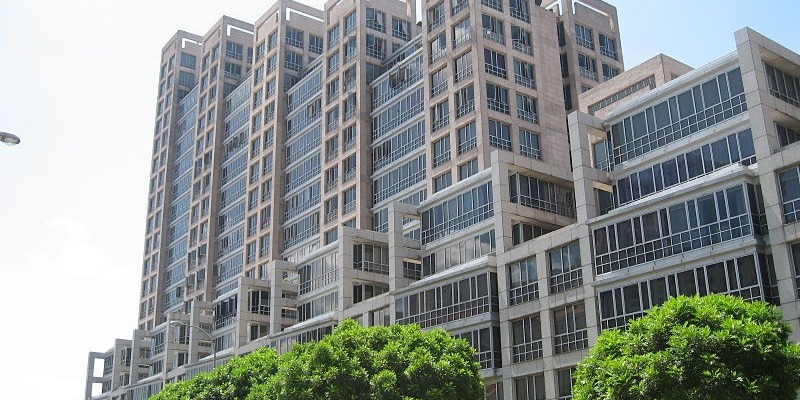
United Engineers Limited, one of Singapore’s oldest companies, is a corporation with business activities in the domains of property rental and hospitality, property development, engineering and distribution and manufacturing. With the general public however, the company is more generally associated with property development. Amongst the many iconic structures that the group has built, we count UE Bizhub CITY (formerly known as UE Square), UE Bizhub East, Rochester Mall and Seletar Mall. UE Bizhub CITY, an 18-storey mixed-use development developed by the company, was designated as a historic site by the Singapore National Heritage Board in 2002.
Corporate updates
We believe that some of our readers might have heard about the completed privatisation of United Engineers by the Chinese property developer, Yanlord Land Group Limited. In this section, we aim to provide a panorama of the key developments leading up to this event, and tell you more about the key players involved.
In 2017, a consortium led by Yanlord Land and Singapore property developer and healthcare company, Perennial Real Estate Holdings Limited (‘Perennial’), acquired a 33.5% stake in United Engineers at S$2.60 a share. At that time, the consortium consisted of Yanlord Land; Perennial UW Pte Ltd (majority owned by Perennial); two of Perennial’s sponsors, Mr Kuok Khoon Hong and Wilmar International Limited; and Heng Yue Holdings Ltd. Kuok and Wilmar held interests in the joint venture through holdings in Perennial UW. The acquisition of the stake triggered a mandatory takeover offer for the remaining shares of United Engineers, at the same price of S$2.60 a share.
In conjunction with the above developments, the consortium also agreed to buy a potential 29.9% stake in WBL Corporation, a unit of United Engineers. Specifically, as of July 2017, the consortium had acquired a 10% stake in WBL and was committed to acquiring, subject to certain conditions, an additional 19.9% stake at a later date.
By late 2017, it became evident that the consortium’s bid to acquire control of United Engineers was in trouble. Shareholder acceptances of the S$2.60/share offer came up to just 1.4% of United Engineers’ ordinary shares, despite the consortium opting to extend the offer deadline twice. We think that this might have been due to the fact that the S$2.60 offer was below United Engineers’ market price at that point of time. In fact, after the consortium’s offer was announced, Singapore’s Oxley Holdings Limited – led by intrepid entrepreneur Mr Ching Chiat Kwong – dived in to acquire a stake of more than 14% in United Engineers from the open market.
In the end, the consortium’s offer to privatise United Engineers for S$2.60 a share lapsed due to insufficient acceptances. But the Yanlord-led consortium did complete its purchase of an approximate one-third stake in WBL Corp.
After the offer for United Engineers lapsed, Yanlord Land bought out the stakes in the consortium – named Yanlord Perennial Investment (Singapore) Pte Ltd (‘YPIS’) – held by Perennial UW and Heng Yue. Perennial UW had held 45% in the acquisition vehicle, while Heng Yue held a 6% stake. The amount paid to Perennial UW and Heng Yue valued United Engineers’ shares held by YPIS at S$2.60 a share.
Shortly after these stakes were transferred and consolidated, Yanlord Investment (Singapore) Ptd Ltd, or formerly known as YPIS, launched a fresh offer in October 2019 to acquire shares in United Engineers for S$2.60 a piece – the same price at which the previous bid was launched, valuing the target company at S$1.66 billion.
A detail that would not – in all likelihood – have escaped the meticulous reader is that Perennial and Heng Yue chose to sell their stakes to Yanlord at S$2.60, which was the same price at which Yanlord chose to launch its bid in October 2019. We think this suggests that Perennial and Heng Yue probably were of the opinion that S$2.60 a share was a fair price for United Engineers, even if one might be inclined to think that it was not the most attractive.
In November 2019, Yanlord Land – through its indirect wholly-owned subsidiary – upped its cash offer to S$2.70 a share, an increase of 3.8% on its original offer price of S$2.60 a share. The revised offer valued United Engineers at some S$1.72 billion. By 26 December, Yanlord Land had acquired or agreed to acquire some 90.27% of United Engineers’ ordinary shares. By then, United Engineers had lost its free float and was poised to be delisted.
Cessation-of-trading put
An exchange filing dated 4 February by United Engineers noted that given that the shares of the company on the SGX-ST has been suspended for more than seven consecutive days, a trading disruption event had occurred. Consequently, under the terms and conditions of the company’s debt programme, holders of its 3.68% notes due 2021 have the right, at their option, to require United Engineers to redeem all of their notes at par. The exercise period for the cessation-of-trading put has expired on 12 Mar 20.
United Engineers has yet to announce the amount of notes on which holders exercised the cessation put option. Nonetheless, given that bid prices of the bond have hovered below par since November, and the illiquidity of the security, we think it is likely that a substantial number of noteholders would opt to put back the notes. As such, we think investors who held on to the UEMSP 3.680% 01Jun2021 Corp (SGD) might have to contend with even lower trading liquidity going forward.
Financial review
For the three months ended September 2019, United Engineers saw its revenue jump 38% to S$112.4m, in large part due to contributions from the company’s Chengdu Orchard Villa (Phase 5A) project in China, which has been completed and handed over. The company registered strong underlying growth in its operating segments, with operating profit before revaluation of investment properties growing 180% YoY to S$24.4m (3Q18:S$8.7m). In the quarter, the group also registered a net surplus of S$65.2m on revaluation of investment properties.
In the company’s property rental and hospitality segment, revenue increased 8% YoY to S$34.4m in the quarter and 4% YoY to S$97.8m for the first nine months of 2019. Operating profit before interest (excluding net revaluation gains from investment properties) jumped 29% YoY to S$21.0m for 3Q19 and 10% YoY to S$53.0m for 9M19. We pause here to note briefly that the results of this segment are not only encouraging, but particularly important for bond investors. This is because property rental and hospitality may be considered to be the division that generates recurring revenue for United Engineers, in contrast to its other business divisions that are more cyclical in nature.
United Engineers derives a good portion of its revenue from property development as well. Revenue from the segment virtually doubled, with growth of 98% YoY to S$49.6m in 9M19, in large part due to revenue from Chengdu Orchard as alluded to earlier in this article. The segment registered an operating profit before interest of S$7.1m in 3Q19, reversing the operating loss before interest of S$2.1m registered in the same quarter of 2018.
In the company’s engineering and distribution division, the relatively poor performance of the group’s systems integration business dragged the division’s overall performance down. For readers who are not in the engineering line, systems integration is the process of integrating the physical and virtual components of a system. Practically, these components could include both hardware and software components. They might also encompass intangibles such as databases and applications.
For this division, revenue declined 22% YoY to S$19.1m in 3Q19 and 19% YoY to S$62.2m in 9M19. Operating profit before interest decreased 70% YoY to S$0.6m in 3Q19, due to lower profit contributions from the group’s distribution business. Operating profit before interest dropped 39% YoY to S$3.4m in 9M19, due to the lacklustre results posted by the group’s system integration and distribution businesses in Singapore.
United Engineers also has a manufacturing segment, one that provides services in precision engineering and electronics manufacturing. Its precision engineering division engages in aluminium die casting – a process that involves forcing molten metal into a metal cavity – while its electronics manufacturing segment creates a diverse range of products from connector pins to sockets. The group’s manufacturing activities are, for the most part, situated in Shenyang in China and the United Kingdom.
Figure 1 summarises the respective revenue contributions of United Engineers’ operating segments.
Figure 1: Revenue contributions of United Engineers’ operating segments
|
Operating division |
3Q19 revenue |
% of total revenue |
|
Property rental and hospitality |
S$34.4m |
30.6% |
|
Property development |
S$37.8m |
33.6% |
|
Engineering and distribution |
S$19.1m |
17.0% |
|
Manufacturing |
S$11.8m |
10.5% |
|
Source: United Engineers, iFAST estimates Note: other revenue not derived from these segments have been excluded |
||
Credit analysis
Earnings before interest and taxes (‘EBIT’, excluding non-operating items e.g. net surplus on revaluation of investment properties) was S$31.4m in the third quarter of 2019, up 117% YoY from S$14.5m in the same quarter the prior year. A more balanced picture might be obtained by looking at the year-to-date numbers. In the first nine months of 2019, the company had EBIT of S$63.3m, up 30% YoY from S$48.8m reported in the first nine months of 2018. Readers wondering about the large difference in growth rates between the two periods might bear in mind that some two-thirds of the company’s revenue comes from cyclical sources such as manufacturing and property development.
For the third quarter of 2019, interest coverage – measured by taking the ratio of EBIT to finance costs – rose from 2.50x in the third quarter of 2018 to 4.49x in the third quarter of 2019. Interest coverage rose from 2.88x for the first nine months of 2018 to 3.01x for the first nine months of 2019. The rise in interest coverage was driven by healthy EBIT growth, which outpaced the rise in finance costs (+24% YoY in 9M19).
With cash balances relatively stable, the company saw its gearing – total borrowings over total assets – decline from 30.1% in December 2018 to 27.7% as of end-September 2019. The decline was attributed to a marginal decline in total borrowings, which declined from S$1.09 billion to S$1.04 billion over the same period.
United Engineers also appeared to have a healthy liquidity position. The current ratio as of end-September 2019 was 4.55x, up from 2.27x seen in December 2018. The uptick in the company’s current ratio was driven by a significant decline in short-term borrowings, from S$360.4m in December 2018 to S$67.6m in September 2019.
Incidentally, non-current borrowings increased from S$728.4m as at end-December 2018 to S$967.5m as of end-September 2019. We observed that the decline occurred around the second quarter of 2019. With the decline in short-term borrowings largely corresponding to the rise in non-current borrowings, we could surmise that the company conducted a debt rollover during the relevant period.
Another reason why this is likely to be the case is because the company had approximately S$300.7m in short-term secured bank loans at the end of 2018, of which the quantum largely corresponds to the decline in short-term borrowings seen between December 2018 and September 2019. From a financing point of view, secured bank loans are usually rolled over with greater ease compared to unsecured credit facilities.
Relative valuation
In general, United Engineers has a decent credit profile with a low level of leverage and a strong balance sheet. The UEMSP 3.680% 01Jun2021 Corp (SGD) currently yields 3.02% at the ask price of 100.78. The issue matures in June 2021.
CapitaLand Limited’s CAPLSP 4.300% 31Aug2020 Corp (SGD)currently yields 0.92%. CapitaLand is a significantly larger company, with a market valuation of S$15.3 billion. In comparison, United Engineers’ market capitalisation is approximately one-tenth the market capitalisation of CapitaLand. Furthermore, it bears emphasis that Temasek Holdings (Private) Limited) holds roughly half of CapitaLand and more likely than not this consideration has been factored into risk premiums on the company’s securities.
Using a non-Temasek linked company for comparison, we see that City Development Limited’s CITSP 2.930% 24Mar2021 Corp (SGD) carries a yield to maturity of 1.81%. City Developments also has a balance sheet with a similar profile, with a low net gearing – total debt net of cash and cash equivalents as a percentage of assets - of 23.4% as of September 2019 and a current ratio of 2.91x. The lower yield would most probably be due to the company’s much larger size and operating scale – it has a market capitalisation in the S$7 billion range.
The YLLGSP 6.750% 23Apr2023 Corp (USD)of Yanlord Land, denominated in USD, currently bears a yield to maturity of 6.75%, which translates to a yield of 6.86% if swapped to SGD. Because United Engineers is wholly owned by Yanlord Land, one might think that their bond yields should achieve greater convergence. However, the higher yields on Yanlord Land’s bond can be explained in part by the more aggressive nature of its balance sheet.
For one, Yanlord Land had a lower current ratio – a measure of liquidity – of 1.46x as of end-September 2019. On the debt front, the company had a gearing ratio of 35.5%, slightly higher than that of United Engineers. But the yield premium of about 380 bps over the United Engineers bond seems to be quite high in our view. Insofar as credit quality is narrowly assessed from the balance sheet perspective , we have reason to believe that Yanlord Land’s bond might be equally attractive. Yanlord Land Group, listed on the Singapore Stock Exchange, has a market capitalisation of S$1.99 billion.
Recommendation
The United Engineers bond would probably be a good option for investors looking to invest in a diversified business with revenues from property development, hospitality and manufacturing. As highlighted earlier in this article, we derive significant comfort from the company’s low gearing and high financial liquidity.
However, comparing just their credit metrics, United Engineers appear to be similar to its acquirer Yanlord Land. Those willing to take a concentrated bet on the Chinese real estate development sector in exchange for higher yields might also consider Yanlord Land’s YLLGSP 5.875% 23Jan2022 Corp (USD) as another option.
As United Engineers has been delisted since late February following its acquisition by Yanlord Group, there will be no continuing obligation for it to report its financials going forward. Also, we expect thin trading activity in the UEMSP 3.68% ‘21s moving forward, which are the company’s only bond outstanding. Consequently, our readers may wish to note that we are ceasing coverage of this firm.
Declaration:
For specific disclosure, at the time of publication of this report, IFPL (via its connected and associated entities) does not have a principal position in the above mentioned securities. The analyst who produced this report hold a NIL position in the abovementioned securities.