Highlights:
- Stock market trading activity drove stamp duty growth, directly turning Hong Kong’s fiscal position from the originally budgeted deficit of HK$67 billion to a surplus of HK$11.2 billion, ending four years of fiscal deficits.
- Hong Kong’s public finances remain resilient with the triple support of fiscal reserves, the Exchange Fund and low debt levels. Fiscal reserves for FY2025/26 rose to HK$665.5 billion, the Exchange Fund’s backing ratio reached 111.4%, and debt/GDP stands at only around 14%. The fiscal foundation is solid.
- Given that the Hong Kong government has returned to fiscal surplus and demonstrated financial resilience amid economic fluctuations, we believe Hong Kong government-issued bonds are suitable for investors seeking stable income and returns.
The Hong Kong SAR Government has finally turned its fiscal position from deficit to surplus after four consecutive years of deficits. Overall revenue rebounded YoY, effectively easing liquidity pressure. Fitch also confirmed on 12 May 2026 that Hong Kong’s issuer rating remains at “AA-”, with the outlook maintained as “Stable”. However, does this mean the depletion of fiscal reserves has ended? Investors are generally concerned that the government has been continuously drawing down fiscal reserves and that last year’s increase in the borrowing ceiling to HK$900 billion may add to the fiscal burden. Are Hong Kong government bonds an appropriate choice for investors seeking stable returns? This article analyses the situation point by point.
Hong Kong Government Achieves Fiscal Surplus Again After Four Years
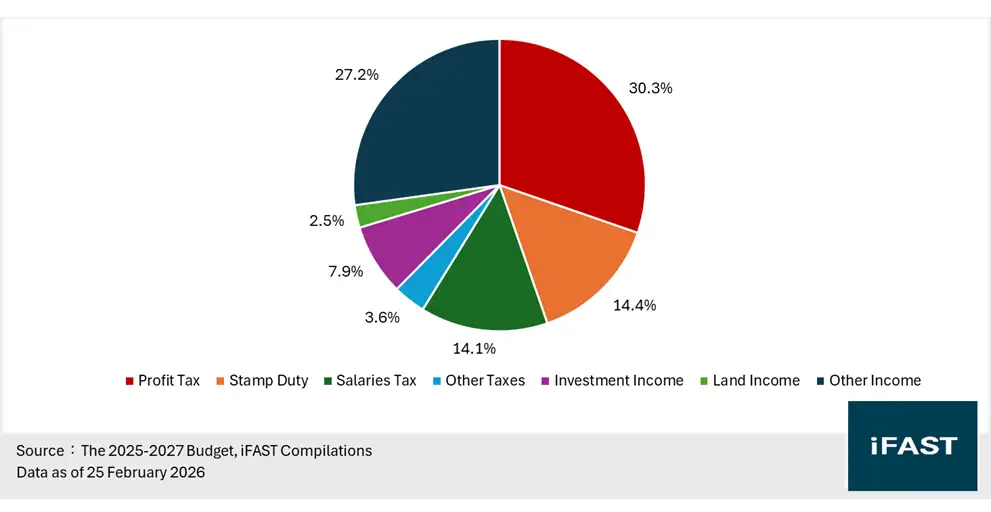
According to the latest revision to the FY2025/26 budget (1 April 2025 to 31 March 2026), the Hong Kong government expects total revenue for the year to reach HK$658.4 billion, YoY growth of 17.8% (see Chart 1). Tax revenue accounts for more than 62% of total revenue, with profits tax (30.3%), stamp duty (14.4%) and salaries tax (14.1%) as the three main sources, followed by investment income (7.9%) and land revenue (2.5%) (see Chart 2). The outperformance of these revenue items directly reversed Hong Kong’s fiscal position from the originally budgeted consolidated deficit of HK$67 billion to a surplus of HK$11.2 billion, ending four years of fiscal deficits.
Chart 1: Financial Results of the Government of the HKSAR
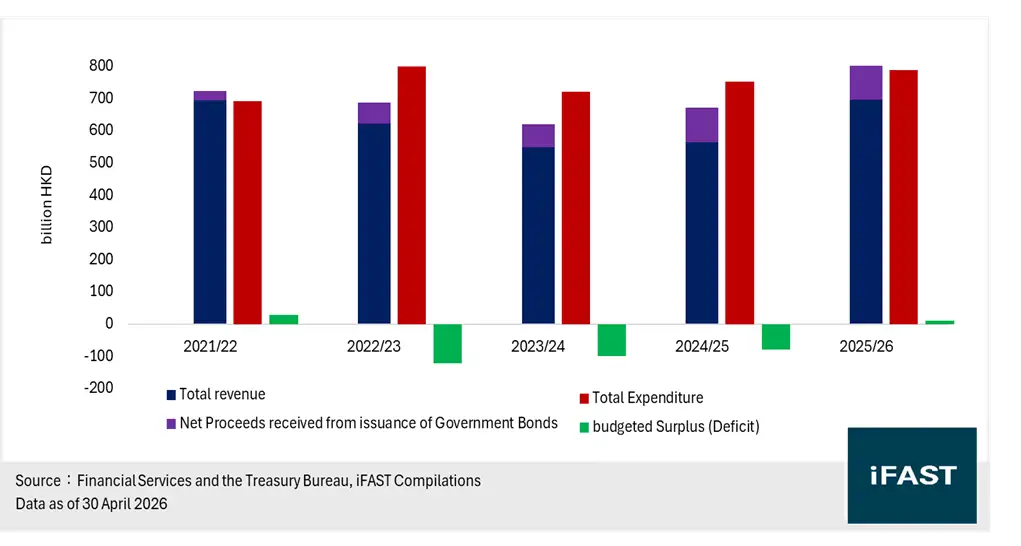
Chart 2: The revenue breakdown of the Hong Kong government
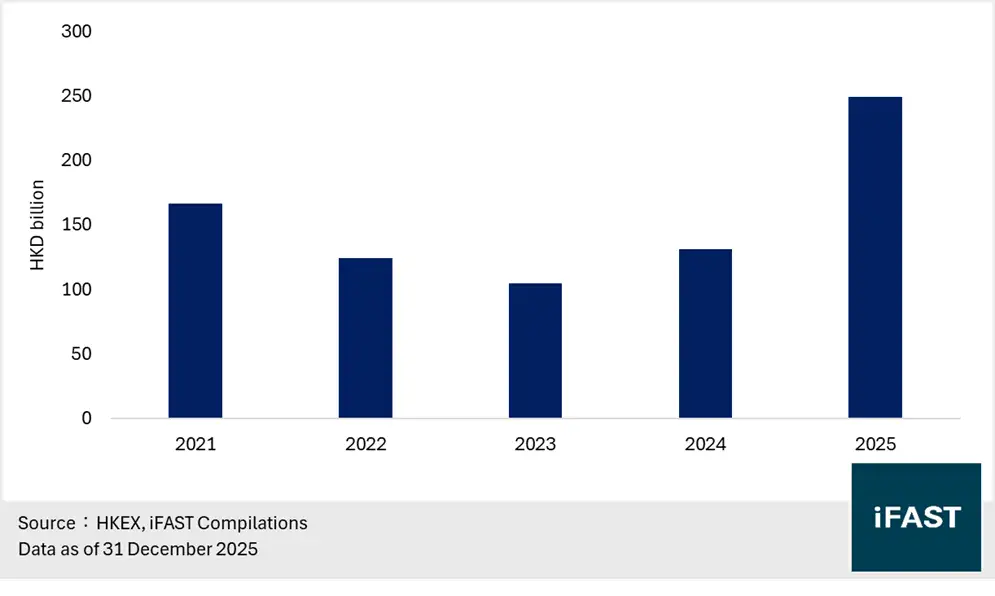
The growth in stamp duty revenue driven by active capital market trading was the core driver behind tax revenues exceeding expectations. In the second half of 2025, the Hong Kong stock market saw a significant rebound in trading volume led by technology stocks. Average daily turnover rose sharply from HK$131.8 billion in 2024 to HK$249.8 billion in 2025, causing stamp duty revenue to exceed the original forecast by 47% to HK$99.5 billion (see Chart 3). Benefiting from strong demand for AI-related electronic products and the rebound in visitor arrivals, Hong Kong’s goods exports and retail sales grew 8% and 6.5% YoY respectively, further supporting corporate earnings. Profits tax revenue therefore reached HK$209 billion, exceeding the budget by 8.7%. Salaries tax revenue maintained steady growth and reached the budgeted HK$97 billion.
Chart 3: Hong Kong stock market daily average turnover
In addition to traditional tax revenue, investment income and land revenue also performed notably last year. Overall investment income remained stable, mainly from returns on fiscal reserves and the Exchange Fund, achieving the original budgeted target of HK$7.5 billion even in a low-interest-rate environment. Land revenue was relatively moderate due to the property market adjustment. Developers’ appetite for land tenders weakened noticeably. Of the eight residential sites originally planned for launch, only six were successfully sold, resulting in actual revenue of HK$17.5 billion, slightly below the budgeted HK$21 billion.
Investors may be concerned that, after excluding *net issuance proceeds, the government still recorded a potential deficit of approximately HK$92.8 billion and did not actually achieve a surplus. However, this potential deficit has narrowed by nearly 51% from HK$188.3 billion in FY2024/25 and was mainly driven by expenditure pressure from accelerated infrastructure such as the Northern Metropolis. The *operating account recorded a surplus of HK$51.3 billion, reflecting the resilience of the government’s fiscal foundation — a key factor behind Fitch maintaining the AA- issuer rating.
*Net issuance proceeds refer to the net amount of proceeds from new bond issuance by the Hong Kong government in a fiscal year minus the principal repayment of bonds maturing in the same period.
*The government’s total revenue comprises the operating account and the capital account. Operating revenue consists of various taxes, government fees and charges, and investment income. The capital account consists of land premium revenue and capital works expenditure.
FY2026/27 Outlook
Looking ahead to FY2026/27, the economy continues to recover and the government expects overall revenue to improve further. Fitch expects GDP growth of 3.5%. Driven by improving corporate earnings and recovering consumption, tax revenue is projected to grow 6–8% YoY. Visitor arrivals to Hong Kong are expected to continue rising, further boosting retail sales and services sector revenue. In addition, the government’s vigorous promotion of green finance and family offices is attracting international capital inflows and supporting growth in the financial services sector, which should generate stable tax contributions. On the expenditure side, the government will continue to control spending growth. Total budgeted expenditure for FY2026/27 will rise only marginally by 2.6% to HK$843.4 billion. The consolidated fiscal surplus is expected to expand to HK$22.1 billion, providing stronger support for debt-servicing capacity.
Triple Support from Reserves, Debt and Exchange Fund — Hong Kong’s Public Finances Remain Resilient
After four years of fiscal deficits, Hong Kong’s fiscal position has begun to stabilise. As of end-March 2026, fiscal reserves rose 1.5% YoY to HK$665.5 billion, equivalent to around 20% of GDP and sufficient to cover 9–10 months of total government expenditure. Combined with the expected FY2026/27 surplus, fiscal reserves are projected to rise further to around HK$700 billion, indicating that the most acute phase of fiscal pressure may have passed (see Chart 4). Hong Kong’s current fiscal reserves rank among the largest in major Asian economies, reflecting that the government still possesses ample fiscal capacity as a buffer.
Chart 4: Hong Kong’s fiscal reserves
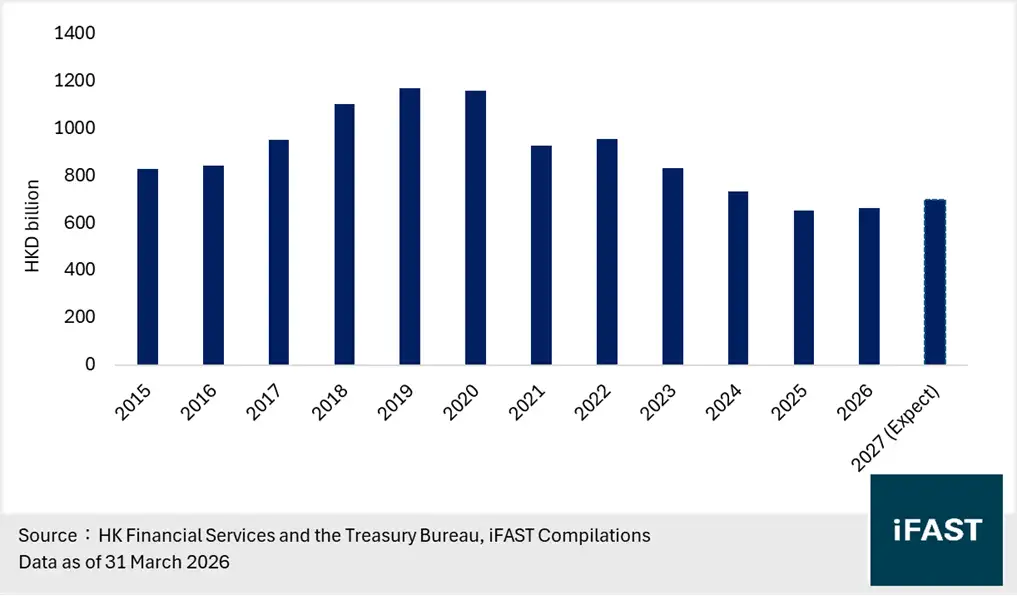
As of end-February 2026, the government’s total debt stood at approximately HK$407.2 billion, remaining at a low level. Fiscal reserves are more than sufficient to fully cover total debt. Although the debt-to-GDP ratio has risen, it is expected to be around 14%, well below the average for advanced economies. In the FY2026/27 budget, the government raised the total borrowing ceiling for the bond programme from HK$700 billion to HK$900 billion. Over the next five years, annual bond issuance is expected to range between HK$160 billion and HK$220 billion, with roughly half used to refinance short-term debt and the remainder to support infrastructure such as the Northern Metropolis. The government has also committed that bond proceeds will not be used for recurrent expenditure, signalling confidence in maintaining surpluses going forward.
The Exchange Fund is also key to Hong Kong maintaining its high rating. As of end-April 2026, the Exchange Fund’s total assets reached HK$4,354 billion, with foreign exchange reserve assets at US$442.1 billion (approximately HK$3,465 billion), equivalent to more than five times the monetary base or around 38% of M3 (see Chart 5). Backing Portfolio for the monetary base include up to HK$230.6 billion in US dollar assets, delivering a backing ratio of 111.39% — well above the 100% statutory requirement. This provides ample confidence in the stability of the linked exchange rate and underpins repayment of foreign-currency bonds. The investment portfolio also recorded record investment income of HK$331 billion in 2025 (8.0% return). After retaining part of the surplus in the Exchange Fund, HK$150 billion of accumulated surplus can be recognised as government revenue over the next two years, effectively easing funding pressure for infrastructure development. Although the fund is large in scale, its stability relies primarily on the HKMA’s monetary operations mechanism and intervention capability. Since 1983 there has been no de-pegging pressure, demonstrating the HKMA’s effectiveness in maintaining the linked exchange rate.
Chart 5: Hong Kong Exchange Fund’s total assets
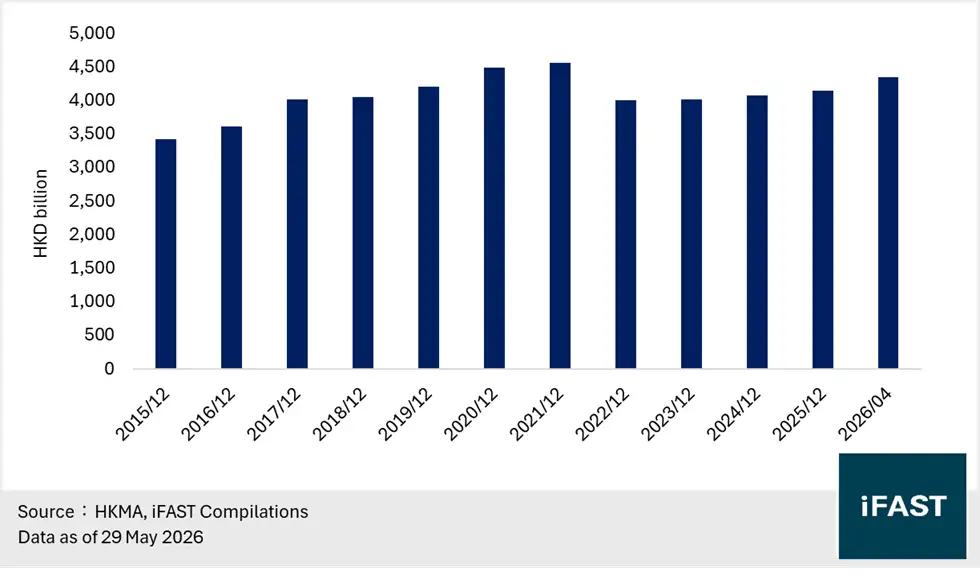
*Backing ratio = Backing assets / Monetary base × 100%. It is one of the Exchange Fund’s most important soundness indicators, measuring the size of the supporting asset portfolio relative to the monetary base.
Hong Kong Government Bond Investment
Given the Hong Kong government’s return to fiscal surplus and demonstrated financial resilience amid economic fluctuations, we believe bonds issued by the Hong Kong government are suitable for investors seeking stable income and returns.
Multiple Hong Kong government bonds are available on the FSMOne platform. The issuer credit ratings are AA+/AA- (S&P/Fitch), representing high investment-grade quality (see Table 1 / 2).
The Hong Kong government divides its bonds into two series — GBHK and HKINTL — primarily to cater to both local and international market demand simultaneously. GBHK mainly issues Hong Kong dollar bonds to develop the local bond market and provide options for Hong Kong investors. HKINTL mainly issues US dollar and other foreign currency bonds targeting global international investors.
Investors should note that HKINTL bonds are US-dollar denominated. Although the exchange rate is protected by the linked exchange rate system, there remains a degree of volatility. Liquidity and yield spreads may also differ between the two series. Investors should choose according to their own currency needs and risk tolerance.
Table 1: HKINTL Bonds
| Bond Name | Investors Buy Price | YTM |
| 99.306 | 4.119 | |
| 97.055 | 4.495 | |
| 102.974 | 1.43 | |
| 100.165 | 1.228 | |
| 102.095 | 2.927 | |
| 103.675 | 1.492 | |
| 107.446 | 1.81 | |
| 104.363 | 4.953 | |
| 100.793 | 4.484 | |
| 100.553 | 4.134 | |
| 102.978 | 1.398 | |
| 110.068 | 1.763 | |
| 87.956 | 4.26 | |
| 63.686 | 4.939 | |
| 99.681 | 4.168 | |
| 99.366 | 2.959 | |
| 98.803 | 4.148 | |
| 99.5 | 3.979 | |
| 100.857 | 2.658 | |
| 100.775 | 2.55 | |
| 99.043 | 4.217 | |
| 108.13 | 2.49 | |
| 110.245 | 2.632 | |
| 100.129 | 4.127 | |
| 100.823 | 2.993 | |
| 99.509 | 4.26 | |
| 99.926 | 3.854 | |
| 101.405 | 2.507 | |
| 101.483 | 2.627 | |
| 100.846 | 1.199 | |
| 87.926 | 4.253 | |
| Source: Bondsupermart Data as of 9 June 2026 |
||
| Bond Name | Investors Buy Price | YTM |
| 98.635 | 2.571 | |
| 97.413 | 2.802 | |
| 95.842 | 3.646 | |
| 94.315 | 2.977 | |
| 99.865 | 2.932 | |
| 99.586 | 2.812 | |
| 101.531 | 3.874 | |
| 104.917 | 3.182 | |
| 99.658 | 3.213 | |
| 101.316 | 2.831 | |
| 100 | 3.85 | |
| Source: Bondsupermart Data as of 9 June 2026 |
||
Risks
Although Hong Kong government bonds carry extremely low credit risk, investors should still note several key risks. First, interest rate risk is the primary consideration, especially for longer-tenor HKINTL and GBHK bonds. When US Treasury yields or HIBOR rise materially, bond prices will face significant downward pressure. Second, Hong Kong government revenue growth is highly dependent on stamp duty, which accounted for approximately 14.4% of total revenue in FY2025/26. Should stock market turnover decline or weaken, stamp duty revenue would fall sharply, directly affecting the stability of overall fiscal revenue.
Furthermore, although the current debt-to-GDP ratio remains low, the coverage of fiscal reserves relative to expenditure (in months) has declined significantly from pre-pandemic peaks. Population ageing will continue to push up social welfare and healthcare spending, and long-term structural deficit pressure may gradually emerge. In addition, persistently weak land revenue (revised to only around HK$17.5 billion for FY2025/26) and US-China geopolitical uncertainties may also undermine market confidence in Hong Kong’s fiscal sustainability. Investors should closely monitor interest rate trends, stock market turnover, land sales and the external macroeconomic environment to manage risks.
Conclusion
Stock market trading activity drove stamp duty growth, directly turning Hong Kong’s fiscal position from the originally budgeted deficit of HK$67 billion to a surplus of HK$11.2 billion, ending four years of fiscal deficits.
Hong Kong’s public finances remain resilient with the triple support of fiscal reserves, the Exchange Fund and low debt levels. Fiscal reserves for FY2025/26 rose to HK$665.5 billion, the Exchange Fund’s backing ratio reached 111.4%, and debt/GDP stands at only around 14%. The fiscal foundation is solid.
Given that the Hong Kong government has returned to fiscal surplus and demonstrated financial resilience amid economic fluctuations, we believe Hong Kong government-issued bonds are suitable for investors seeking stable income and returns.
Declaration: For specific disclosure, at the time of publication of this report, IFPL (via its connected and associated entities) and the analyst who produced this report hold NIL positions in the abovementioned securities. This research report was prepared with the assistance of artificial intelligence (AI) tools. iFAST Financial Pte Ltd does not rely exclusively on AI for content generation; the content of this report – including all investment theses, ratings, price targets and conclusions – has been independently reviewed and verified by the research analyst(s) to ensure accuracy and professional integrity.
RISK DISCLOSURE STATEMENTS FOR BONDS
Key risks of investing in bond
|
Key risks of investing in high-yield bonds
|
| Bonds with special features Some bonds may contain special features and risks that warrant special attention. These include bonds:
|
Remarks
|